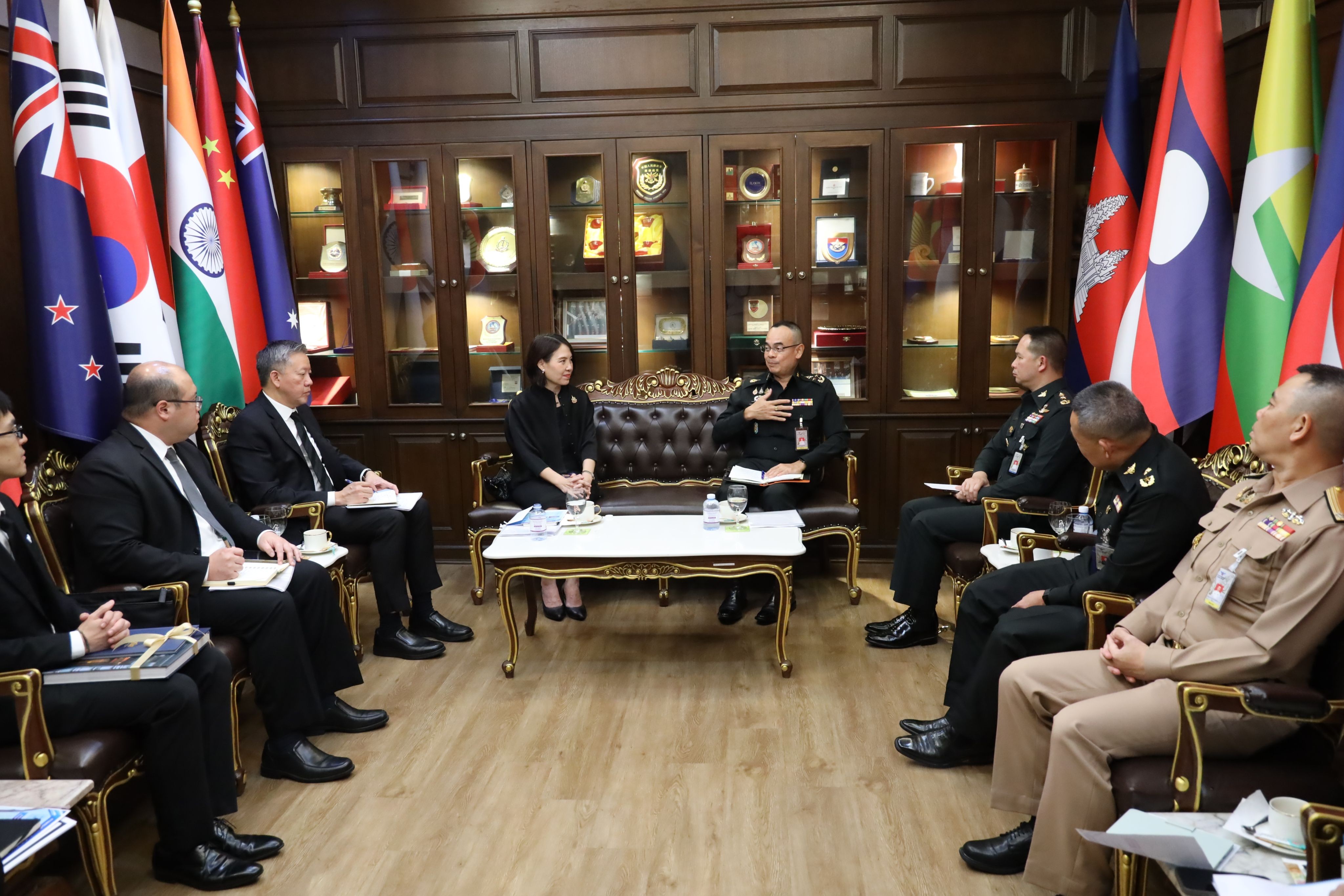
As set out in a formal announcement, On 27 August 2026, Ms. Somrudee Poopornanake, Director-General of the Department of European Affairs, held a meeting with General Sura Saiubol, Director-General of the Office of Policy and Planning, Ministry of Defence of Thailand, Lieutenant General Tawan Tunkul, Director of Office of Military Affairs Coordination to The Ministry of Foreign Affairs and executives from the Defence Policy and Planning Office at the Ministry of Defence. This engagement signifies a renewed commitment between Thailand and European nations across multiple strategic sectors. The stated objective—promoting cooperation—underscores a recognition of shared security interests in a region facing increasing complexity.
Background
The meeting occurred within the framework of Thailand’s “5S Foreign Affairs Masterplan,” an initiative launched in 2003, intended to guide the country’s diplomatic efforts over two decades. This plan prioritizes security, stability, sustainability, service, and strategic partnerships. The Department of European Affairs operates under the Ministry of Foreign Affairs, responsible for cultivating relationships with European countries. The Office of Policy and Planning within the Ministry of Defence focuses on defence strategy and coordination, indicating a coordinated approach to these discussions. The inclusion of Lieutenant General Tawan Tunkul highlights the engagement of military affairs within this diplomatic endeavor.
Analysis
The reaffirmation of readiness to work closely represents an effort to solidify existing alliances. The stated areas of cooperation—defence, defence industry, maritime security, humanitarian demining, and promoting the offset policy—demonstrate a strategic focus on critical security challenges. Promoting the offset policy suggests Thailand seeks to leverage European technological expertise in developing domestic defense capabilities. This signals a potential shift towards greater self-reliance within its military sector. The emphasis on maritime security is particularly relevant given Thailand’s extensive coastline and growing concerns about regional naval power dynamics. The meeting’s participants represent key governmental bodies involved in shaping Thailand’s defence posture and foreign relations.
Implications
This engagement holds implications for Thailand’s regional positioning. Strengthening ties with European nations could provide a counterbalance to emerging strategic alignments within Southeast Asia. The focus on maritime security suggests potential collaboration with European navies in addressing piracy and other maritime threats. The inclusion of humanitarian demining reflects a growing international concern regarding landmines and explosive remnants of war, potentially linking Thailand into broader global initiatives. Promoting the offset policy—a strategy used to mitigate defence spending by requiring foreign suppliers to transfer technology to local industries—could have significant impacts on Thai defense procurement practices.
Outlook
Should the visit yield further discussions regarding collaborative projects, a more detailed framework for cooperation would likely emerge. If the commitment to maritime security translates into joint exercises or information sharing, Thailand’s naval capabilities could be enhanced. Should the offset policy gain traction, it could stimulate investment in domestic defense industries and reduce reliance on foreign arms suppliers. The statement does not address potential challenges such as differing strategic priorities or bureaucratic hurdles within either Thai or European governmental structures.
Conclusion
The exchange between Ms. Poopornanake and General Saiubol reinforces the Ministry of Foreign Affairs’ commitment to bolstering security partnerships, yet it remains unclear whether this renewed focus will translate into concrete operational outcomes concerning defence capabilities or strategic alliances.