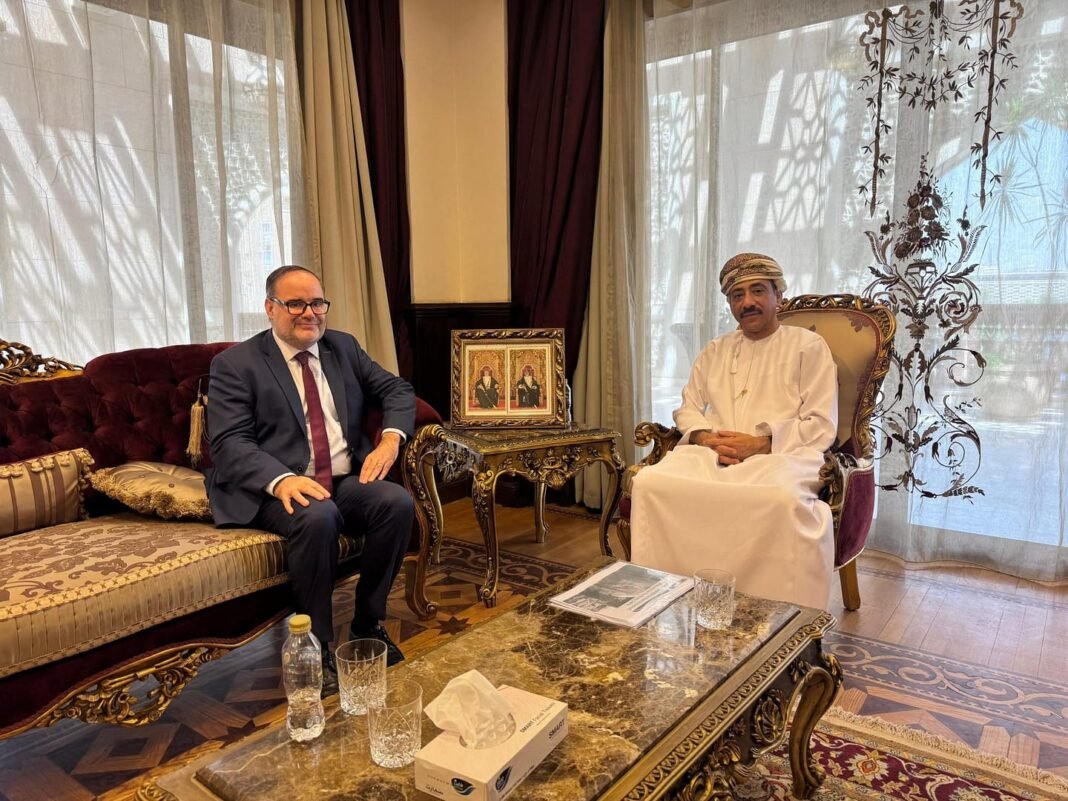
Details in a press release show that Oman’s National Committee to Combat Human Trafficking (NCCHT) is soliciting researchers and contributors, a move announced August 14, 2026. The announcement, delivered via email to nccht@fm.gov.om, specifies a registration deadline of October 1, 2026. This action represents the Committee’s stated intention to develop its strategy. The initiative highlights a potential gap in publicly available information regarding Oman’s approach to this complex transnational crime.

Background
The NCCHT operates under the auspices of the Ministry of Foreign Affairs. The committee’s mandate, as outlined in the press release, focuses on developing and implementing strategies to combat human trafficking. This announcement follows a series of recent statements from the ministry concerning regional security issues—specifically, Oman’s condemnation of Colombia’s recognition of Israeli sovereignty over Syrian Golan (August 12, 2026) and expressions of solidarity with Colombia following a devastating earthquake (July 27, 2026). Furthermore, the Minister of Foreign Affairs recently called for a new Gulf security policy (July 14, 2026), suggesting a broader strategic reassessment within Oman’s foreign relations. The timing of this call for researchers coincides with these developments, potentially indicating a shift in priorities or a need for specialized expertise to address evolving threats.
Analysis
The NCCHT’s reliance on external contributors suggests a potential lack of internal capacity or data within the Committee itself. The stated goal – developing its strategy – implies an existing, albeit undocumented, framework. This approach allows the ministry to engage with outside expertise without necessarily disclosing its own assumptions or objectives. If implemented as described, this process could yield valuable insights into trafficking routes and vulnerabilities within Oman and the wider region. However, the limited information provided—specifically, the lack of detail about the scope of research required or the criteria for selecting contributors—raises concerns. The fact that the announcement is an unofficial English version of an Arabic report indicates a potential desire to control messaging and limit public access to the full strategy’s details. The release directs interested parties to email nccht@fm.gov.om.
Implications
The NCCHT’s open call for researchers carries implications for Oman’s regional standing regarding human trafficking. A robust and transparent strategy would bolster international cooperation and demonstrate a commitment to combating this crime effectively. Conversely, a strategy developed solely through external input, without clear ministerial oversight or public disclosure, could be perceived as lacking strategic direction. The absence of information concerning potential partnerships with international organizations—such as the United Nations Office on Drugs and Crime (UNODC)—is notable. Should the visit yield concrete results, Oman’s approach to combating human trafficking will likely influence its relationships with countries grappling with similar challenges.
Outlook
If the registration deadline of October 1, 2026, passes without significant public announcements regarding the research findings or the final strategy, it would suggest a cautious or deliberately opaque approach. Should the committee’s efforts result in a revised national strategy, its success will likely hinge on the quality and relevance of the input received from external researchers. The statement does not address Oman’s current legal framework for combating human trafficking or whether this call represents an initiative to update existing legislation.