
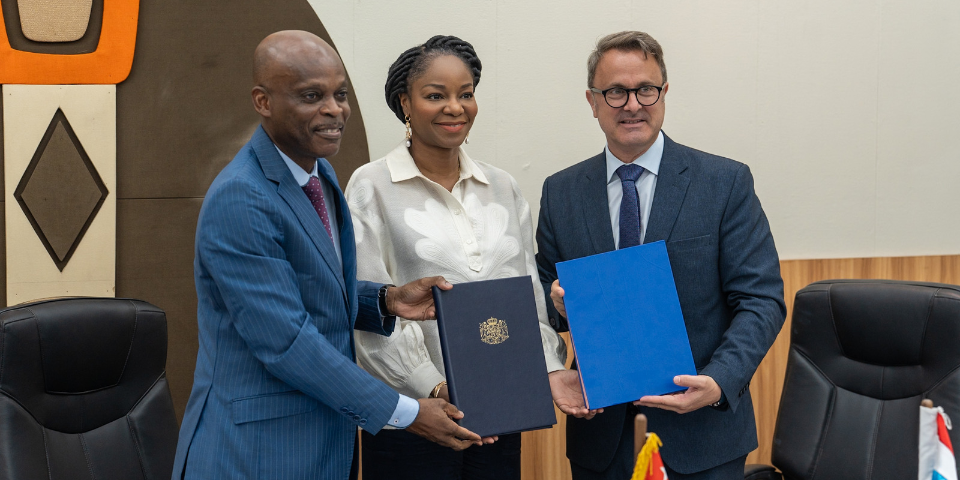
Background to the PIC stems from ongoing bilateral discussions established following the initial 2024 engagement. The commission bilatérale, comprised of Robert Dussey, Minister for Foreign Affairs, Cooperation, African Integration and Togolese Abroad, and Cina Lawson, Minister for Public Service Efficiency and Digital Transformation, serves as the formal mechanism for these dialogues. The creation of this program represents a consolidation of existing informal channels, formalized into a three-year framework – 2026-2031 – designed to direct Luxembourg’s cooperation efforts within Togo. The statement does not mention any prior agreements or preparatory work undertaken before the signing.
Analysis suggests that the stated objectives—education and training, environmental resilience, and digital transformation—align with broader European Union priorities regarding sustainable development in Africa. However, the broad brushstrokes of the PIC – covering these three domains – are notable for their lack of specificity. The inclusion of “digitalization” without detailing investment levels or potential technological transfers is a key omission. The reliance on the Beninese embassy to administer the program through its accreditation to Togo introduces a layer of indirect management, potentially impacting the speed and effectiveness of implementation. Stakeholder incentives are clear: Luxembourg seeks economic opportunities, while Togo aims for enhanced human capital and climate adaptation capabilities. The simultaneous focus on these areas suggests an attempt to address multiple vulnerabilities within Togo’s economy and environment.
Implications for policymakers extend beyond the immediate bilateral relationship. Should the PIC yield success in its stated objectives, it could serve as a model for similar cooperation agreements with other nations in the region. Conversely, if implementation falters due to logistical or political challenges – which the statement does not address – it risks damaging Luxembourg’s reputation as a reliable development partner. Regionally, the agreement strengthens ties between Luxembourg and Togo within the broader ECOWAS framework. The trade implications are minimal; the statement does not mention any specific provisions for increased commerce or investment. Security considerations, however, remain absent—the discussion with President Faure Gnassingbé focused on “relations bilateral, notamment dans le domaine de la coopération au développement, sur la situation interne et la situation dans la sous-région,” a deliberately vague phrasing that obscures potential security concerns.
Outlook depends entirely on the subsequent implementation of the PIC. If the partnership successfully navigates logistical hurdles—particularly through the Beninese embassy’s administration — and secures tangible outcomes in education, climate resilience, and digital infrastructure, it could foster long-term stability within Togo. Should the program encounter significant delays or face resistance from local stakeholders – a contingency not addressed by the statement – the relationship could become strained. The agreement’s success hinges on LuxDev’s capacity to effectively coordinate with Togolese counterparts and ensure the timely delivery of resources.
Conclusion: The signing of the PIC represents a step towards deepening Luxembourg’s engagement in Togo, but the program’s ambition is tempered by its lack of detail regarding financial commitments or concrete deliverables. The primary question remains: will this broadened cooperation translate into demonstrable improvements for Togolese society, or simply represent another iteration of goodwill gestures?