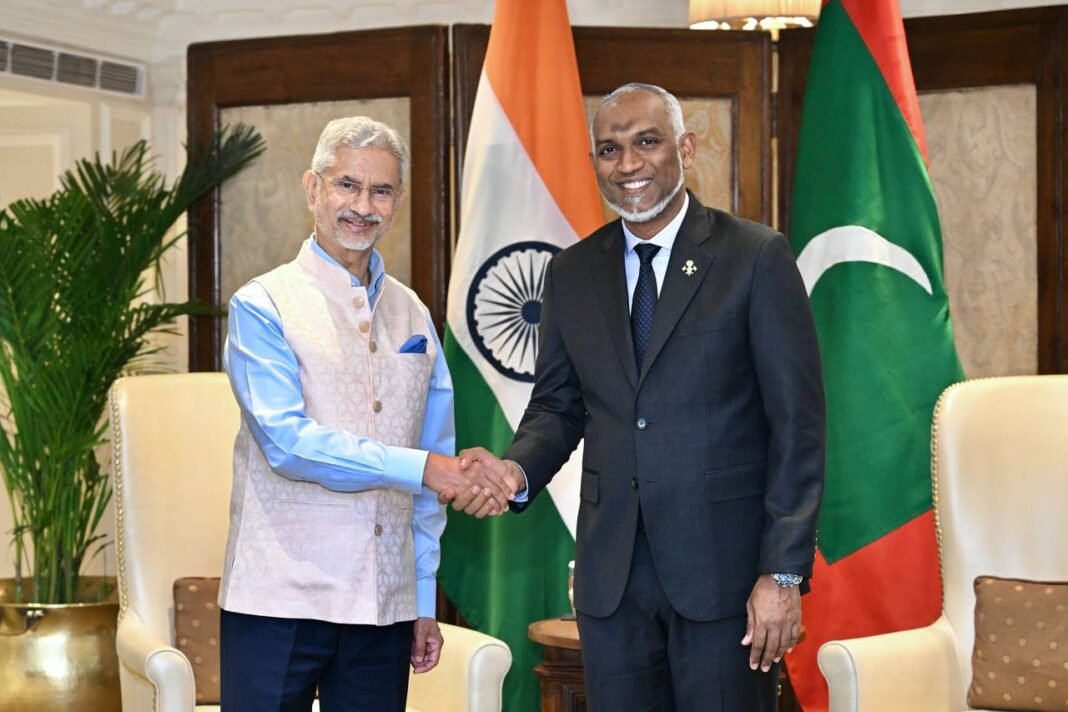
Per the government announcement, On October 23, 2026, External Affairs Minister Dr. S. Jaishankar visited Azerbaijan, according to a statement released by the Ministry of External Affairs. The visit, intended to “review bilateral ties between the two countries,” involved a meeting with his Azerbaijani counterpart. This action, the statement indicates, represents a continuation of diplomatic engagement within a region increasingly defined by geopolitical competition. The statement does not address the underlying dynamics of the Nagorno-Karabakh conflict or any specific security concerns related to the South Caucasus.

Context
The visit, scheduled for October 23, 2026, follows a pattern of ministerial engagements by the Ministry of External Affairs. A similar visit to the UAE in October 2026, as detailed in a separate Ministry statement, centered on “reviewing the progress of the India-UAE Comprehensive Strategic Partnership.” A visit to Ghana, Côte d’Ivoire and Ethiopia in October 2026, similarly focused on “review close bilateral ties of friendship and cooperation.” The statement does not mention the timing or purpose of this Azerbaijan visit beyond the stated intention to “review bilateral ties.” This suggests a continued, if somewhat generalized, diplomatic effort to maintain engagement with key regional partners. The statement does not address the broader strategic implications of India’s approach to the South Caucasus, a region dominated by Russia’s influence and the ongoing tensions surrounding Armenia and Azerbaijan. The focus on “bilateral ties” is notable, as it avoids any explicit reference to the complex regional dynamics.
What to Watch
Should the visit yield a formal agreement regarding trade or economic cooperation, the Ministry of External Affairs will likely issue a supplementary statement detailing the specific outcomes. The statement does not mention any specific areas of cooperation. The visit’s primary objective, as outlined in the initial announcement, is to “review bilateral ties,” a deliberately vague phrase that offers little in terms of concrete policy implications. The statement does not address the potential for India to play a mediating role in the Nagorno-Karabakh dispute or to deepen its strategic relationship with either Armenia or Azerbaijan. The statement does not mention any discussions regarding energy security or transportation corridors.
The Ministry of External Affairs has previously prioritized strengthening bilateral partnerships within the framework of the “India-UAE Comprehensive Strategic Partnership” and “close bilateral ties of friendship and cooperation” during its visits to Ghana, Côte d’Ivoire and Ethiopia. The statement does not mention any changes in India’s approach to the South Caucasus.