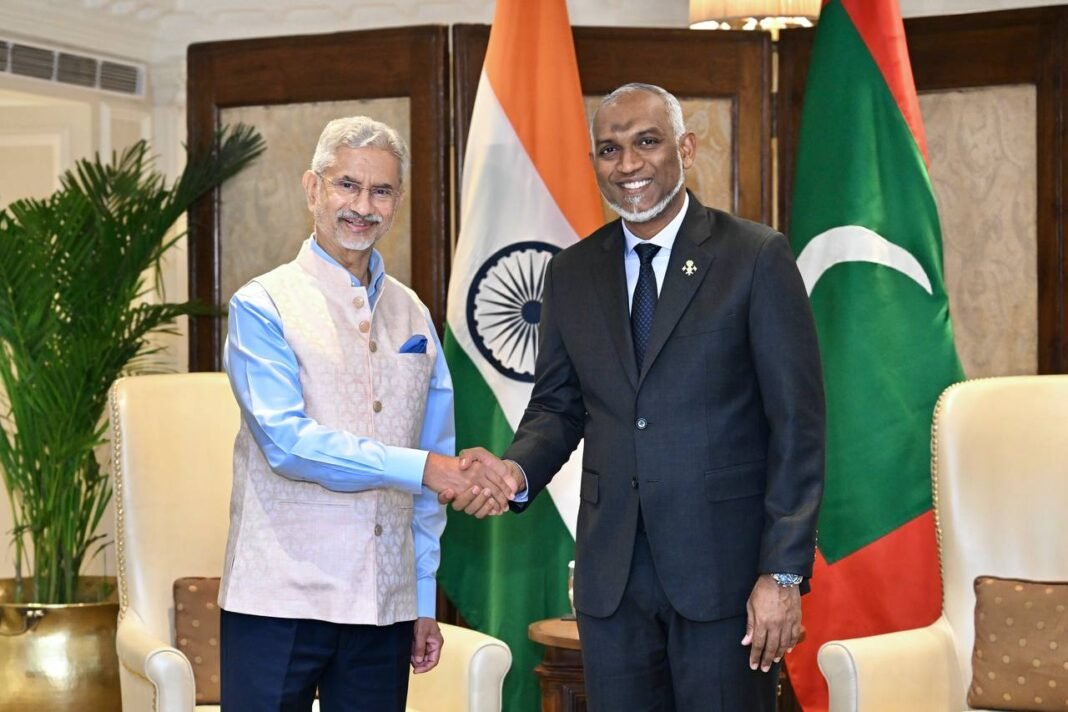
Reporting in a government statement, The meeting between India and CARICOM foreign ministers, held on the sidelines of the 81st United Nations General Assembly in New York on September 23rd, 2026, represents a follow-up to a summit convened in Guyana in November 2024. This event, co-chaired by External Affairs Minister Dr. S. Jaishankar and the Minister of Foreign Affairs, International Business and Cooperation of Suriname, Melvin W. J. Bouva, highlights a deliberate shift in India’s engagement with the Caribbean region. The statement does not address the specific goals of this renewed focus, but the participation of representatives from twelve CARICOM nations – including Barbados, Jamaica, and Trinidad and Tobago – signals a prioritization of deepening political and economic ties. The meeting underscored the commitment of the two sides to deepen their relations both in the bilateral and global contexts, as stated in the official release.

Background
The India-CARICOM relationship has evolved through several stages. The 2nd India-CARICOM Summit in Guyana in November 2024 established a framework for increased cooperation. This followed the Forum for India-Pacific Islands Cooperation (FIPIC) Foreign Ministers’ Meeting, held in New York on September 23rd, 2026, which further demonstrated India’s commitment to bolstering partnerships within the broader Indo-Pacific region. The statement does not mention any specific historical precedents for this level of engagement, but the meeting’s timing – coinciding with India’s ongoing efforts to secure a non-veto permanent seat on the UN Security Council – suggests a strategic alignment.
Analysis
The meeting’s agenda reflects a confluence of strategic interests. India’s support for CARICOM’s bid to have India’s candidature for UNSC term 2028-29 reflects a calculated move to gain broader international support within the Global South. The discussions on deepening political engagement, increasing trade and investment, and cooperation in Agriculture and Food Security, Digital governance, Climate resilience and Energy cooperation, align with CARICOM’s stated priorities of economic diversification and resilience. The inclusion of representatives from Haiti, a nation currently facing significant instability, suggests a recognition of the broader geopolitical implications of regional security challenges. The statement does not address the financial implications of this increased cooperation.
Implications
For policymakers, the meeting signals a re-evaluation of India’s regional strategy. The endorsement of India’s UNSC candidacy – particularly within the context of the ongoing debate over Security Council reform – carries significant weight. Should the visit yield support from a significant number of CARICOM nations, it could bolster India’s diplomatic efforts in the broader multilateral arena. The commitment to cooperation in areas like climate resilience and energy cooperation is particularly pertinent given the escalating global challenges in these sectors. The statement does not address the potential impact on regional trade patterns.
Outlook
If the support for India’s UNSC candidature continues to gain traction, India’s position within the UN Security Council could be significantly strengthened. Should CARICOM nations actively champion India’s cause, the momentum could prove crucial in securing a majority vote. The statement does not address the potential for further negotiations or agreements to emerge from this meeting. The continued discussions on global issues such UN reforms, combating climate change as well as counter-terrorism and trans-national crimes, will likely remain a central focus of India’s engagement with the region.