
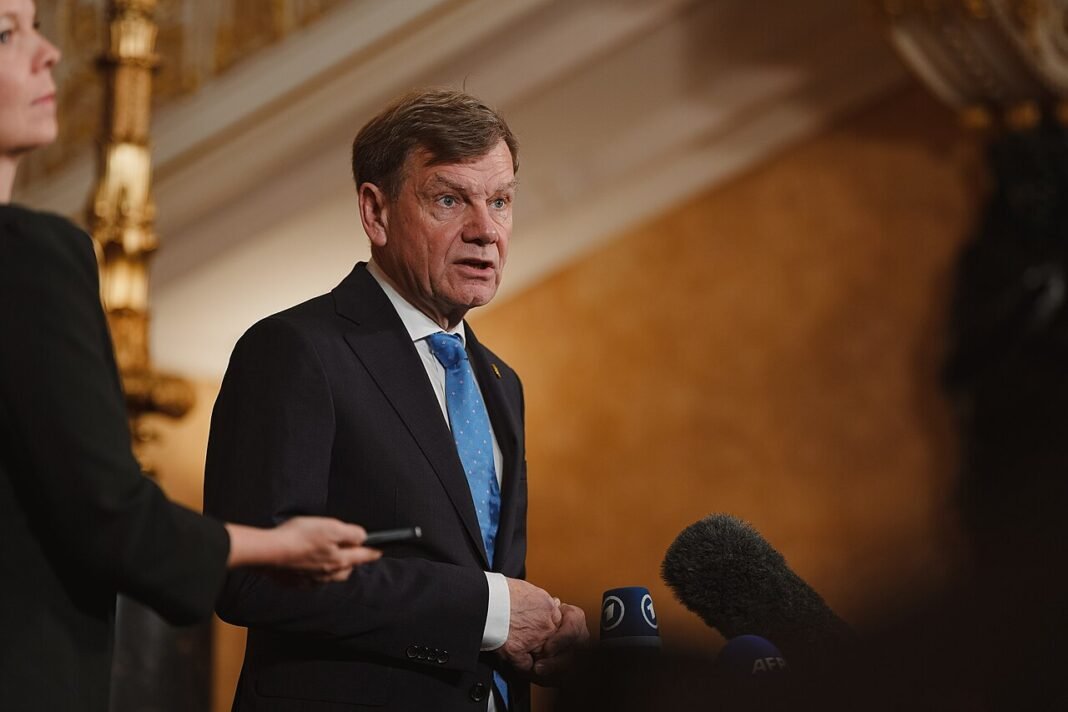
On 22 September 2026, Foreign Minister Johann Wadephul hosted a roundtable in New York to discuss joint approaches to support the incoming UN Secretary-General. The event, co-hosted by Singapore’s Foreign Minister the Honorable Vivian Balakrishnan and Ghana’s Foreign Minister the Honorable Samuel Okudzeto Ablakwa, gathered representatives from Finland, Fiji, Kazakhstan, Kenya, Mexico, Egypt, Brazil, and France. This gathering underscores Germany’s continued commitment to strengthening the United Nations, a body facing demonstrable challenges in achieving its core objectives within a period of global upheaval, as outlined in the statement. (Read the full statement.)

Background
The roundtable convened on the occasion of the high-level week of the 81st UN General Assembly. The statement indicates a recognition of the need for structural reforms across the UN system. The discussion was framed around the question of what the international community will need in 5 years’ time to ensure the UN’s continued relevance and effectiveness. The statement does not address the specific historical context of past UN reforms or criticisms of the organization’s structure.
Analysis
The participants’ shared commitment to a “stronger, more efficient and more capable” UN reflects a common understanding of the organization’s current limitations. The focus on “global upheaval” suggests a recognition of increased geopolitical tensions and the resultant strain on multilateral institutions. The emphasis on alliances between Member States from various regions and backgrounds highlights a pragmatic approach to achieving reform, acknowledging the need for broad support to overcome potential resistance. The choice between ambitious member-state-led reform and externally imposed change brought about by conflict, rivalry and crises was embraced by the ministers, indicating a preference for a collaborative, rather than confrontational, path forward. This suggests a recognition that the UN’s effectiveness hinges on the willingness of its members to work together.
Implications
The initiative carries implications for regional stability. The ministers’ agreement to support the new UN leadership in “reinvigorating the spirit of cooperation” suggests an attempt to mitigate potential conflicts and foster dialogue. The desire for a continued conversation among Permanent Representatives indicates an understanding that sustained engagement is crucial for driving meaningful reform. The event’s focus on trade and security issues – “pressing issues of our time” – implies a recognition of the UN’s role in addressing global challenges beyond purely political matters. The statement does not address potential impacts on Germany’s foreign policy priorities or its engagement with specific regional partnerships.
Outlook
Should the visit yield a renewed commitment to UN reform, the ministers’ concurrence regarding a continuation of the conversation among Permanent Representatives is a conditional step. If the ongoing dialogue proves productive, it could lead to concrete proposals for structural changes. Should the momentum generated by this roundtable be sustained, it may facilitate the inclusion of further interested partners in the reform process. The statement does not address the potential for disagreements among Member States or the challenges of implementing reforms across diverse institutional landscapes.
Conclusion
The gathering in New York demonstrates a recognized need for the UN to adapt to a changing global landscape. The question remains whether the collective determination to support the new Secretary-General’s agenda can translate into tangible reforms that address the organization’s core deficiencies.

.jpg)