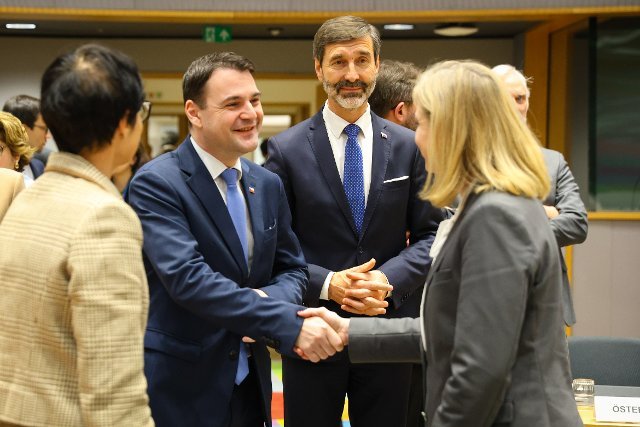
Details in a press release show that The most consequential element of the Ministry of Foreign Affairs’ press release, dated 16 March 2026, concerns Minister of Foreign Affairs Petr Macinka’s attendance at the Foreign Affairs Council (FAC) in Brussels on Monday, 16 March 2026. The statement indicates his involvement in discussions surrounding the ongoing war in Ukraine and the 20th package of sanctions against Russia. Specifically, the press release details a proposed international independent mission of energy experts to Ukraine, a move intended to address the disruption of oil supplies via the Druzhba pipeline. This disruption, the statement indicates, represents an apparent obstacle to the sanctions package, a situation involving Slovakia and Hungary, and Ukraine.
Background
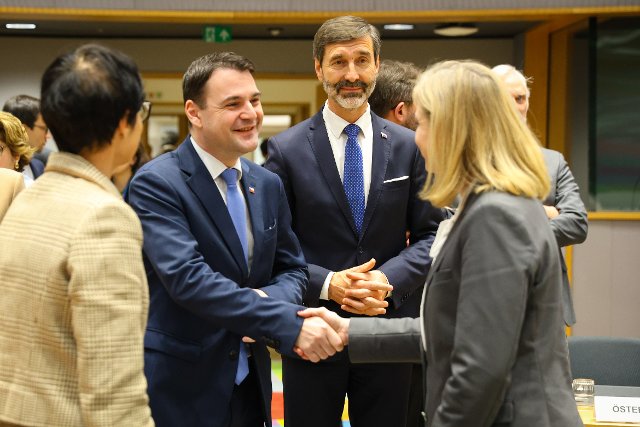
The press release specifies that the FAC meeting took place on 16 March 2026 at 17:00. Deputy Prime Minister and Minister of Foreign Affairs Petr Macinka participated in the meeting of the EU Foreign Affairs Council (FAC) in Brussels. The discussions included the ongoing war in Ukraine, the 20th package of sanctions against Russia, developments in the Middle East, and the situation in the European Union’s southern neighbourhood. Andrii Sybiha, Ukraine’s Minister of Foreign Affairs, joined the meeting via videoconference. The statement does not address the specific composition or mandate of the proposed independent mission.
Analysis
The Czech Republic’s proposal for an independent energy mission demonstrates a pragmatic approach to the sanctions impasse. The statement does not address the underlying political tensions between Slovakia, Hungary, and Ukraine regarding the Druzhba pipeline. The initiative highlights a willingness to actively mediate and potentially offer a technical solution to a politically charged issue. The inclusion of the “S3” format – talks with Austria and Slovakia – suggests a desire for broader regional coordination. The participation of India’s Minister of External Affairs Subrahmanyam Jaishankar indicates a strategic interest in diversifying energy sources and reinforcing relationships within the broader geopolitical landscape. The statement does not address the potential impact of this mission on broader EU sanctions policy.
Implications
The Czech Republic’s actions have implications for the broader EU response to the war in Ukraine. If the proposed mission yields a tangible resolution to the Druzhba pipeline issue, it could alleviate pressure on Slovakia and Hungary, potentially unlocking the 20th sanctions package. The “S3” format suggests a broader ambition to influence regional stability in the Western Balkans. The discussions with India’s Minister of External Affairs highlight the Czech Republic’s efforts to strengthen ties with key partners in the Indo-Pacific region. The statement does not address the potential for this initiative to influence trade relations or security cooperation.
Outlook
Should the visit yield a demonstrable assessment of the Druzhba pipeline’s condition and a commitment from Ukraine to facilitate repairs, the Czech Republic could position itself as a key facilitator within the EU. If the mission fails to produce a resolution, the Czech Republic’s willingness to act as a mediator will likely remain contingent on the continued disruption of oil supplies. The statement does not address the potential for further bilateral meetings or the coordination of future strategies with France and India.