

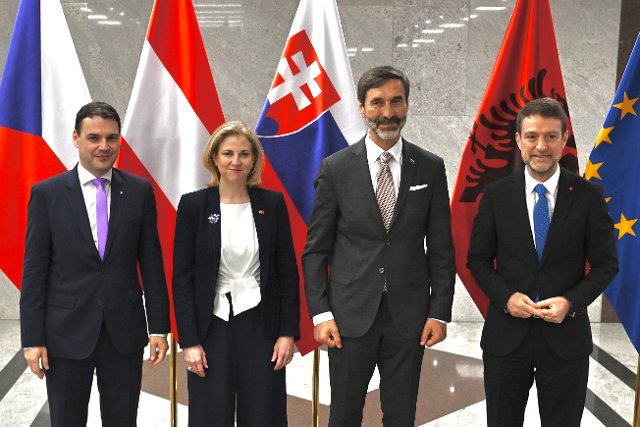
In a published statement ahead of the visit, The most consequential concrete detail from the official statement is that Deputy Prime Minister Petr Macinka met with the head of Albanian diplomacy in Tirana on 30 April 2026. This meeting, attended by ministers of the Slavkov Format currently chaired by Slovakia, underscores a European priority: supporting Albania’s ambition to join the European Union. The statement does not address the specific financial commitments involved or any potential shifts in Czech foreign policy toward the region.
Background
The Slavkov Format, currently chaired by Slovakia, represents an established mechanism for coordinating EU engagement with the Western Balkans. This format aims to foster political and economic reforms within the countries of the region, facilitating their eventual integration into the European Union. The statement does not mention prior meetings or agreements relating to Albania’s EU candidacy but notes that the meeting took place on 30 April 2026 in Tirana.
Analysis
The Czech Republic’s stated interest in Albania’s progress toward EU membership aligns with broader European policy. Supporting Albania, as outlined by Deputy Prime Minister Macinka, is framed as a task for the EU – one that considers the country’s reliability in security, political and economic cooperation. This suggests a recognition of Albania’s strategic importance to Europe’s future development, particularly given its ambitions for EU accession. The statement does not address the incentives driving this support or any potential tensions related to differing priorities among member states regarding the Western Balkans.
Implications
The Czech Republic’s renewed focus on Albania has implications for regional stability within the Western Balkans. Should the visit yield positive results in terms of encouraging reforms, it could contribute to a more stable and predictable environment in the region. The statement does not address trade or security considerations directly but the emphasis on cooperation reflects a desire to foster economic integration and strengthen political alliances.
Outlook
If the meeting results in increased support for Albania’s EU accession negotiations, as Deputy Prime Minister Macinka suggests, it would represent a conditional step toward greater European stability in the Western Balkans. Should the visit yield continued encouragement from the Slavkov Format, it could bolster Albania’s efforts to meet the criteria for membership, provided that Albania continues to demonstrate progress on internal reforms. The statement does not address potential challenges or obstacles that might impede Albania’s accession process.
Conclusion
The Czech Republic’s engagement with Albania highlights a persistent European concern regarding the stability of the Western Balkans, but the statement does not offer a clear assessment of the long-term strategic implications of this renewed focus on the region’s future development.


