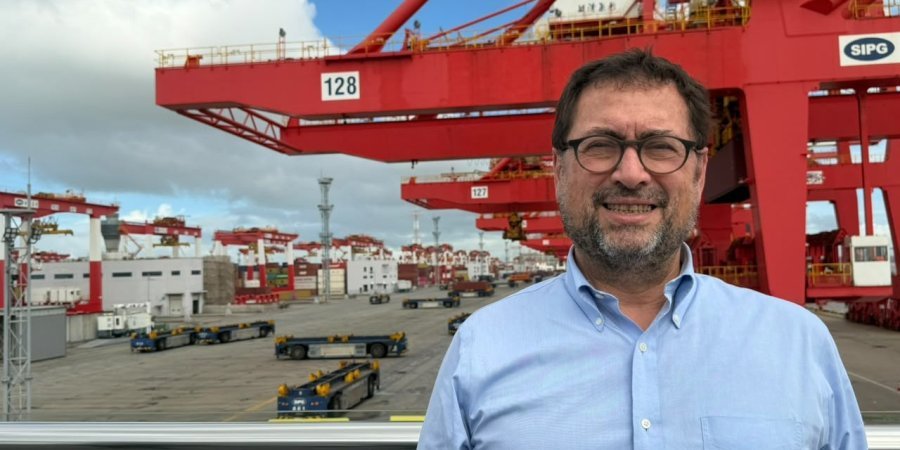
Reporting in a government statement, Chilean Foreign Minister Francisco Pérez Mackenna visited the Port of Shanghai on Saturday, a terminal responsible for nearly half of the country’s exports to China. This event matters because it underscores Chile’s increasing dependence on this single gateway for its largest trading relationship—a cornerstone of the nation’s economic strategy.
Background
The visit, accompanied by Ambassador Alfonso Silva, involved a tour of the world’s largest container port. This facility moves more than 55 million TEU annually, representing the highest volume of container traffic globally. The statement does not mention any prior meetings or agreements that led to this engagement; however, it references a 20-year-old Free Trade Agreement between Chile and China.
The Port of Shanghai serves as the primary conduit for Chilean exports including copper, cherries, cellulose, and salmon – products representing a significant portion of Chile’s bilateral trade. The statement does not address the specific volumes or value of these goods flowing through the port.
Analysis
The visit signals a deliberate strategic alignment with China, Chile’s dominant trading partner. This relationship accounts for over a third of Chile’s total international trade and has seen nearly 15% growth in the past year, reaching US$67.100 billion. The statement emphasizes “trust” built through this trade, but it does not detail any specific initiatives or negotiations driving this growth.
The concentration of Chilean exports—nearly half—through a single port creates an inherent vulnerability. This reliance highlights a potential point of friction should geopolitical tensions escalate between China and Chile, or if the Port of Shanghai experiences operational disruptions. The statement does not address these risks, nor does it explore alternative trade routes or diversification strategies.
Implications
For policymakers, Pérez Mackenna’s visit reinforces the need to proactively manage this concentrated trade relationship. Should China’s demand for Chilean exports decline, or if access to the port is disrupted, Chile’s economy would face significant consequences. The statement does not address contingency planning for such scenarios.
Regionally, the deepening ties between Chile and China strengthen Beijing’s influence in South America – a trend that could impact regional trade dynamics and potentially alter security alignments. Furthermore, the flow of Chilean copper through Shanghai is critical to global supply chains; disruptions would have far-reaching economic effects.
Outlook
If the current trajectory of bilateral trade continues, Chile will likely deepen its integration with China’s economy. Should China’s economic growth slow significantly – a possibility not addressed in the statement—Chile’s reliance on this single market could become increasingly problematic.
Conclusion
The visit to Shanghai, while showcasing a robust trade partnership, ultimately leaves unanswered questions about Chile’s long-term strategy for managing its most important economic relationship. The focus remains firmly on volume and growth, without a clear articulation of risk mitigation or alternative pathways.