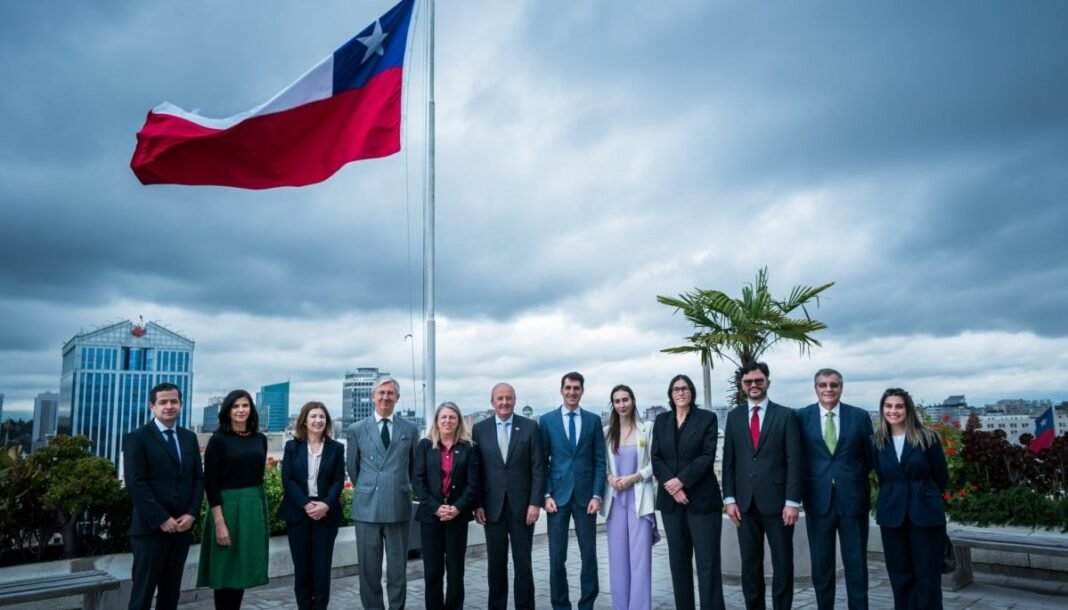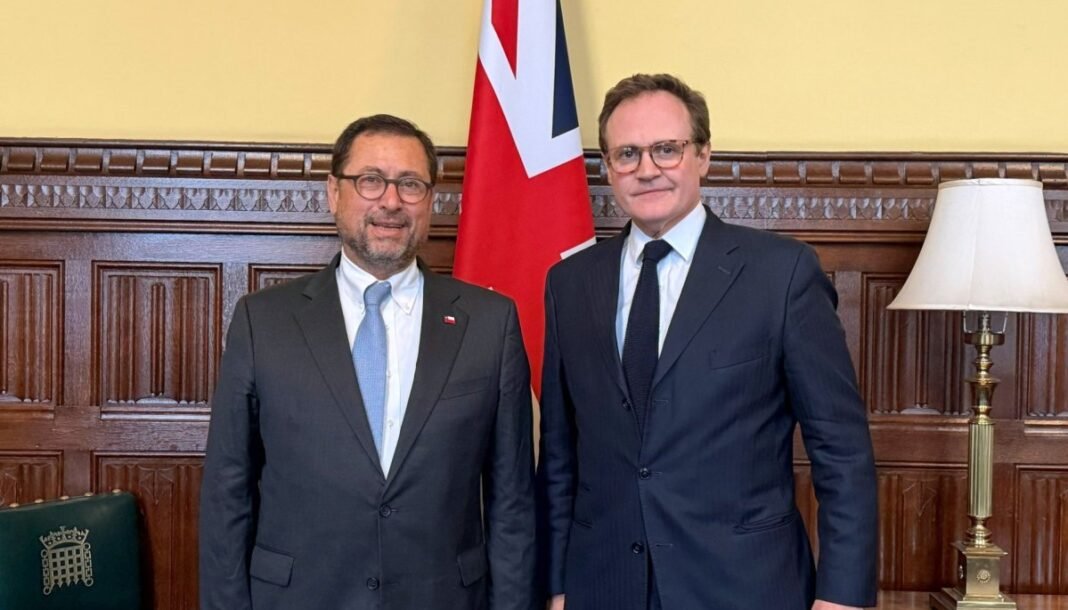
As set out in a formal announcement, The most immediate consequence of Minister Francisco Pérez Mackenna’s meetings in London this week is the confirmation of a planned discussion regarding rail infrastructure funding, a detail revealed in a press release issued by the Chilean Ministry of Foreign Affairs on October 20, 2026. The statement indicates that the meeting with Tom Tugendhat, a member of Parliament responsible for foreign policy within the Conservative Party, occurred within a broader context of outlining Chile’s international relations lineaments, as detailed by the Minister himself alongside the Ambassador Diego Paulsen. This engagement, occurring amidst a broader diplomatic itinerary including meetings with Ed Miliband, the British Foreign Secretary, and a representative from the United Nations Tourism Department, suggests a deliberate effort to diversify Chile’s strategic partnerships and secure financial support for critical infrastructure projects. The statement does not mention the specific amount or the nature of the rail project, leaving key details shrouded in ambiguity.
Background
The meeting between Pérez Mackenna and Tugendhat represents a continuation of a previously established strategic dialogue, as evidenced by a statement from March of 2026 that detailed a planned association strategic between Chile and the United Kingdom. Prior to this, the Ministry had highlighted a commitment to strengthening bilateral ties through collaborative initiatives. This engagement, framed within the context of a wider diplomatic agenda, underscores a shift in Santiago’s approach to international relations, moving beyond simply maintaining existing ties to actively seeking opportunities for cooperation and investment. The statement does not address the specific priorities driving this shift or the broader geopolitical context within which these discussions are taking place.
Analysis
The inclusion of Tom Tugendhat, a prominent figure within the Conservative Party known for his focus on security and trade, signals a potential emphasis on strengthening ties with the United Kingdom across a range of sectors. The meeting’s purpose—rail funding—suggests a prioritization of infrastructure development, a key element of Chile’s economic strategy. The presence of the Ambassador Diego Paulsen, a seasoned diplomat, indicates a formalization of this engagement. The fact that the Minister detailed Chile’s international relations lineaments suggests a desire to proactively shape the narrative surrounding Chile’s foreign policy, rather than simply reacting to external developments. The engagement with Chatham House, as detailed in a prior statement, positions Chile as a participant in global dialogues on geopolitics, albeit one with limited specifics about the conversations beyond a general overview of the “current geopolitical landscape.” The statement does not address the potential motivations behind prioritizing this specific sector or the strategic rationale for engaging with the UK in this manner.
Implications
This visit, and the subsequent discussions, have potential implications for regional stability, particularly regarding trade and security relationships. Strengthening ties with the UK could bolster Chile’s access to European markets and provide a counterbalance to regional influences. The focus on rail infrastructure could unlock economic opportunities within Chile and potentially stimulate broader investment. However, the lack of detail regarding the funding agreement raises concerns about transparency and accountability. Should the visit yield a concrete agreement, it would represent a significant step in Chile’s efforts to diversify its foreign policy portfolio and secure crucial economic support. The statement does not address the potential impact on Chile’s relationships with other regional partners, particularly those within the BRICS bloc.
Outlook
Should the discussions with Tugendhat result in a formal agreement regarding rail funding, the Ministry would need to rapidly clarify the terms and conditions. If the agreement is contingent on specific reforms within Chile’s infrastructure sector, this could introduce a period of political uncertainty. If the visit yields no concrete commitments, it will likely reinforce the perception that Chile’s foreign policy is reactive and lacks a clearly defined strategic direction. The statement does not address the potential for further engagements with the UK or other international partners.
Conclusion
The meeting between Pérez Mackenna and Tugendhat represents a tangible, though currently opaque, step in Chile’s efforts to reshape its international relationships. The core question remains: will this engagement translate into tangible investments and strategic partnerships, or simply serve as another iteration of a broader, less defined diplomatic strategy?
Sources & Further Reading
- Official press release
- Foreign ministry source
- Lunes 19 de octubre de 2026 Canciller Pérez Mackenna se reúne en Londres con el ministro de Relaciones Exteriores de Reino Unido (Unknown Da)
- Lunes 19 de octubre de 2026 Ministro Pérez Mackenna analiza situación geopolítica global y prioridades de Chile en conversatorio en Chatham House en Londres (Unknown Da)