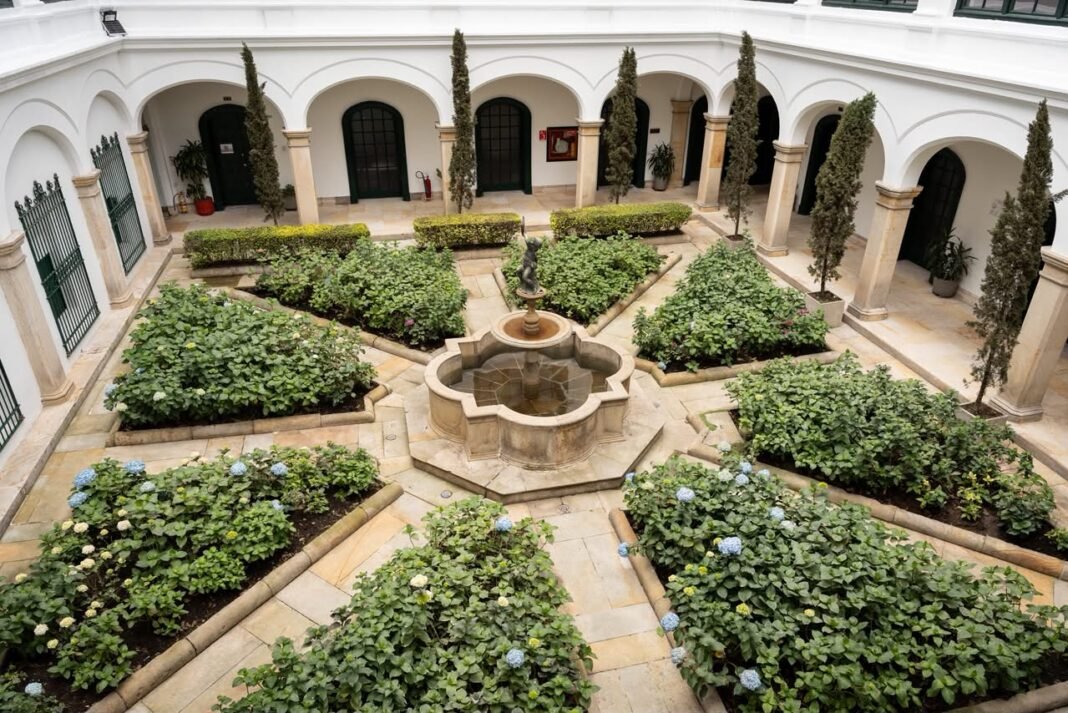
In a published statement ahead of the visit, Bogotá D.C., 7 de octubre de 2026. The interior courtyard located on the first floor of the Palacio de San Carlos, situated behind the main vestibule staircase, has been historically and traditionally recognized as the “Patio de los Novios” since 1992. In 2023, during the administration of then-Minister of Foreign Affairs Álvaro Leyva, the name was changed from “Patio Quintín Lame,” an indigenous leader. This decision, announced by the Ministry of Foreign Affairs, initiates a process to restore the courtyard’s original historical designation, aligning with the institution’s responsibility to safeguard and transmit Colombia’s historical and architectural heritage to future generations.

Background
The Palacio de San Carlos, serving as the official headquarters of the Colombian Ministry of Foreign Affairs and a prominent landmark of national historical and architectural significance, has long been associated with the “Patio de los Novios.” The renaming in 2023, prompted by the administration of Álvaro Leyva, represented a deliberate shift in recognizing the courtyard’s historical significance. The statement does not mention the specific reasons for the initial renaming, beyond identifying Quintín Lame as the leader. Prior to 2023, the courtyard operated under the name “Patio Quintín Lame,” a designation that the ministry now seeks to reverse. This suggests a strategic effort to reinforce the Ministry’s connection to its historical roots and the broader narrative of Colombia’s republican history. The ministry’s actions are framed within a broader context of protecting and transmitting cultural values to subsequent generations.
Analysis
The Ministry’s decision to restore the “Patio de los Novios” name is fundamentally an assertion of institutional memory and a defense of national heritage. The statement does not address the potential political implications of this action, but it clearly indicates a prioritization of historical authenticity within the Ministry of Foreign Affairs. The move reflects a desire to solidify the Ministry’s identity as a custodian of Colombia’s historical narrative, aligning with a broader trend of national governments seeking to reinforce their historical legitimacy. The decision also underscores a commitment to preserving the symbols of the country’s institutional development. If implemented as described, this action represents a subtle but significant step in managing the Ministry’s public image and demonstrating its dedication to protecting Colombia’s cultural legacy. This suggests an effort to counter any potential criticisms regarding the Ministry’s historical understanding or its role in shaping national identity.
Implications
The restoration of the “Patio de los Novios” name carries implications beyond the immediate realm of the Ministry of Foreign Affairs. It signals a commitment to protecting Colombia’s architectural heritage, a particularly relevant consideration given the country’s ongoing efforts to promote tourism and attract foreign investment. The move could also have implications for other institutions seeking to reconcile their historical narratives with evolving national identities. Furthermore, the action reflects a broader trend of national governments asserting their sovereignty in cultural matters, a key component of diplomatic relations within the region. The statement does not address whether this decision will influence the naming conventions of other national monuments or historical sites.
Outlook
Should the Ministry continue to prioritize the preservation of historical nomenclature, it could set a precedent for similar actions across other government agencies. If the Ministry successfully defends its position, it may be able to leverage this renewed focus on historical memory to strengthen its diplomatic efforts, particularly in areas related to cultural heritage protection. If the Ministry faces resistance from those advocating for a more inclusive understanding of national history, it could lead to further tensions surrounding the interpretation of Colombia’s past. The Ministry’s actions will likely be scrutinized by civil society groups and academic institutions interested in the evolution of Colombia’s historical narratives.