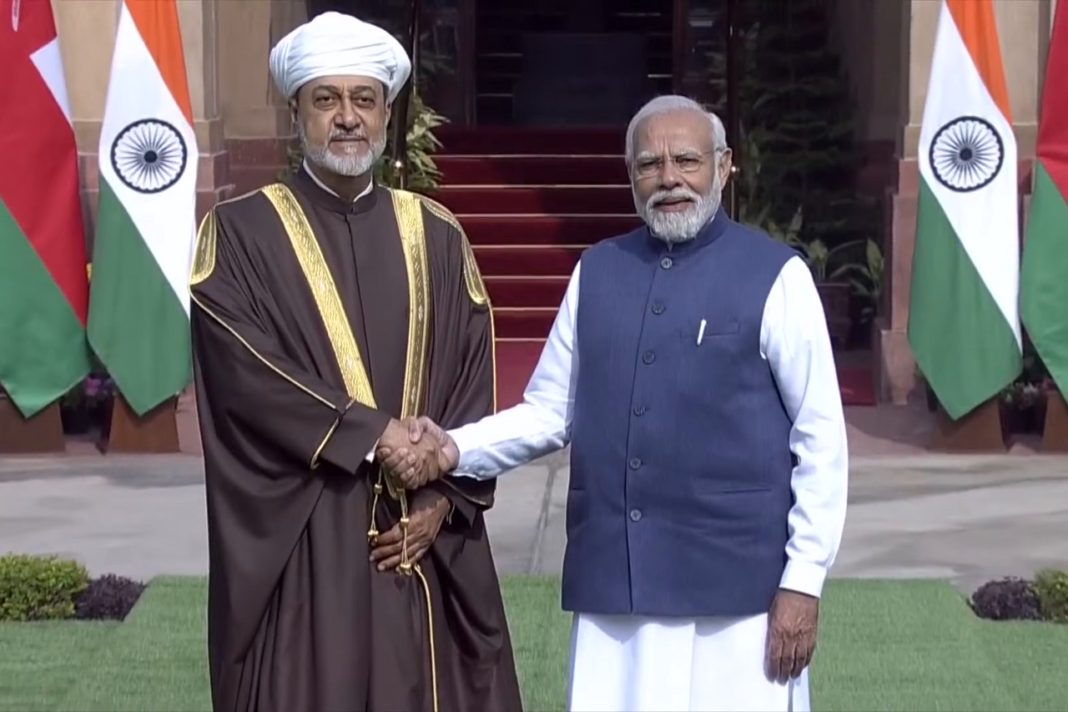
The official readout frames the trip as His Majesty Sultan Haitham bin Tarik’s state visit to Kazakhstan on 7 October 2026, documented in video highlights released by the Ministry of Foreign Affairs, represents a significant, if understated, step in Oman’s evolving foreign policy. The visit, focused on bolstering existing ties and exploring new avenues of cooperation, reflects a broader trend of Oman engaging with Central Asian nations – a region previously largely overlooked – as geopolitical pressures reshape the Middle East. The fact that the Ministry released video highlights, accessible via YouTube with English subtitles, suggests a deliberate effort to frame the visit positively and demonstrate Oman’s commitment to strengthening relationships within the region. This engagement is notable given Oman’s longstanding alliances with Saudi Arabia and the UAE, and the ongoing diplomatic activity surrounding regional security challenges.

Background
The statement does not address the historical context of Oman’s foreign policy. However, prior statements by the Ministry demonstrate a consistent focus on diversification and fostering partnerships. Specifically, the 19 September 2026 state visit to Botswana and Angola highlighted Oman’s efforts to broaden its diplomatic horizons. Furthermore, the 5 October 2026 statement on Oman and Kazakhstan described a “journey of friendship and cooperation” built on a “long history,” indicating a pre-existing relationship, though one not previously prominently featured in official statements. The NCCHT’s continued “Aman 2 campaign,” as detailed in the 7 October 2026 infographic, suggests a sustained commitment to combating human trafficking, a theme that, while not explicitly mentioned in the visit’s context, reinforces Oman’s broader security priorities. The Ministry’s release of the video highlights demonstrates a shift toward proactive public engagement regarding diplomatic activity.
Analysis
The visit’s primary objective appears to be solidifying Oman’s position as a reliable partner within a region experiencing increased volatility. Kazakhstan’s strategic location – bordering Russia and China – positions it as a crucial node in evolving trade routes and geopolitical dynamics. This visit signals a calculated attempt to leverage Kazakhstan’s role in these networks. Oman’s engagement with Kazakhstan, as outlined in the 18 September 2026 joint statement with Angola, demonstrates a deliberate strategy to diversify partnerships beyond traditional Gulf alliances. The Ministry’s release of the video highlights, coupled with the phone call with the Saudi Arabian counterpart on 9 October 2026, suggests a desire to proactively manage relations with key regional actors. The visit’s focus on “rail funding” – as implied by the link to YouTube – is a key element of this strategy, potentially aiming to secure access to Central Asian markets and transport corridors. The visit’s timing, occurring amidst ongoing diplomatic consultations with Nepal and Saudi Arabia, further indicates a multi-faceted approach to regional engagement.
Implications
The state visit carries implications for regional stability, particularly concerning the evolving dynamics between Russia, China, and the Gulf states. Oman’s deepening ties with Kazakhstan could provide a platform for mediating disputes and fostering dialogue within the Central Asian region. Should the visit yield further agreements on trade and infrastructure, it could bolster Kazakhstan’s economic diversification efforts. The strengthening of relations with Saudi Arabia, as evidenced by the phone call, is crucial given Riyadh’s influence within the broader Gulf security architecture. This engagement also has implications for Oman’s trade relations, potentially opening up new markets and diversifying its economic base. The Ministry’s continued efforts to combat human trafficking, a recurring theme in its statements, demonstrate a commitment to regional security and stability.
Outlook
If the visit yields agreements on technical cooperation and joint projects, particularly within the transport sector, Oman’s engagement with Kazakhstan could become a more formalized partnership. Should the visit strengthen Oman’s position as a neutral mediator in regional disputes, it could enhance the Sultanate’s diplomatic leverage. However, given the existing geopolitical tensions, the visit’s success hinges on Oman’s ability to maintain neutral footing and avoid aligning itself with any particular bloc. The Ministry’s continued efforts to combat human trafficking, as demonstrated in the NCCHT’s ongoing campaign, will likely remain a key component of Oman’s foreign policy strategy.