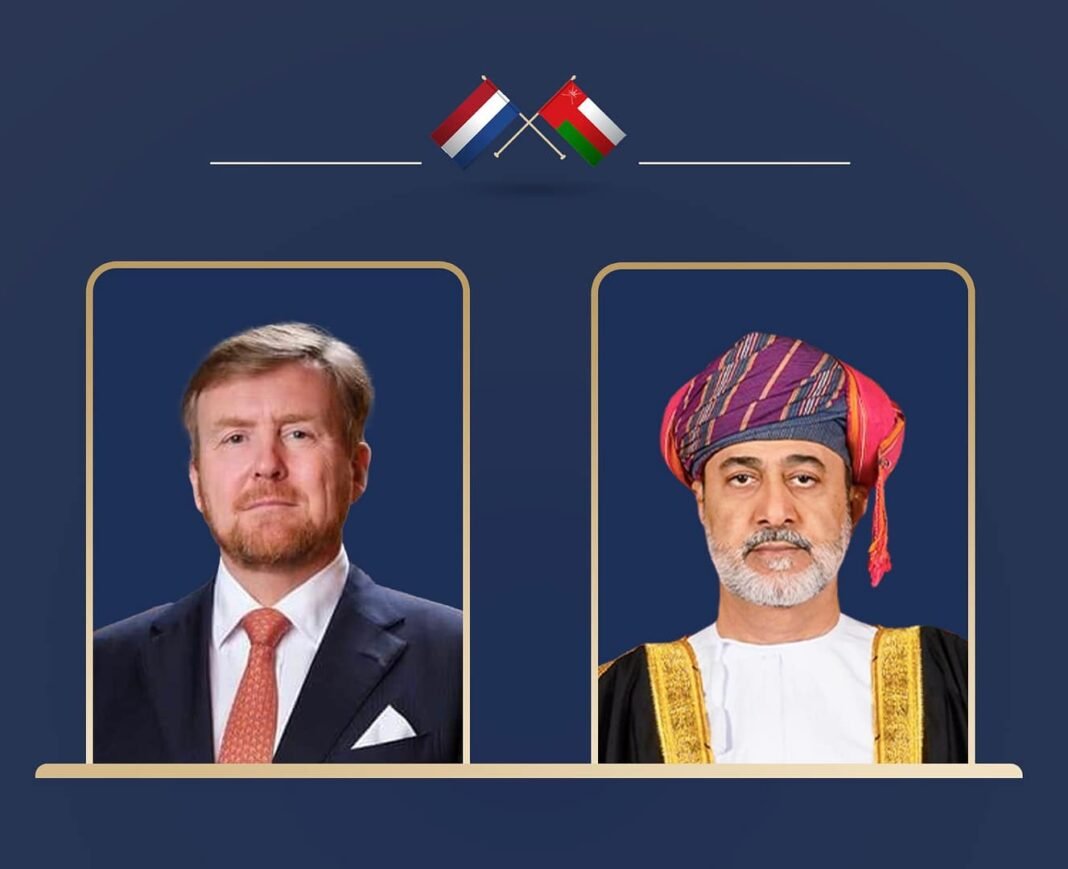
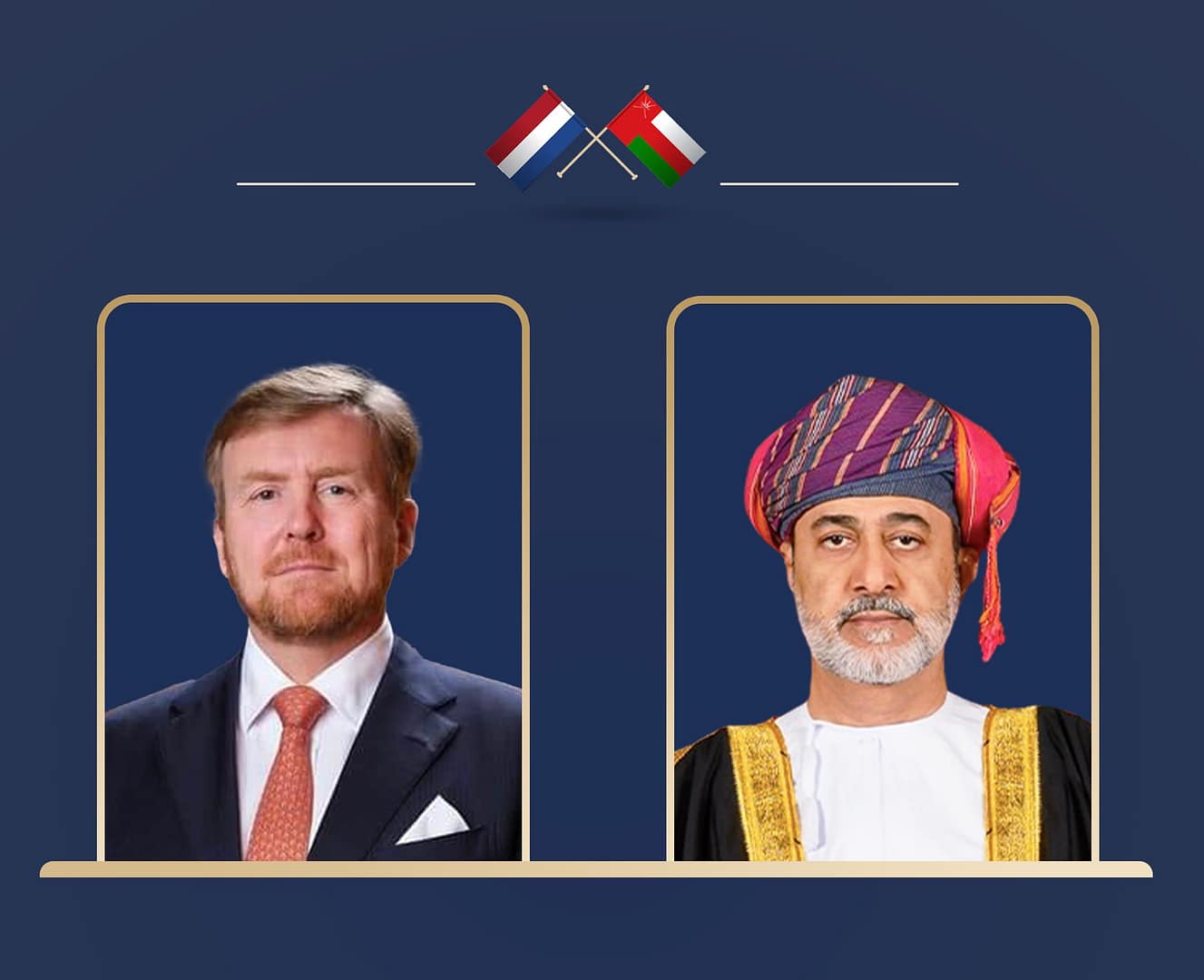
A ministry communiqué confirms that His Majesty Sultan Haitham bin Tarik held a telephone call with King Willem-Alexander of the Kingdom of the Netherlands on 7 October 2026. This communication, focused on cooperation between the two countries and ways to develop it in support of their shared interests, matters because it represents a continuation of Oman’s diplomatic efforts amidst heightened regional instability.
Background
Previous statements by the Ministry of Foreign Affairs indicate a focus on restoring freedom of navigation in the Strait of Hormuz and the Red Sea region (Sat, 19 Se). The Ministry’s statement of 5 October 2026 regarding Oman and Kazakhstan highlights a journey of friendship and cooperation, suggesting a sustained commitment to bilateral relations across multiple sectors (Mon, 05 Oc). The luncheon held for His Majesty Sultan Haitham bin Tarik by the President of Kazakhstan further demonstrates the prioritization of this relationship (Tue, 06 Oc). These prior engagements demonstrate an established pattern of engagement with key regional partners.
Analysis
The phone call’s stated purpose – discussing cooperation and regional developments – provides limited insight into the specific concerns addressed. The reference to “reducing tensions and contain crises through dialogue and diplomatic and political means” reflects a common thread in recent Omani diplomatic activity, particularly in the context of escalating instability in the Red Sea region. The discussion of “regional and international developments and issues” suggests a broad remit, encompassing potentially sensitive matters not explicitly detailed. The statement does not address the geopolitical context of Oman’s strategic location, nor does it explain the rationale for prioritizing this specific dialogue with the Netherlands. The lack of detail surrounding the “shared interests” being discussed raises questions about the precise nature of the relationship and Oman’s role in shaping regional dynamics.
Implications
The phone call’s occurrence signals Oman’s continued involvement in international diplomatic efforts, potentially aimed at mitigating regional crises. Should the visit yield further discussions on de-escalation, it would represent a bolstering of Oman’s role as a facilitator of dialogue. The focus on “reducing tensions” suggests a prioritization of stability, particularly given Oman’s strategic location and its longstanding commitment to peaceful resolution of conflicts. The call does not directly impact trade or security arrangements, but it reinforces Oman’s commitment to regional stability, a key element of its foreign policy.
Outlook
If the visit yields further discussions on regional tensions, Oman will likely continue to act as a mediator, leveraging its relationships with key regional actors. Should the Netherlands remain a key partner in these efforts, this could strengthen Oman’s position as a stabilizing force in the region. The phone call does not, however, address the underlying causes of regional instability, nor does it offer any concrete solutions.
Conclusion
The telephone call between His Majesty Sultan Haitham bin Tarik and King Willem-Alexander represents a continuation of Oman’s diplomatic engagement, but the specifics of the discussion remain shielded. The conversation highlights a persistent need for dialogue and diplomacy in a volatile geopolitical landscape – a priority for Oman, but one that requires sustained attention and broader strategic initiatives.