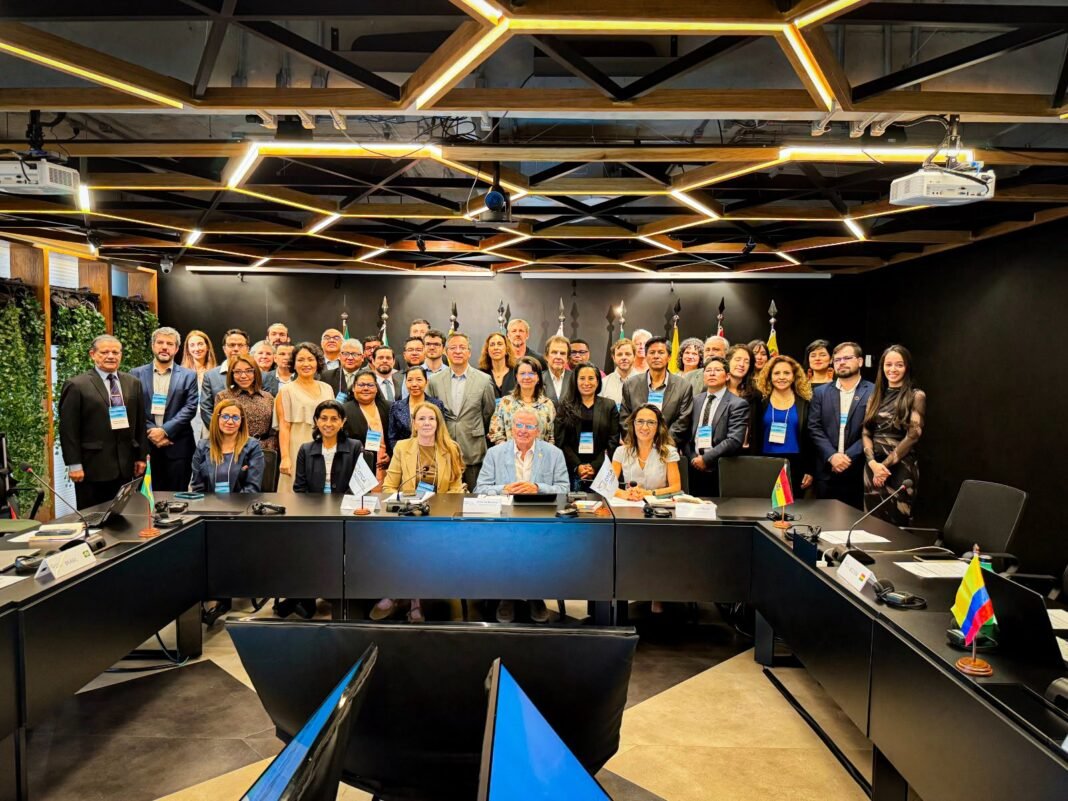
In a published statement ahead of the visit, Brasilia, 8 de octubre de 2026 – Colombia played a central role in securing a landmark agreement between the member nations of the Organization of the Amazon Cooperation Treaty (OTCA) during the second Ordinary Meeting of the Special Environmental and Climate Commission (CEMAC). The agreement, finalized following a first in-person session, establishes a shared pathway for addressing the region’s shared climatic and environmental challenges. This represents a significant step towards coordinated action, as highlighted by OTCA Secretary General Martín von Hildebrand, who noted the need for “constant thinking in solutions,” due to the “dynamic” nature of the situation and the requirement for “an integrated approach.”

Background
The OTCA, established in 1995, is a regional intergovernmental organization dedicated to promoting cooperation among Amazonian countries. The CEMAC, established in 2015, is a specific commission within the OTCA focused on environmental and climate issues. This meeting marked the first in-person session of the CEMAC, a key development signaled by Colombia’s coordination of the Subcommission on Climate, a critical component of the broader CEMAC structure. The statement does not mention the specific number of member states within the OTCA.
Analysis
The agreement’s success hinges on the shared recognition of the urgency posed by Amazonian climate challenges. Stakeholder incentives are clearly aligned: Colombia, as the coordinating nation for the Subcommission on Climate, seeks to bolster regional resilience and protect biodiversity. The agreement’s focus on adaptation, risk management, and coordinated responses to extreme hydrometeorological events reflects a pragmatic assessment of the region’s vulnerabilities. The statement does not address the potential financial implications of these coordinated efforts. Notably, the agreement’s emphasis on data sharing and hydrological modeling—supported by the Instituto Amazónico de Investigaciones Científicas SINCHI— demonstrates a commitment to evidence-based decision-making and collaborative research. A key tension lies in balancing national priorities with the need for a unified regional strategy. The inclusion of the “Ríos Voladores” seminar outcomes underscores the recognition that inaction risks crossing critical thresholds.
Implications
For policymakers, the agreement establishes a framework for prioritizing investments in climate adaptation and biodiversity conservation within Colombia and across the Amazon region. The agreement’s emphasis on strengthening regional connectivity and promoting sustainable water management has significant implications for trade and security, potentially reducing the risk of resource-related conflicts. The agreement’s focus on a coordinated response to hydroclimatic events could strengthen Colombia’s capacity to manage natural disasters and mitigate their economic and social impacts. The agreement’s success relies on Colombia’s ability to translate these commitments into concrete policies and funding allocations.
Outlook
Should the visit yield continued engagement from the OTCA Secretariat, Colombia will likely pursue further technical assistance and knowledge sharing. If the Subcommission’s work progresses effectively, the agreement could lead to the development of a regional climate risk assessment framework. If the implementation of the agreed-upon actions is hampered by national priorities or funding constraints, the effectiveness of the agreement will be compromised. The statement does not address the potential for future negotiations on broader regional cooperation initiatives.
Conclusion
The agreement represents a significant, albeit tentative, step towards coordinated action within the Amazon basin. The question remains: will Colombia, and the broader OTCA, translate this shared ambition into tangible results, or will the inherent complexities of regional governance ultimately undermine the agreement’s potential?