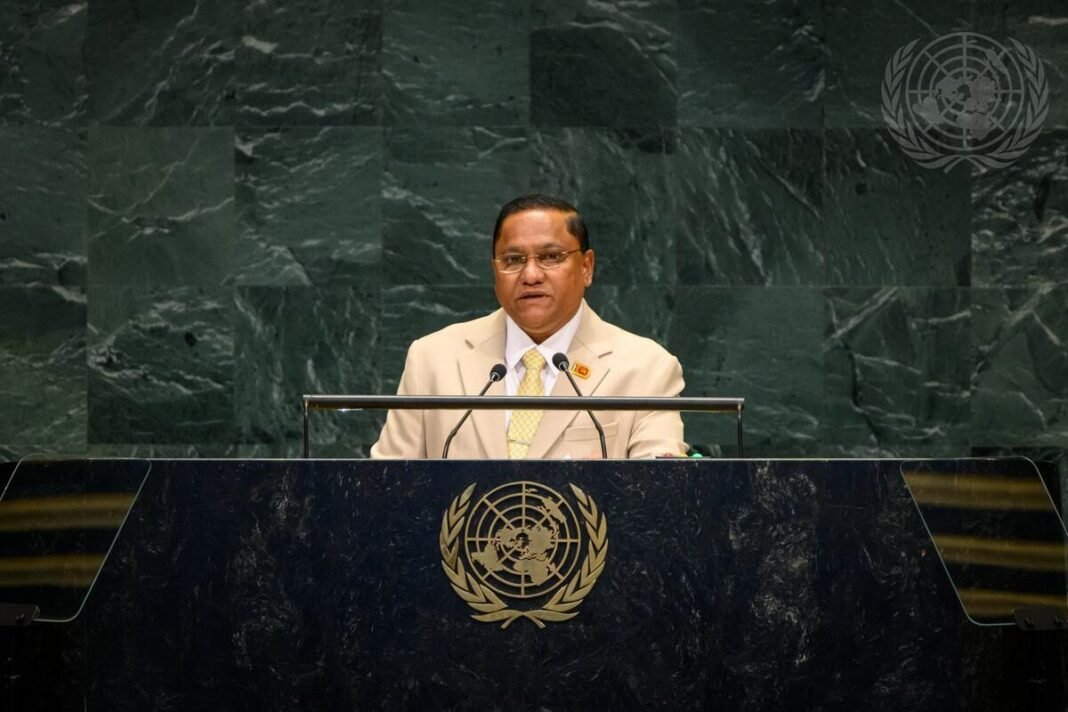
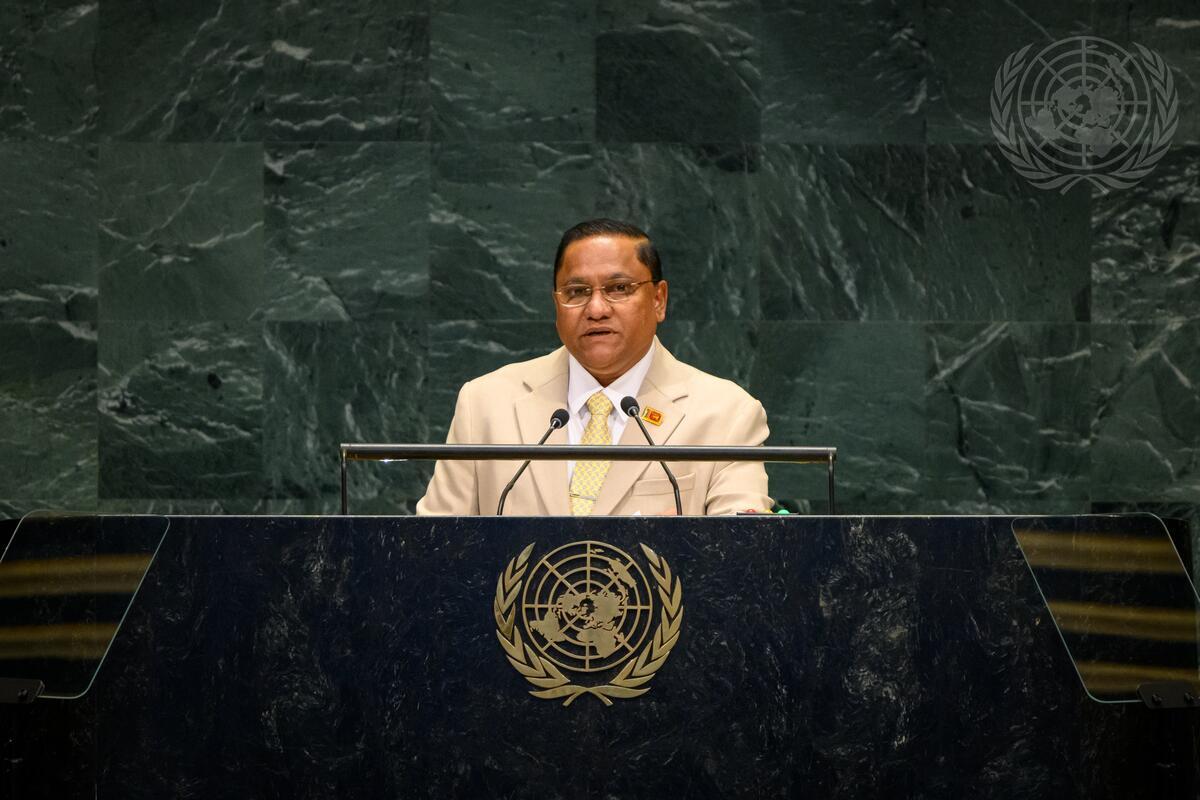
The foreign ministry readout describes The 81st Session of the United Nations General Assembly concluded with Foreign Minister Vijitha Herath participating in key discussions, a testament to Sri Lanka’s continued engagement with the international community. The statement, published on 1 October 2026, details the core objectives of Herath’s attendance: to reaffirm Sri Lanka’s commitment to multilateralism, to secure international assistance for ongoing reconstruction efforts, and to advocate for critical global issues, including disarmament and sustainable development. The fact that Herath addressed the High Level Segment, outlining the devastation caused by Cyclone Ditwah and the subsequent recovery process, underlines the immediate challenges facing the nation and the urgent need for external support. This support, the minister explicitly stated, should include “fairer debt rules and development financing for middle-income countries,” a direct appeal to international creditors.
Background
The Minister’s participation in the UN General Assembly follows a series of meetings and engagements, including a visit to the United Arab Emirates on 2-3 September 2026, as outlined in a separate Ministry News release on 4 September 2026. This prior engagement, focused on strengthening bilateral relations with the UAE, demonstrates a broader strategy of diplomatic outreach aimed at securing diverse sources of support. The 81st Session of the UN General Assembly itself represents a significant multilateral forum for Sri Lanka to articulate its priorities and engage with world leaders on a range of pressing global issues. The statement does not mention any specific pre-existing agreements or commitments that influenced Herath’s approach.
Analysis
The Minister’s messaging reveals a strategic prioritization of immediate recovery needs – particularly in the wake of Cyclone Ditwah – alongside longer-term concerns regarding debt sustainability and the need for fairer international financial practices. The explicit call for “fairer debt rules” suggests a recognition of the significant challenges posed by Sri Lanka’s existing debt burden. The repeated emphasis on sustainable development goals, specifically SDG 16 – promoting peace, justice and strong institutions – highlights a commitment to addressing the root causes of instability within the country. The statement reveals a calculated effort to frame Sri Lanka’s situation as a “middle-income country” deserving of tailored development financing. The fact that the statement does not address Sri Lanka’s debt figures or the specific terms of any potential debt restructuring negotiations indicates a cautious approach to publicizing the extent of the country’s financial difficulties.
Implications
The Foreign Minister’s attendance carries implications for Sri Lanka’s diplomatic strategy and its relationships with key international actors. The direct appeal for debt reform could influence discussions with international financial institutions. The renewed emphasis on disarmament, rooted in Sri Lanka’s historical commitment to the NPT, suggests a continued role for the country in advocating for global security. Should the visit yield increased international engagement, it could provide a crucial boost to Sri Lanka’s economic recovery and bolster its standing within the international community. The statement does not address the potential impact of increased international scrutiny on Sri Lanka’s governance reforms.
Outlook
If the visit yields a commitment from international partners to explore fairer debt rules, Sri Lanka’s macroeconomic stability could be significantly strengthened. Should the discussions with the Secretary-General focus on technical assistance for digitalization and AI development, it could accelerate Sri Lanka’s transition to a knowledge-based economy. The Minister’s continued engagement with the UN on issues of maritime governance – specifically the BBNJ Agreement – suggests a commitment to safeguarding Sri Lanka’s oceanic resources. The statement does not address the potential for further conflict in West Asia and its impact on Sri Lanka’s foreign policy priorities.
Sources & Further Reading
- Official press release
- Foreign ministry source
- Foreign Minister Vijitha Herath to lead Sri Lanka delegation to 81st Session of the UN General Assembly (2026-09-25)
- Minister Vijitha Herath Concludes Visit to Dubai, United Arab Emirates (2026-09-04)
- Minister Vijitha Herath Concludes Visit to Dubai, United Arab Emirates (2026-09-04)