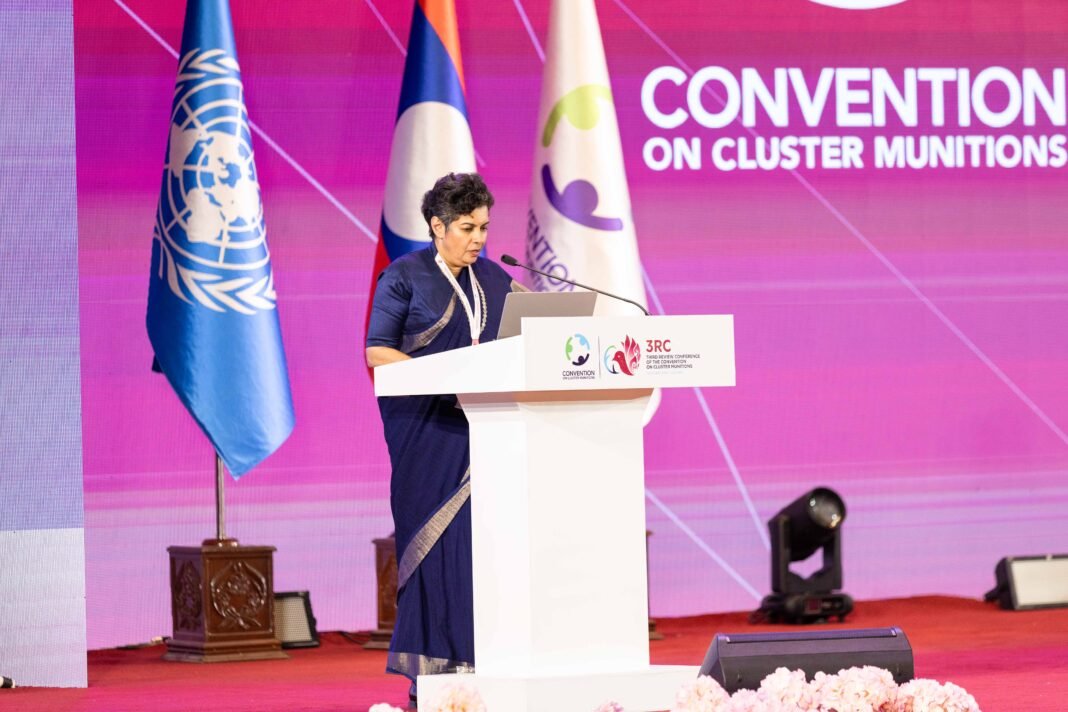
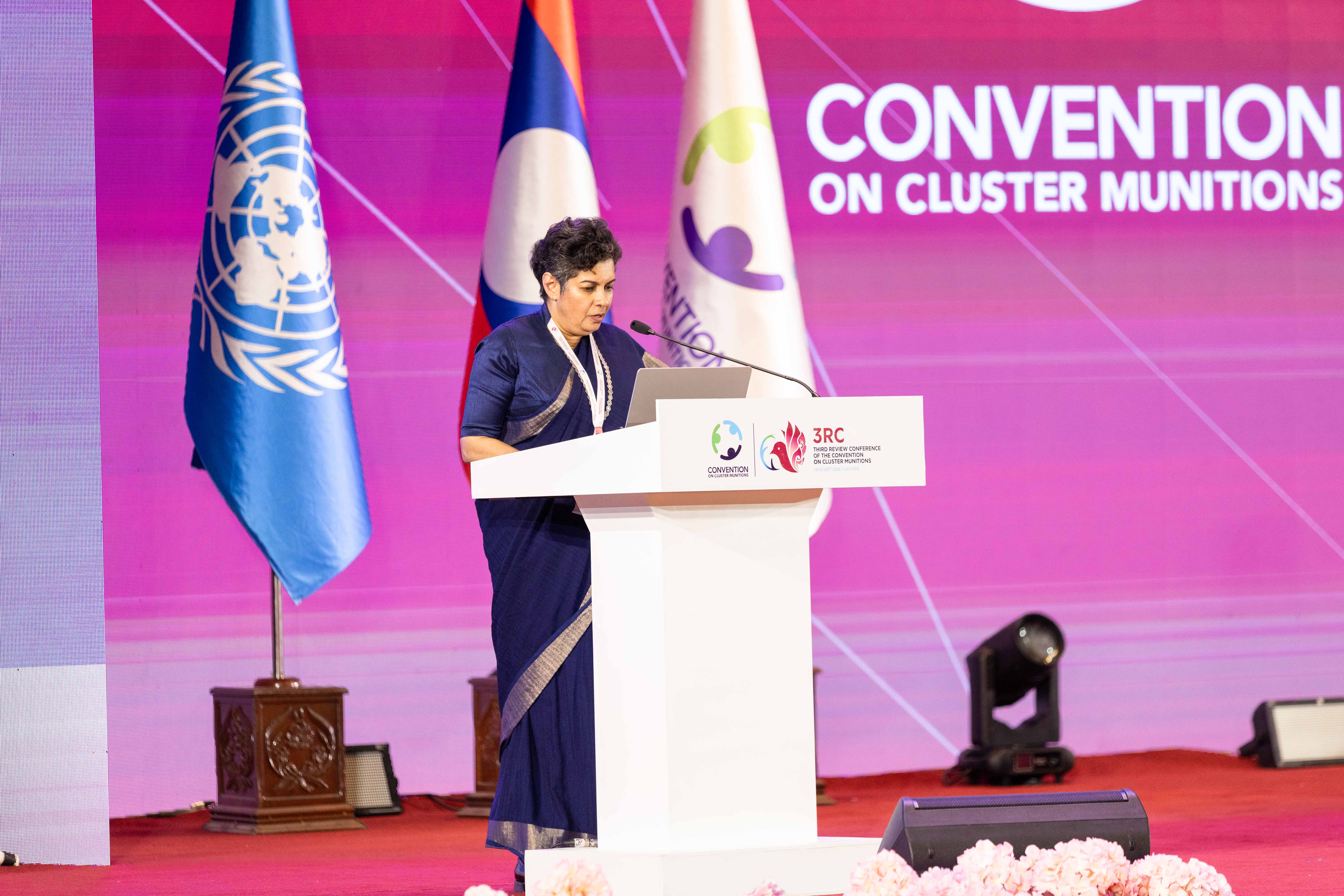
The official readout frames the trip as Sri Lanka’s reaffirmation of its commitment to the Convention on Cluster Munitions (CCM) at the Third Review Conference in Vientiane, Lao PDR, reflects a persistent, if somewhat isolated, stance within the international effort to eliminate these weapons. The fact that the Head of the Sri Lanka Delegation, Ms. Manisha Gunasekera, underscored concern over heightened risks from cluster munitions – particularly in the context of recent conflicts – highlights a recognition of ongoing threats, even as the Convention itself represents a significant step in international humanitarian law.
Background
Sri Lanka’s engagement with the CCM is rooted in its accession to the Convention in 2018. This marked a pivotal moment, aligning the island nation with a core international norm aimed at reducing civilian casualties and environmental contamination. The statement references the country’s Presidency of the Ninth Meeting of States Parties in 2019 and its subsequent role as Vice-President of the Bureau for four consecutive years, demonstrating a sustained level of active participation within the Convention framework.
The Third Review Conference, convened from 14 to 18 September 2026, brought together states parties to assess progress and chart a course for the next five years. The Vientiane Capital Action Plan (VCAP) 2027–2031 serves as a key framework, building upon the previous Lausanne Action Plan. This underlines a commitment to continued progress, particularly in areas such as stockpile destruction and risk-reduction education, central tenets of the CCM’s objectives.
Analysis
Sri Lanka’s unwavering support for the CCM suggests a prioritization of humanitarian concerns and adherence to international legal obligations. The expressed concern over “heightened risk of the use, production and transfer” of cluster munitions points to a recognition of ongoing instability, a factor not explicitly detailed in the press release. This suggests a cautious approach, potentially driven by security considerations within the South Asian context.
The delegation’s emphasis on integrating victims into national frameworks—through survivor-centred approaches and inclusive socio-economic reintegration—demonstrates a commitment to the humanitarian dimensions of the Convention. The welcome of Nigeria, South Sudan, Vanuatu and Timor-Leste as new signatories highlights the incremental progress within the broader disarmament effort. However, the statement does not address the ongoing issue of stockpiles or the potential for renewed conflict, both of which remain critical challenges for the CCM.
Implications
Sri Lanka’s continued engagement with the CCM has regional implications, particularly concerning the security environment in South Asia. While the island nation’s commitment to eliminating cluster munitions is laudable, the lack of specific details regarding its own military posture – and the continued presence of these weapons within its inventory – remains a point of concern. The reaffirmation could be interpreted as a signal of continued adherence to international norms, but it doesn’t necessarily address the underlying security dynamics.
Beyond the immediate regional context, Sri Lanka’s position contributes to the broader international dialogue on disarmament. The emphasis on standardized methodologies for measuring progress reflects a desire for greater accountability and transparency within the CCM framework. The welcome of new signatories, however, does not fundamentally alter the global distribution of these weapons.
Outlook
Should the visit yield a strengthened commitment to the VCAP, Sri Lanka’s actions will be contingent on its ability to secure international assistance for stockpile destruction and risk-reduction efforts. If the VCAP’s targets are demonstrably met, this would represent a significant advancement, yet the statement does not address the challenges of implementation within a resource-constrained environment.
If the increased emphasis on environmental impacts and climate-risk assessments within the VCAP is successfully integrated into clearance, survey and stockpile-destruction activities, this could mitigate some of the long-term humanitarian consequences associated with cluster munitions. The delegation’s call for simplified reporting mechanisms for states with limited administrative capacity suggests a recognition of the practical difficulties involved in achieving universal compliance.
Conclusion
Sri Lanka’s steadfast support for the Convention on Cluster Munitions underscores a commitment to international humanitarian law. However, the ongoing presence of these weapons within the country’s inventory raises fundamental questions about the feasibility of complete elimination, demanding continued scrutiny and engagement on the part of the international community.