
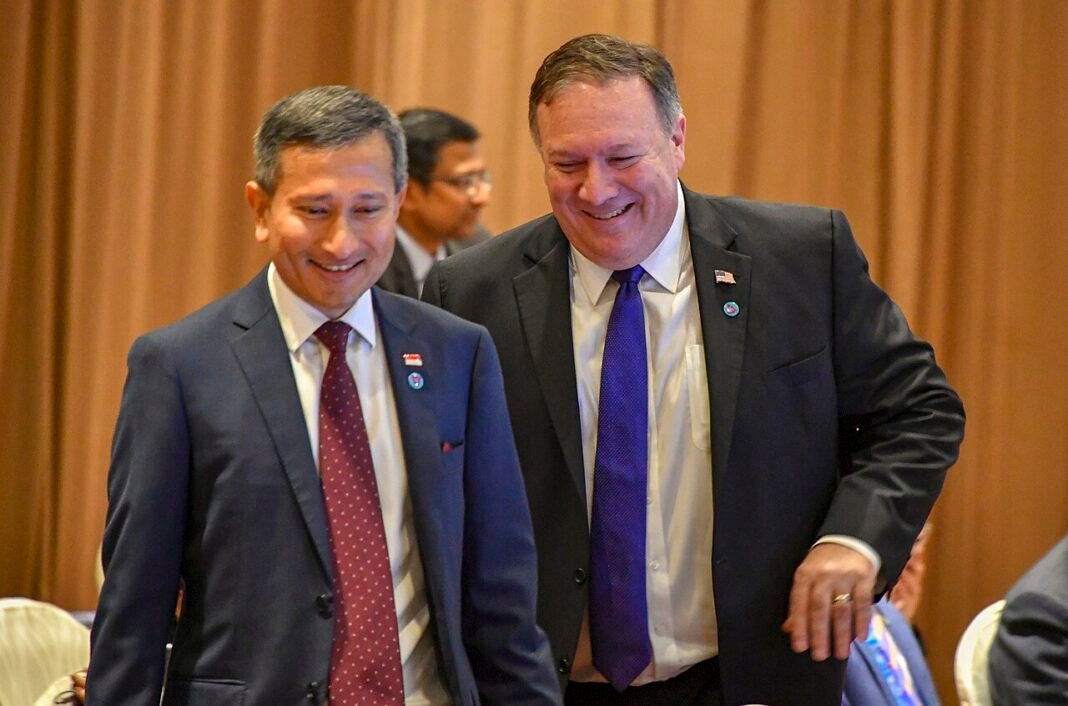
The foreign ministry readout describes The statement does not mention the number of African officials participating in the meeting, but it highlights that Minister for Foreign Affairs Dr Vivian Balakrishnan has met with African Group Permanent Representatives, a fact that underscores Singapore’s longstanding relationship with Africa. This engagement, stretching back to 1964 when Lee Kuan Yew travelled through 17 African countries, demonstrates a pragmatic approach rooted in shared challenges and a willingness to learn from experiences across the continent’s diverse development pathways – a strategy now being formalized through the SAPLINGS program.

Background
The press release details a history of engagement dating back to 1964, when Lee Kuan Yew undertook a 35-day journey through 17 African countries. This formative period, characterized by Singapore’s emergence as a newly independent state confronting similar questions of sovereignty and development, led to a network of relationships within forums like the Non-Aligned Movement and the G77. The statement does not address the specific number of countries involved in these early collaborations. Later, in 1993, a group of young African leaders, brought together by General Olusegun Obasanjo, visited Singapore to study Singapore’s development experience. The statement does not mention the specific number of participants in this 1993 visit.
Analysis
Singapore’s approach, as articulated by Minister Balakrishnan, centers on a transactional model of engagement – sharing experiences and learning from partners, without imposing a singular development template. This suggests a recognition of Africa’s heterogeneity and a desire to avoid the pitfalls of imposing externally driven solutions. The statement does not address the potential risks of this approach, particularly concerning the power imbalances inherent in such collaborations. The launch of the SAPLINGS program, offering executive education and scholarships, represents a significant investment in this strategy, aiming to build long-term capacity and trust. The statement does not address the financial implications of this investment.
Implications
The deepening of Singapore’s relationship with Africa, as outlined in the press release, carries implications for regional stability, particularly within the context of the African Continental Free Trade Area (AfCFTA). Should Singapore’s engagement successfully foster integration and economic growth across the continent, it could mitigate some of the tensions associated with the AfCFTA’s implementation. The opening of a Mission in Addis Ababa, as announced, is a strategic move to enhance Singapore’s systemic engagement with the African Union and its member states. The statement does not mention any potential security implications of this increased engagement.
Outlook
If the visit yields a commitment to expanding bilateral trade – currently at S$18.7 billion – and if the SAPLINGS program is successfully implemented as described, Singapore could solidify its position as a key economic partner for several African nations. Should the Mission in Addis Ababa prove effective in fostering dialogue and collaboration with the AU, it could contribute to a more stable and predictable international environment. The statement does not address whether Singapore’s engagement will influence the ongoing negotiations surrounding the BRICS economic bloc.
Conclusion
The continued emphasis on shared interests and mutual learning, as evidenced by the minister’s remarks, suggests a long-term commitment to a partnership built on pragmatic cooperation. However, the statement does not address whether Singapore’s approach will ultimately prove resilient in the face of evolving geopolitical dynamics and the inherent complexities of fostering sustainable development across a diverse continent.
Sources & Further Reading
- Official press release
- Foreign ministry source
- 25 September 202625 September 2026Transcript of Remarks by Minister for Foreign Affairs Dr Vivian Balakrishnan at the Forum of Small States Reception at the Permanent Mission of Singapore to the United Nations in New York, 24 September 2026Transcript of Remarks by Minister for Foreign Affairs Dr Vivian Balakrishnan at the Forum of Small States Reception at the Permanent Mission of Singapore to the United Nations in New York, 24 September 2026Transcripts (25 Septemb)
- 19 September 2026Official Visit by Minister for Foreign Affairs Dr Vivian Balakrishnan to Ottawa, Canada, 17 to 18 September 2026CountryCanadaOfficial Visit by Minister for Foreign Affairs Dr Vivian Balakrishnan to Ottawa, Canada, 17 to 18 September 2026Press Statements (19 Septemb)
- 9 September 2026Minister for Foreign Affairs Dr Vivian Balakrishnan's Written Reply to Parliamentary Question No. 1851, 9 September 2026Minister for Foreign Affairs Dr Vivian Balakrishnan's Written Reply to Parliamentary Question No. 1851, 9 September 2026Press Statements (9 Septembe)


.jpg)