
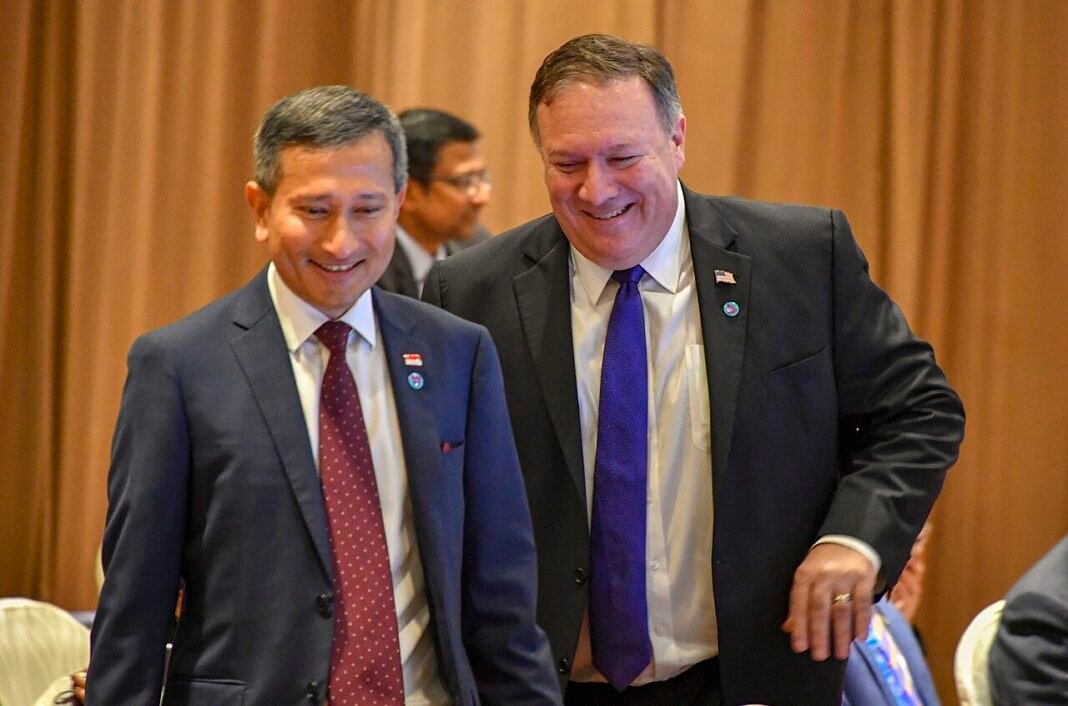
Reporting in a government statement, The visit of Minister for Foreign Affairs Dr Vivian Balakrishnan to the State of Qatar on 16 to 17 September 2026, as detailed in the Ministry of Foreign Affairs press statement, centered on the third iteration of the Qatar–Singapore Implementation Monitoring Mechanism (IMM). This event, marked by a meeting between Dr Balakrishnan and Qatar Prime Minister and Minister of Foreign Affairs Sheikh Mohammed Bin Abdulrahman Al Thani, underscores a deliberate effort to translate previously agreed-upon initiatives into tangible outcomes. The statement explicitly notes the growing momentum of bilateral cooperation since the last IMM Meeting in August 2019, a timeline demonstrating a sustained engagement between the two nations.

Background
The IMM, established as part of the Qatar–Singapore High-Level Joint Committee (HLJC) in 2006, serves as a crucial mechanism for tracking progress on bilateral projects. The statement highlights a prior visit by Her Excellency Halimah Yacob, then-President of the Republic of Singapore, to Qatar in June 2023, and a subsequent visit by Sheikh Mohammed Bin Abdulrahman Al Thani to Singapore in August 2023, demonstrating a reciprocal commitment to diplomatic engagement. More recently, the visit of Senior Minister, Coordinating Minister for National Security and Minister for Home Affairs K Shanmugam, and Dr Ali Bin Saeed Al Marri, Minister of Labour, further solidifies the ongoing bilateral relationship. These repeated engagements, documented in prior statements from September 2026, point to a consistent prioritization of maintaining a robust diplomatic channel.
Analysis
The focus on the IMM signals a strategic approach to bilateral relations, moving beyond high-level political visits to a more operational level. The co-chairs’ welcome of “growing momentum” suggests a desire to demonstrate tangible progress, particularly given the context of broader regional instability. The review of six Technical Working Committees (TWCs) – covering Information and Communications Technology, Security, Business, Legal, Sustainability and Social Development – indicates a diversified portfolio of collaboration. The planned visit of Prime Minister Lawrence Wong to Qatar in October 2026 and the upcoming State Visit of Emir Sheikh Tamim Bin Hamad Al Thani to Singapore highlight a forward-looking agenda, aiming to solidify existing ties and explore new avenues for cooperation. The statement does not address Qatar’s role within the GCC or the potential impact of the ongoing conflict in the Middle East on bilateral relations.
Implications
The continued operation of the IMM carries implications for regional stability, particularly regarding Qatar’s role as a mediator in the Middle East. The co-chairs’ concern over the situation in the Middle East, specifically the renewed hostilities involving the US and Iran, suggests a shared interest in de-escalation. The endorsement of the Joint Statement on the Third IMM Meeting reinforces Qatar’s commitment to upholding a rules-based international order. The planned upgrades to the Qatar–Singapore Free Trade Agreement (FTA) and cooperation within the ASEAN–GCC framework could have significant implications for trade flows and economic partnerships within the region. The visit also provides an opportunity to address security concerns, particularly regarding maritime security and the safety of seafarers in the Red Sea.
Outlook
Should the visit yield a substantive slate of deliverables within the TWCs, as the co-chairs suggest, it would represent a positive step for both nations. If the planned Singaporean visit to Qatar in October 2026 is successful, it could pave the way for further strategic collaboration. However, should the situation in the Middle East continue to escalate, as expressed by the co-chairs’ concerns, the IMM’s effectiveness could be jeopardized. The continued operation of the IMM relies on the ability of both sides to maintain open communication and prioritize shared interests, a factor that remains uncertain given the current geopolitical climate.
Sources & Further Reading
- Official press release
- Foreign ministry source
- 15 September 2026Visit of Minister for Foreign Affairs Dr Vivian Balakrishnan to the State of Qatar, 16 to 17 September 2026CountryQatarVisit of Minister for Foreign Affairs Dr Vivian Balakrishnan to the State of Qatar, 16 to 17 September 2026Press Statements (15 Septemb)
- 1 September 2026Visit By Minister for Foreign Affairs Dr Vivian Balakrishnan to the Republic of Palau for the 55th Pacific Islands Forum Leaders Meeting 31 August to 1 September 2026CountryPalauVisit By Minister for Foreign Affairs Dr Vivian Balakrishnan to the Republic of Palau for the 55th Pacific Islands Forum Leaders Meeting 31 August to 1 September 2026Press Statements (1 Septembe)
- 30 August 2026Visit by Minister for Foreign Affairs Dr Vivian Balakrishnan to the Republic of Palau for the 55th Pacific Islands Forum Leaders Meeting 31 August to 1 September 2026CountryPalauVisit by Minister for Foreign Affairs Dr Vivian Balakrishnan to the Republic of Palau for the 55th Pacific Islands Forum Leaders Meeting 31 August to 1 September 2026.Press Statements (30 August)

.jpg)