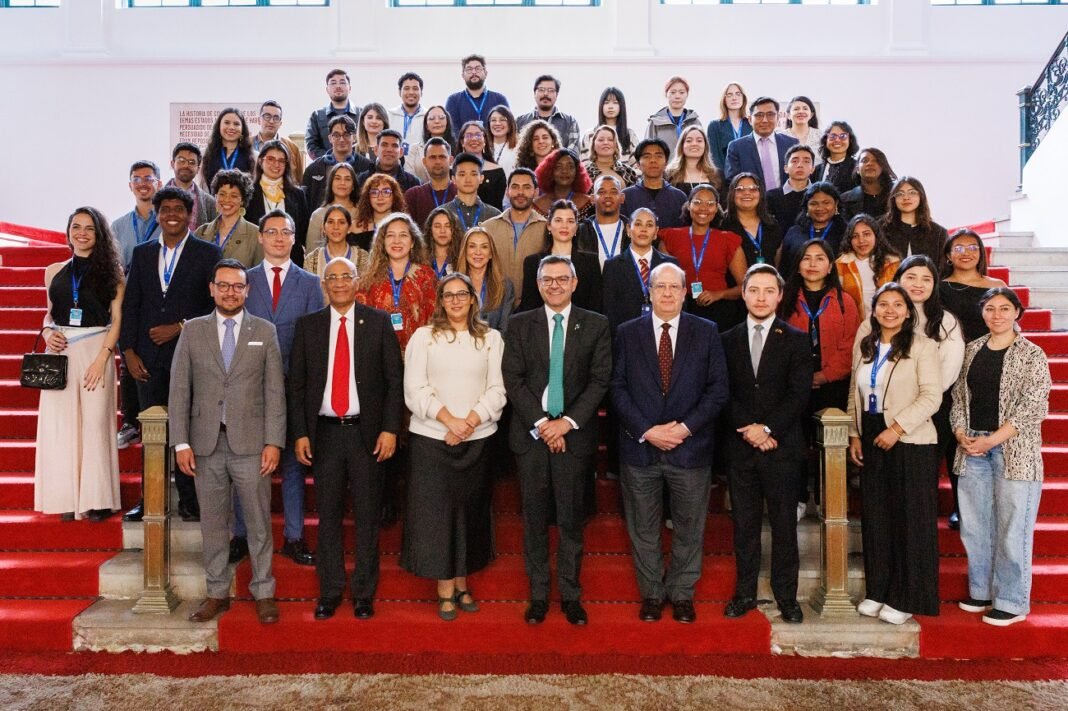
The foreign ministry readout describes Bogotá, 25 de septiembre de 2026. A total of 48 international beneficiaries of the Beca Colombia, Alianza del Pacífico, and Multilingualism programs participated in a welcome meeting organized by the Ministry of Foreign Relations and the Colombian Institute for Educational Credit and Technical Studies Abroad (ICETEX), held at the Palace of San Carlos. This event highlights Colombia’s strategy to attract international talent and foster academic exchange.

Background
The initiative is structured around three core programs: Beca Colombia, which supports Colombian students pursuing studies abroad; the Alianza del Pacífico platform, facilitating mobility for students from the Pacific Alliance countries; and the Multilingualism program, promoting language proficiency. The Ministry of Foreign Relations, through ICETEX, aims to strengthen Colombia’s position as a destination for education and knowledge exchange. This aligns with broader government efforts to promote regional integration and foster cultural ties.
Analysis
The stated goal – to “fortalecer vínculos académicos y culturales” – reflects a strategic shift within Colombia’s foreign policy. The government’s emphasis on international cooperation, as articulated by Vice Minister Elisa Mercedes Fuentes Mejía, is framed as a means of addressing “intereses y necesidades compartidas.” This suggests a recognition of Colombia’s reliance on external support and a proactive approach to leveraging international partnerships. The inclusion of ProColombia and the Instituto Caro y Cuervo indicates an effort to enhance Colombia’s image as a desirable destination for higher education and research. The participation of beneficiaries like Abigail Arzaluz Alva, currently pursuing a master’s degree at the Externado de Colombia University, underscores the tangible benefits of these programs. This reinforces the government’s intent to prioritize education as a key component of its development strategy, aligning with broader trends in Latin American nations seeking to diversify their economies through knowledge and innovation.
Implications
The expansion of the scholarship program carries significant implications for regional stability. Increased academic mobility can foster greater understanding and cooperation between Colombia and its neighbors, potentially mitigating tensions and promoting dialogue. For policymakers, the program’s success hinges on sustained funding and effective management. The influx of international students and researchers could also stimulate economic growth in Colombia, particularly in sectors linked to education and technology. Furthermore, the integration of Colombian students into global academic networks strengthens Colombia’s position as a contributor to international knowledge production.
Outlook
Should the visit yield continued investment in the scholarship programs and the ICETEX’s expansion, Colombia could solidify its role as a regional hub for international education. If the government successfully integrates the experiences and knowledge gained by the scholars back into Colombia’s development priorities, it could drive innovation and contribute to sustainable economic growth. However, the long-term success of the program depends on addressing persistent challenges within the Colombian higher education system, including funding constraints and infrastructure limitations.
Conclusion
The event’s focus on international networks and knowledge exchange leaves open the question of how effectively Colombia can translate this increased academic engagement into concrete policy outcomes, particularly in areas such as technological innovation and sustainable development.