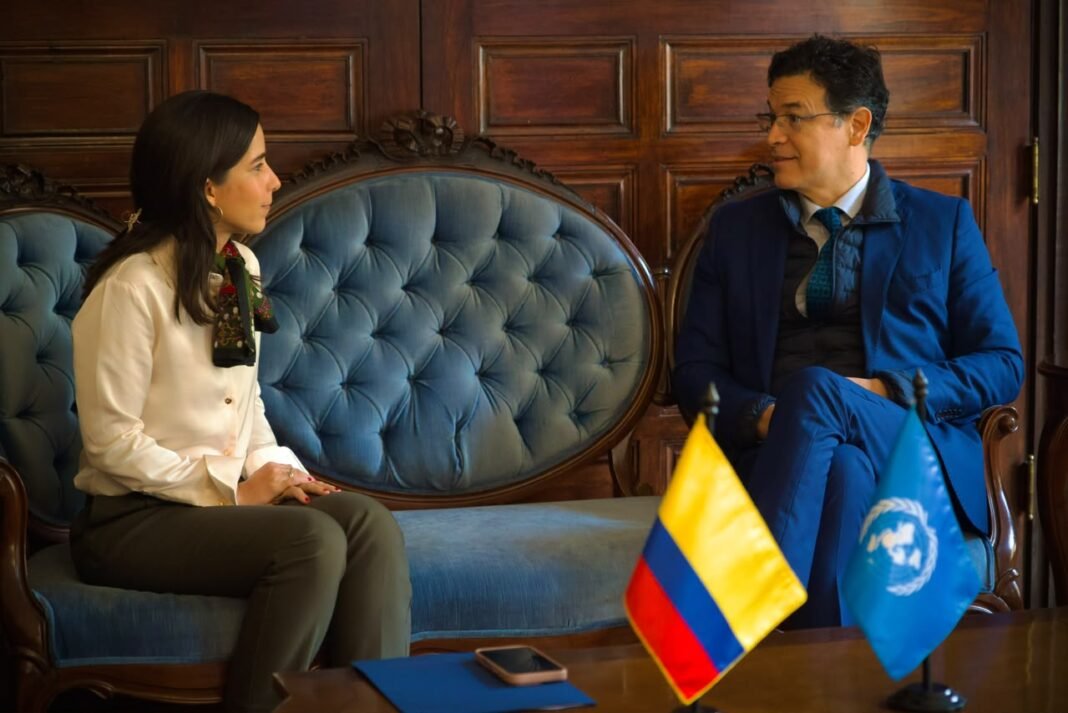
Bogotá D. C., 11 de septiembre de 2026. The Vice-Minister of Multilateral Affairs, Daniella Restrepo Duarte, held three working meetings with representatives of UN-Habitat, the United States Embassy, and the United Nations Mine Action Service (UNMAS), to advance priority issues on the international agenda for Colombia. This renewed engagement—detailed in a recent press release—highlights a strategic recalibration of Colombia’s approach to complex challenges, particularly in the aftermath of recent seismic activity and persistent security threats. The statement does not address the scale of the earthquake damage or the ongoing impact of illicit armed groups. (Read the full statement.)

Background
The meetings align with ongoing efforts to rebuild territories affected by the recent earthquake, focusing on housing, territorial planning, and urban recovery. This approach, framed under the “rebuild better” initiative, suggests a deliberate effort to move beyond immediate disaster relief towards long-term sustainable development. The statement does not mention the specific territorial areas impacted by the earthquake or the projected timeline for reconstruction. Prior to these meetings, the government had been engaged in bilateral discussions with the United States following a visit by Secretary of State Marco Rubio. The US Embassy’s involvement underscores a continued commitment to security and economic cooperation, as outlined in the statement.
Analysis
The government’s prioritization of cooperation with UN-Habitat, the US Embassy, and UNMAS represents a multifaceted strategy. The focus on “rebuild better” reflects a recognition of the need for comprehensive solutions, integrating humanitarian assistance with long-term planning. This suggests a shift away from purely reactive disaster response and towards proactive measures aimed at building resilience. The inclusion of UNMAS, and specifically the discussion of improvised explosive devices and unmanned aerial vehicles, indicates a heightened awareness of evolving security threats. If implemented as described, the coordination between the Ministry of Foreign Affairs and relevant security and defense entities could significantly enhance Colombia’s capacity to address these dangers. The statement does not address the potential budgetary implications of these expanded partnerships.
Implications
These engagements have significant implications for regional stability and Colombia’s international relations. Strengthening ties with the United States, particularly following Secretary Rubio’s visit, signals a renewed commitment to security cooperation and potentially broader economic engagement. The collaboration with UN-Habitat offers an opportunity to leverage international expertise in reconstruction efforts, aligning with global standards for sustainable urban development. The engagement with UNMAS demonstrates a willingness to address the persistent challenge of landmines and explosive remnants of war, a critical factor in the country’s ongoing security and development efforts. The statement does not address whether these partnerships will impact Colombia’s relations with other regional actors.
Outlook
Should the visit yield a formalized agreement for technical assistance with UNMAS, the government will likely prioritize the identification of specific training programs and equipment needs. If the US Embassy continues to support bilateral security cooperation, this could manifest in increased intelligence sharing and joint security exercises. However, the success of these efforts hinges on the government’s ability to effectively coordinate across multiple agencies and secure sufficient funding. If the Ministry of Foreign Affairs successfully navigates the complexities of these multilateral partnerships, it could significantly bolster Colombia’s ability to address pressing security and development challenges. The statement does not address the potential for disagreements or challenges in coordinating these diverse initiatives.
Conclusion
The flurry of meetings underscores Colombia’s commitment to a proactive, multilateral approach to complex challenges. However, the statement does not address the fundamental question of whether these partnerships will translate into tangible improvements on the ground, particularly in securing long-term stability and fostering sustainable development within affected communities.