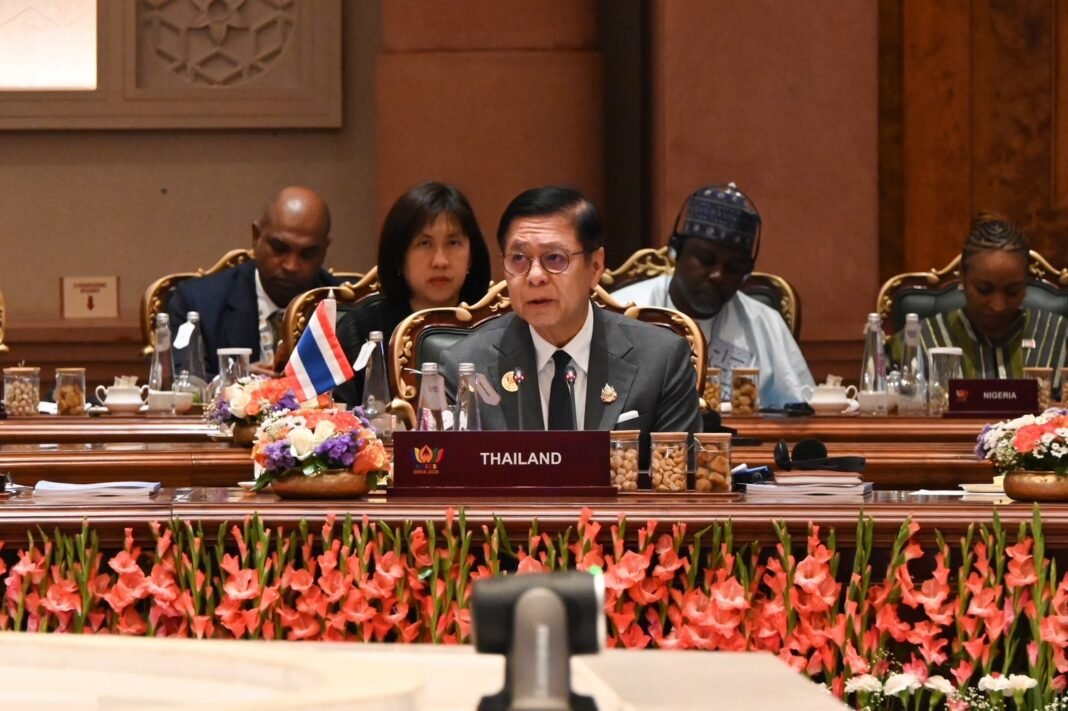
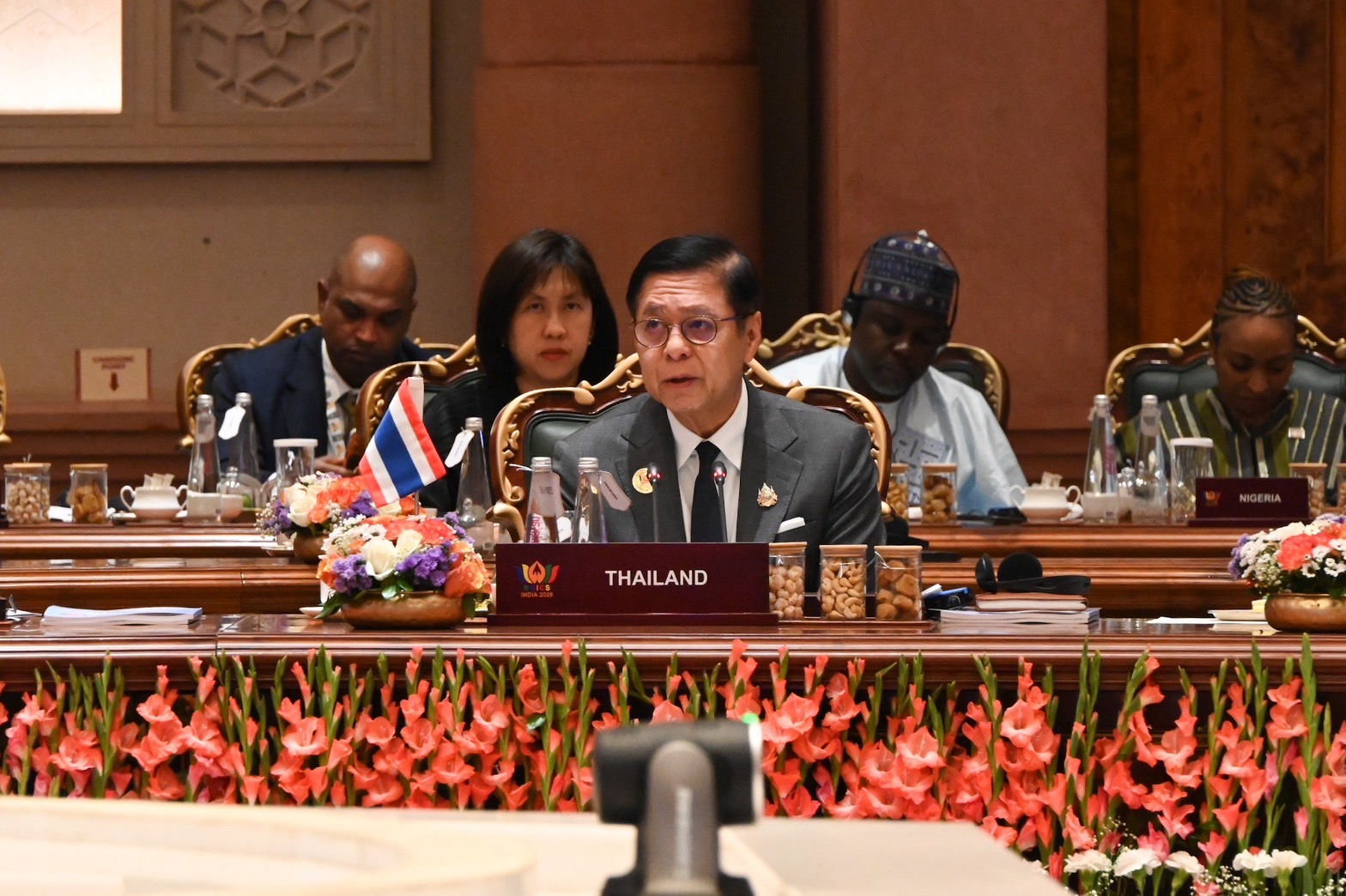
On 13 September 2026, Deputy Prime Minister and Minister of Foreign Affairs Sihasak Phuangketkeow delivered a statement at the 18th BRICS Leaders’ Summit in New Delhi, India. This action, representing Prime Minister Anutin Charnvirakul, underscored Thailand’s intention to actively shape the international order alongside developing countries. The statement’s core assertion – that Thailand stands ready to contribute to the direction of the global agenda – reflects a strategic shift toward greater engagement with the Global South, a region increasingly viewed as a cornerstone of future international relations. The statement does not address the specific composition of the BRICS bloc or the summit’s overall objectives. (Read the full statement.)
Background
The 18th BRICS Leaders’ Summit, themed “Resilience, Innovation, Cooperation and Sustainability: Shaping the Future for Inclusive Global Growth,” convened in New Delhi, India. This event, as outlined in the press release, represents a significant moment for Thailand’s foreign policy, occurring within the context of the ongoing transition of international rules and the increasing influence of the Global South. The ministry’s participation aligns with the broader “5S” Foreign Affairs Masterplan, a 20-year strategy focused on strengthening Southeast Asian cooperation and promoting sustainable development. Prior to this summit, the Deputy Prime Minister and Minister of Foreign Affairs engaged in bilateral meetings with the Ministers of Foreign Affairs of Belarus and Cuba, as detailed in separate press releases from 13 September 2026. These prior statements by this same ministry, dated 13 September 2026, focused on bilateral engagements with Belarus and Cuba on the sidelines of the BRICS Summit. The statement does not address the specific details of these engagements.
Analysis
Phuangketkeow’s statement reveals a calculated attempt to reposition Thailand within the evolving global landscape. The emphasis on “international rules in transition” suggests a recognition of the diminishing sway of traditional Western-led institutions. The commitment to working with developing countries, particularly through South–South cooperation, represents a deliberate move to diversify Thailand’s alliances and reduce its reliance on established powers. The inclusion of the Thailand–Africa Initiative, the Global Partnership against Online Scams, and advocacy for wider access to green finance demonstrates a targeted approach, aligning with key priorities identified by the Global South. The proposal to build linkages between BRICS and ASEAN, focusing on food security, supply chains, and the digital economy, highlights a strategic ambition to leverage Thailand’s geographical position as a regional bridge. The statement does not address Thailand’s economic interests within the BRICS framework or the potential implications for its trade relationships.
Implications
For Thailand, this engagement at the BRICS summit carries significant implications for its foreign policy. It signals a shift away from a primarily Western-oriented approach towards a more multi-polar world, potentially bolstering economic ties with countries like Russia, China, and Brazil. The focus on South–South cooperation could unlock new avenues for trade, investment, and technological collaboration, particularly within the ASEAN region. The emphasis on food security and supply chains reflects a broader concern about global instability and resource management. The proposal to serve as a bridge between ASEAN and BRICS could enhance Thailand’s role as a regional hub, amplifying the collective voice of developing countries on the global stage. The statement does not address the potential impact on Thailand’s relations with the United States or European Union.
Outlook
Should the visit yield continued engagement with BRICS leaders, Thailand will likely pursue deeper collaborations in areas such as infrastructure development and digital technology. If the Deputy Prime Minister and Minister of Foreign Affairs successfully advocate for wider access to green finance, Thailand could position itself as a key facilitator of sustainable development within the Global South. If the proposed linkages between BRICS and ASEAN are actively pursued, Thailand could become a central node in a new global trade network. Should the initiative to combat online crime gain traction, Thailand could play a leading role in establishing a global cooperation mechanism. The statement does not address potential obstacles to these collaborations or the possibility of diverging interests among BRICS member states.
Conclusion
Phuangketkeow’s participation at the BRICS summit marks a deliberate step in Thailand’s attempt to redefine its role in the international order. The question remains whether this strategic realignment will translate into tangible benefits for Thailand, or if it will ultimately prove to be a limited exercise in diplomatic maneuvering within a complex and evolving global landscape.
Sources & Further Reading
- Official press release
- Foreign ministry source
- Deputy Prime Minister and Minister of Foreign Affairs meets with the Minister of Foreign Affairs of Belarus on the sidelines of the BRICS Leaders’ Summit (13 Sep 202)
- Deputy Prime Minister and Minister of Foreign Affairs meets with Minister of Foreign Affairs of Cuba on the sidelines of the BRICS Leaders’ Summit (14 Sep 202)
- Deputy Prime Minister and Minister of Foreign Affairs meets with Minister of Foreign Affairs of Bahrain on the sidelines of the BRICS Leaders’ Summit (14 Sep 202)