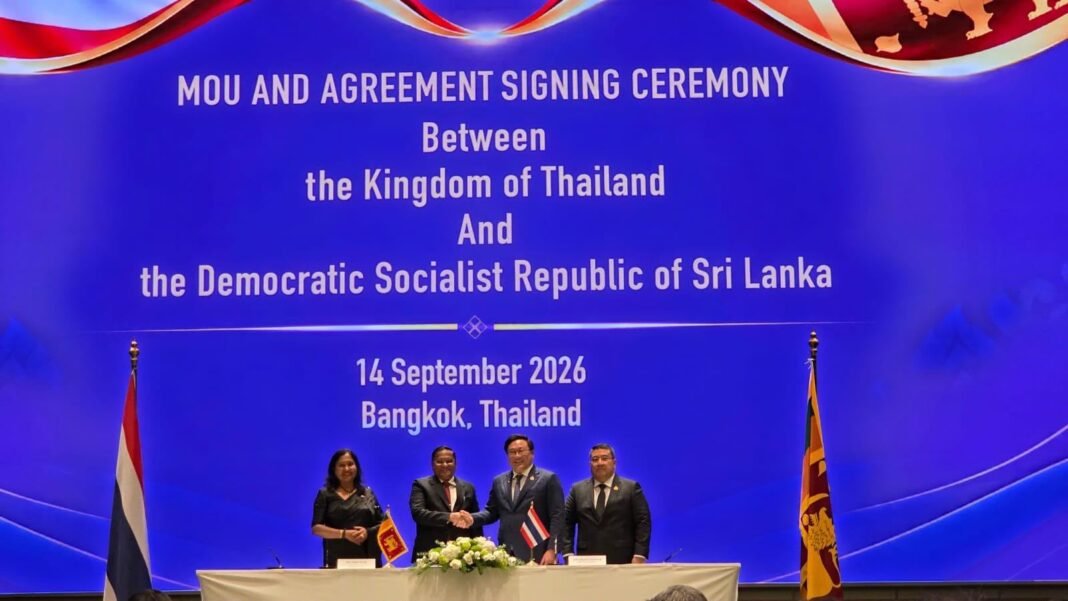
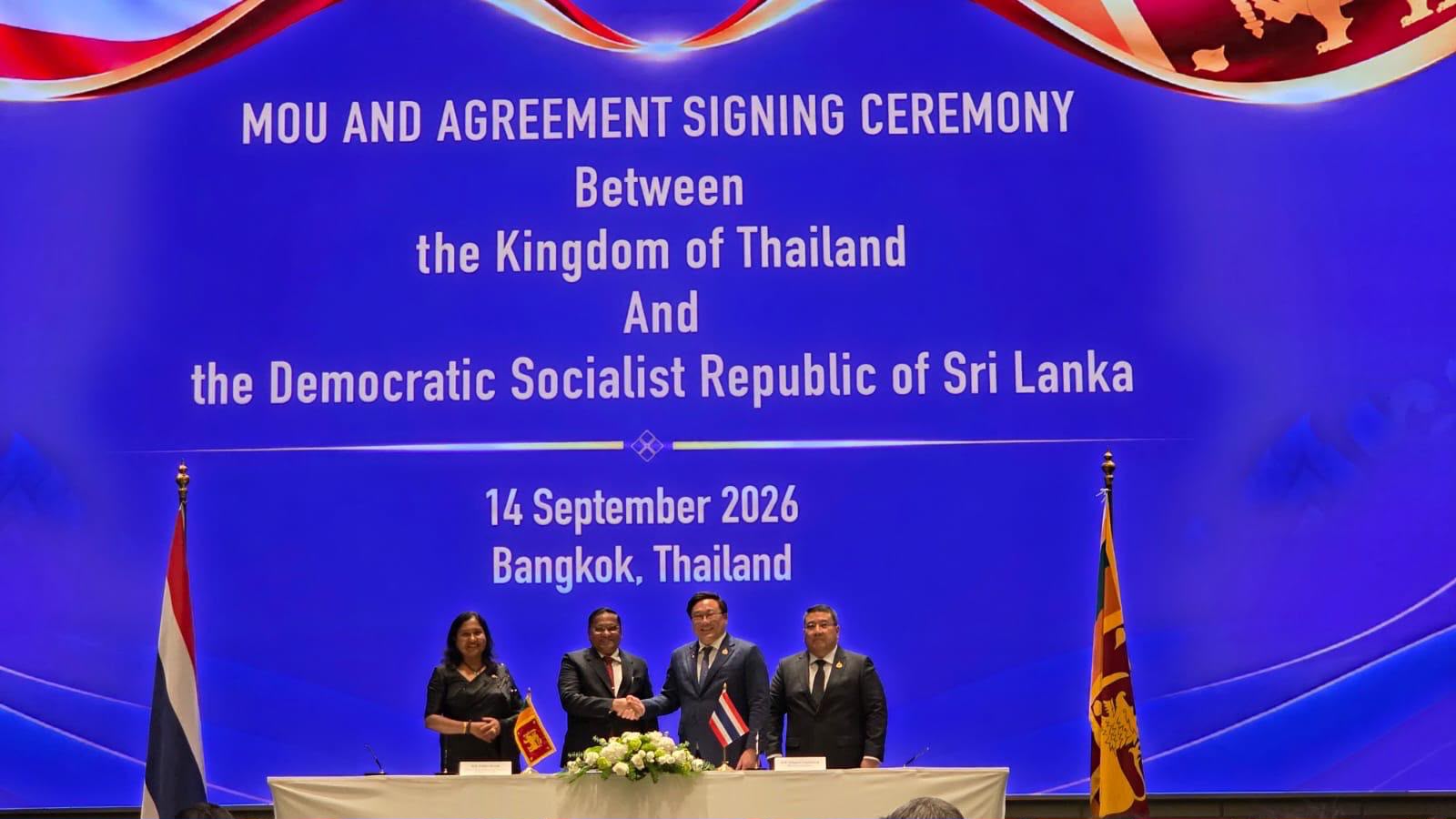
As set out in a formal announcement, The Ministry of Foreign Affairs announced today, September 14, 2026, that Thailand will offer an initial 10,000 employment opportunities to Sri Lankan workers under a new framework for labour cooperation and employment. This follows the signing of a Memorandum of Understanding (MoU) on Labour Cooperation and a Memorandum of Agreement (MoA) on the Employment of Sri Lankan Workers in Thailand by Minister of Foreign Affairs, Foreign Employment and Tourism Vijitha Herath and Minister of Labour of Thailand Julapun Amornvivat in Bangkok. The statement indicates a shift in Thailand’s approach to employing foreign workers, potentially driven by a need to address labour shortages within its economy. This development impacts Sri Lanka, offering a new channel for its citizens seeking employment abroad.
Background
The agreements establish a structured, transparent and legally regulated framework for the recruitment and employment of Sri Lankan workers in Thailand. This framework is intended to safeguard worker rights, welfare and interests. The signing of the MoU and MoA signifies a formalization of existing discussions between the two nations regarding labour relations. Prior to this event, informal agreements had facilitated Sri Lankan workers’ entry into the Thai labour market, but lacked the legal protections now enshrined in the new agreements. The Thai Labour Minister, Julapun Amornvivat, has previously advocated for greater worker protections within Thailand’s labour sector, suggesting a willingness to adapt to Sri Lanka’s concerns.
Analysis
The initiatives present a complex calculus for Sri Lanka. The potential influx of 10,000 workers represents a significant opportunity to alleviate unemployment and generate foreign exchange earnings. However, the agreements’ emphasis on “safeguards to protect their rights, welfare and interests” suggests a recognition of past issues regarding worker exploitation and precarious working conditions within Thailand. The proposed establishment of a Joint Working Group to oversee implementation highlights a commitment to transparency and ongoing monitoring. If implemented as described, the agreements could bolster Sri Lanka’s foreign employment sector, but only if Thailand’s labour laws are effectively enforced. The focus on sectors like information technology, tourism, hospitality, technical and other skilled sectors reflects a targeted strategy to address Thailand’s specific workforce needs.
Implications
For policymakers in Colombo, the agreements represent a strategic opportunity to diversify Sri Lanka’s foreign employment destinations. The expansion of access to skilled and decent employment could contribute to economic growth and stability. However, the success of the initiative hinges on the effective enforcement of worker protections within Thailand. The move also has implications for regional stability, potentially influencing migration patterns and labour dynamics within Southeast Asia. Furthermore, the agreements could strengthen trade and economic cooperation between Sri Lanka and Thailand, particularly if skilled workers contribute to the growth of key sectors in Thailand.
Outlook
Should the visit yield the establishment of a fully functional Joint Working Group, and should Thailand demonstrate a sustained commitment to upholding the labour standards outlined in the agreements, the expansion of employment opportunities for Sri Lankan workers could accelerate. If Thailand’s labour laws are consistently enforced, and if the Joint Working Group effectively monitors compliance, the agreements could represent a sustainable framework for bilateral labour cooperation. However, should Thailand’s enforcement mechanisms prove inadequate, or if disputes arise regarding worker rights, the agreements could face significant challenges and potentially jeopardize the initiative.
Conclusion
The signing of the MoU and MoA marks a new phase in Sri Lanka’s engagement with Thailand’s labour market. The ultimate success of this venture rests on the continued commitment of both nations to protect the rights and well-being of Sri Lankan workers deployed in Thailand, a challenge that remains open.