
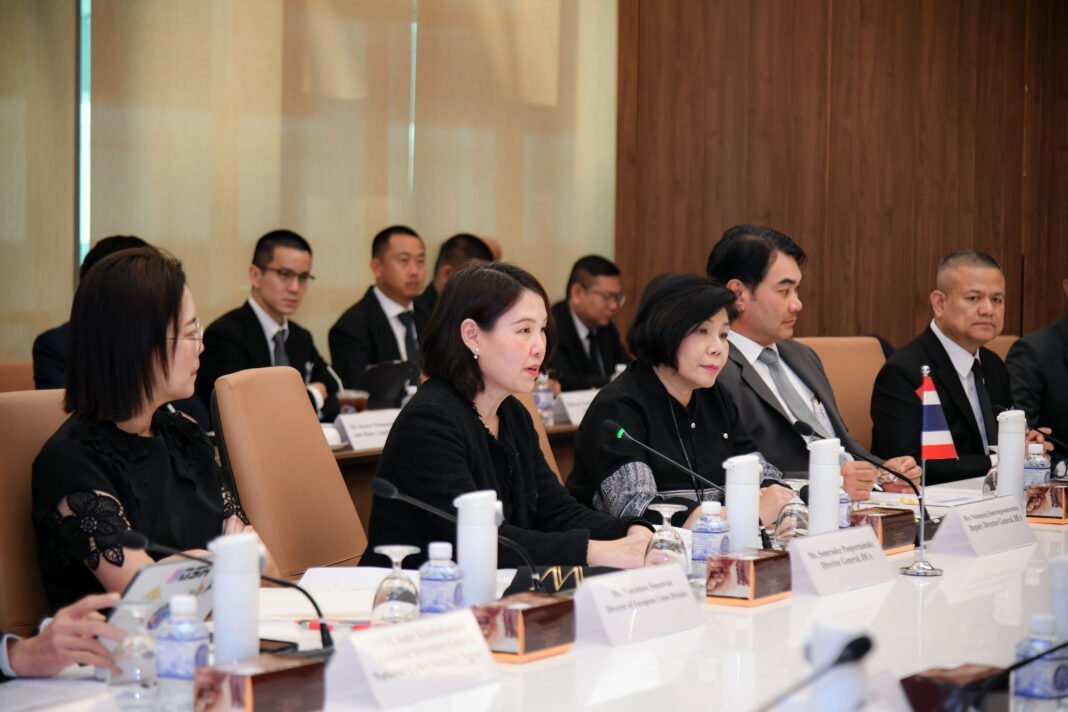

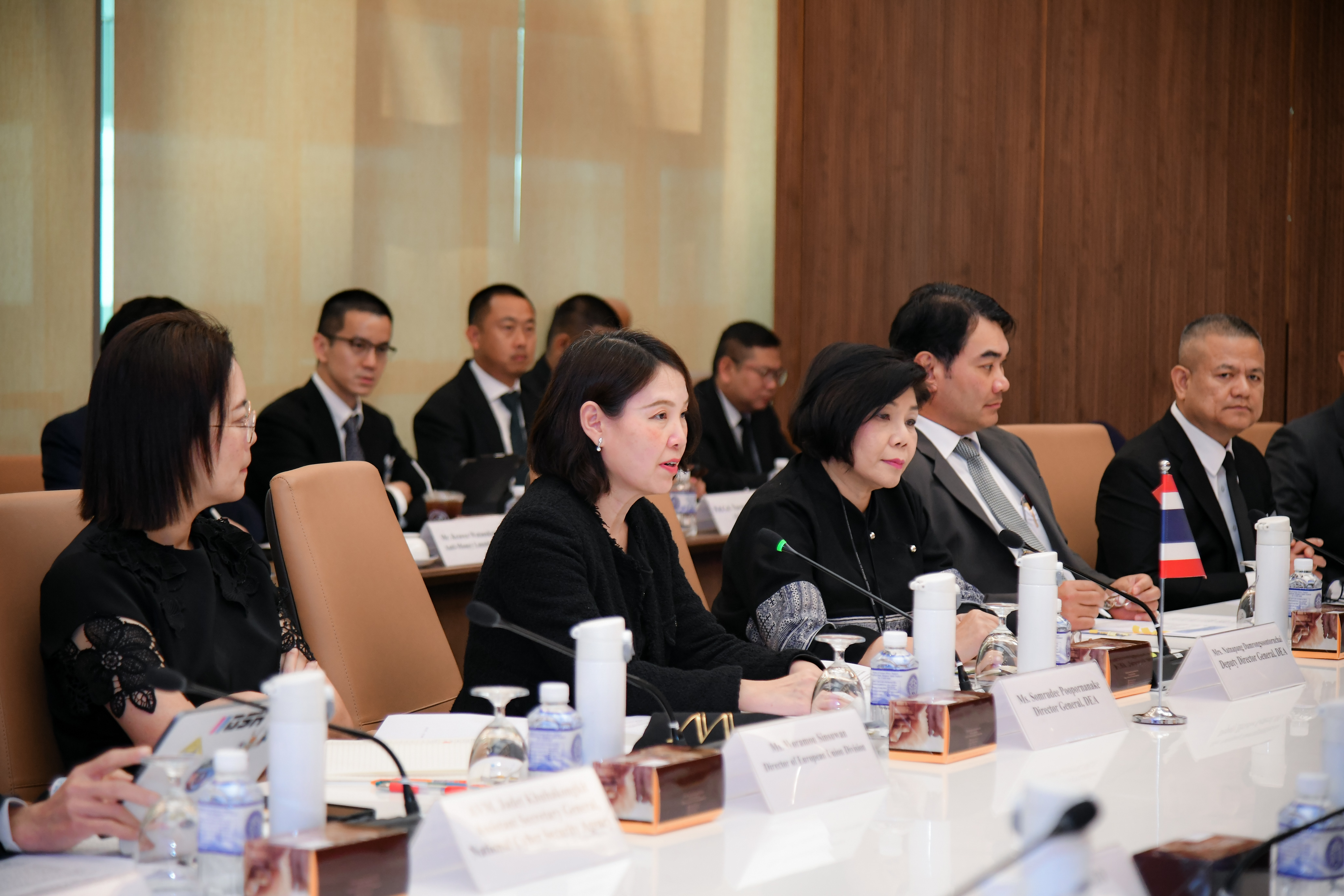
A ministry communiqué confirms that The Ministry of Foreign Affairs announced on 13 September 2026 that Director-General of the Department of European Affairs, Ms. Somrudee Poopornanake, met with Mrs. Maria Rosa Sabbatelli, Head of Unit for Global Security of the EU’s Service for Foreign Policy Instruments (FPI). This meeting, joined by representatives from key Thai security agencies, reflects a stated aim to elevate Thailand-EU relations to a strategic level. The core of the discussions centered on broadening security cooperation across multiple domains, as outlined in the Ministry’s 20-Year “5S” Foreign Affairs Masterplan. The statement does not mention the specific timeframe for achieving this strategic elevation.
Background
Prior to this meeting, the Ministry of Foreign Affairs had in September 2026 held a brainstorming meeting led by the Director-General of the European Affairs Department to advance security and strategic cooperation between Thailand and Europe. Furthermore, in March 2026, the Ministry had met with the Spokesperson of the U.S. Embassy in Thailand, demonstrating a consistent prioritization of international security partnerships. The “5S” Foreign Affairs Masterplan, a key element of Thailand’s foreign policy, emphasizes strengthening security cooperation as a foundational pillar. The statement does not mention the specific details of the Masterplan’s implementation.
Analysis
The meeting’s focus on expanding security cooperation indicates a recognition by the Thai government of evolving global threats, particularly in the realm of cybercrime. The involvement of the National Security Council, Royal Thai Navy, Thai Maritime Enforcement Command Center, the Royal Thai Police (Cyber Crime Investigation Bureau, Anti-Cyber Scam Center (ACSC)), and the Anti-Money Laundering Office suggests a multi-faceted approach, targeting a range of vulnerabilities. The invitation to the EU’s FPI highlights Thailand’s desire to leverage the EU’s expertise and resources in areas where domestic capacity may be limited. This signals a potential reliance on external partnerships to bolster Thailand’s capabilities in combating increasingly sophisticated transnational criminal networks. The engagement with the ACSC is particularly noteworthy, reflecting a heightened awareness of the impact of cyber fraud on Thailand’s economy and citizens.
Implications
This expanded security cooperation could have significant implications for regional stability. Enhanced collaboration in combating cybercrime could disrupt illicit financial flows and reduce the attractiveness of Thailand as a hub for cyber scams. Strengthening cybersecurity measures aligns with broader international efforts to protect critical infrastructure and data. The move to a “strategic level” of relations with the EU suggests a willingness to deepen engagement on complex security issues, potentially impacting Thailand’s relationships with other regional partners. The increased focus on maritime security, supported by the involvement of the Thai Maritime Enforcement Command Center, could influence regional maritime security dynamics. The statement does not address the potential impact on Thailand’s trade relationships or defense posture.
Outlook
Should the visit yield a formal agreement outlining specific collaborative projects, the Thai government’s commitment to this strategic partnership will be tested. If the EU’s FPI provides technical assistance and resources to the ACSC, as suggested by the meeting’s agenda, this could represent a tangible step forward. If the EU’s security agencies demonstrate a sustained interest in collaborating on CBRN threats, this could signal a broadening of Thailand’s security concerns. Should the Thai government secure additional funding or support from the EU for cybersecurity initiatives, this would further strengthen its capacity to combat cybercrime. The success of this initiative hinges on the willingness of both sides to invest time and resources in building a robust and mutually beneficial partnership.
Conclusion
The meeting between Thai and EU security officials underscores a shared recognition of escalating global security challenges. However, the path to a truly strategic partnership remains undefined, leaving open the question of whether Thailand’s ambition for enhanced security cooperation will translate into concrete, sustained action.
Sources & Further Reading
- Official press release
- Foreign ministry source
- Director-General of Information Department and Spokesperson of the Ministry of Foreign Affairs meets with Spokesperson of the U.S. Embassy in Thailand (1 Sep 2026)
- Director-General of European Affairs chairs brainstorming meeting to advance security and strategic cooperation between Thailand and Europe (10 Sep 202)
- Director-General of the Department of European Affairs meets with Ambassador of Azerbaijan to Push Forward Bilateral Cooperation (7 Sep 2026)