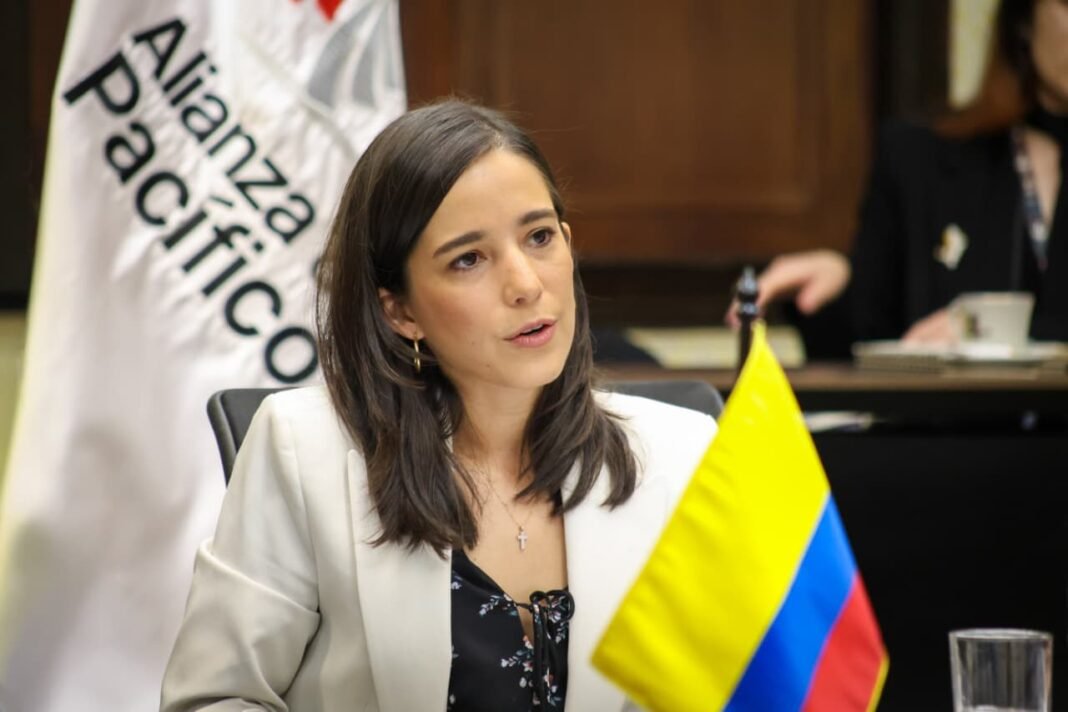
Colombia participated in critical meetings of the Pacific Alliance during August 20th and 21st, reinforcing its commitment to a more dynamic, transparent, and globally-oriented bloc. The event, hosted in Mexico City, saw participation from delegations representing Chile, Colombia, Mexico, and Peru, alongside Costa Rica as a candidate for full membership. This strategic engagement, spearheaded by Vice Minister of Multilateral Affairs Daniella Restrepo Duarte and Vice Minister of Foreign Trade Sandra Carvajal Sáenz, aims to deepen economic ties with the Asia-Pacific region – a priority highlighted by the government’s new foreign policy direction (the statement does not address Colombia’s broader trade strategy). — the full statement has further detail.

Background
The Alianza del Pacífico, established in 2012, represents a regional integration initiative designed to promote economic cooperation among its member nations. The meetings involved the Coordinadores Nacionales (CN) and the Grupo de Alto Nivel (GAN), reflecting ongoing efforts to refine the Alliance’s operational framework and strategic direction. These gatherings were supported by technical and political work carried out by Leonardo Enrique Correa Godoy, Director (e) of Mechanisms of Regional Concertation and Integration within the Ministry of Foreign Affairs, and Manuel Chacón, Director of Economic Integration at the Ministry of Commerce, Industry, and Tourism. The statement does not detail the historical evolution of the Alianza del Pacífico.
Analysis
Colombia’s renewed focus on the Pacific Alliance reflects a calculated strategy to mitigate economic headwinds at home. The agreement to advance the Fondo de Cooperación (FCAP) transfer to Mexico is a key element, aimed at securing continued operational and financial support for regional development projects – a move implicitly acknowledging limitations in Colombia’s own capacity for large-scale investment. The government’s emphasis on “a diplomacy pragmatic and focused on results” suggests an attempt to demonstrate tangible benefits from the Alliance membership, despite ongoing concerns about illicit activities within the country (the statement does not address security challenges). The prioritization of youth employment initiatives – including revisions to the Programa de Voluntariado Juvenil and the Plan de Trabajo para la Empleabilidad Juvenil – demonstrates a direct response to persistent unemployment figures. Furthermore, Colombia’s leadership role in the AP-ASEAN agenda underscores its commitment to projecting influence within the broader regional context.
Implications
The intensified engagement with the Pacific Alliance carries significant implications for Colombia’s foreign policy and regional stability. Successfully navigating the FCAP transition could bolster investor confidence, while expanded trade opportunities within the Alliance offer a potential buffer against economic slowdowns. Colombia’s continued leadership in the AP-ASEAN space positions it as a key player in promoting sustainable growth and connectivity across Southeast Asia and the Pacific. Should the visit yield positive results on trade liberalization commitments, Colombia could strengthen its position as a gateway for investment into the region – a critical consideration given ongoing geopolitical tensions.
Outlook
If the FCAP transfer is successfully completed by December, as planned, it would represent a significant step towards solidifying Colombia’s commitment to the Alliance. Should the visit yield positive results on trade liberalization commitments, Colombia could strengthen its position as a gateway for investment into the region – a critical consideration given ongoing geopolitical tensions. However, should negotiations falter regarding tariff reductions or regulatory harmonization, the immediate benefits of membership may diminish. The continued focus on Indonesia’s tourism resilience project and preparations for the IX Reunión Ministerial AP-ASEAN suggest a long-term strategy, contingent on sustained political will within the Alliance member states.
Conclusion
Colombia’s renewed commitment to the Pacific Alliance presents an opportunity to bolster economic growth and regional influence; however, the government’s emphasis on pragmatic results raises questions about the long-term sustainability of this strategy within a complex geopolitical landscape. The ultimate test will be whether Colombia can translate its participation in the Alianza into genuine economic benefits for its citizens.