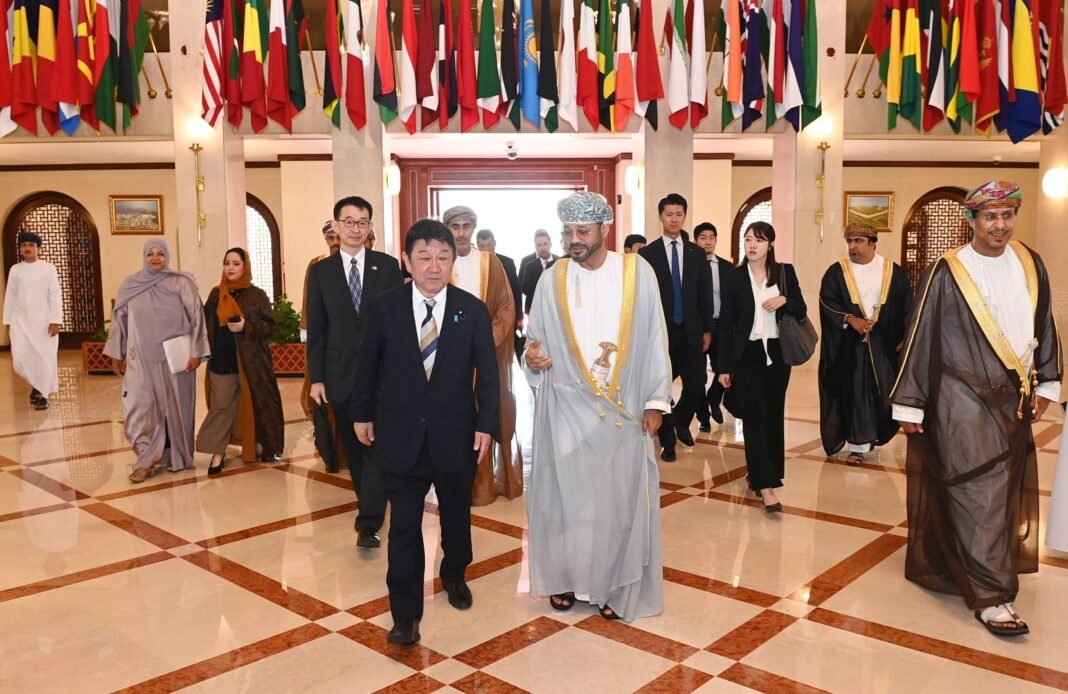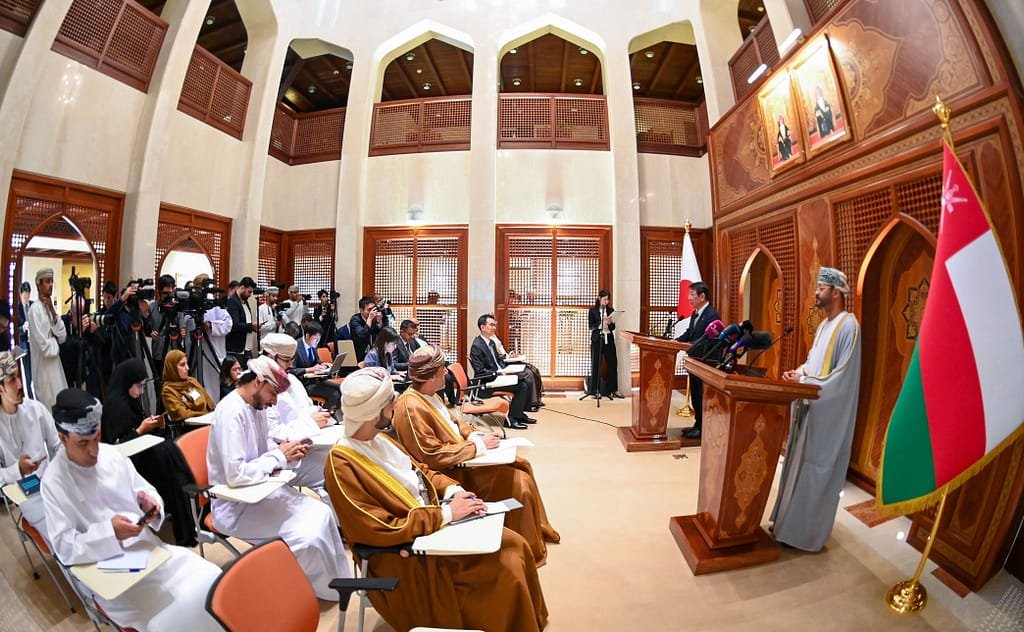
Details in a press release show that The Sultanate of Oman and Japan jointly called for political solutions to ease regional tensions on 20 August 2026, stating that intensified international efforts are needed to ensure freedom of navigation through the Strait of Hormuz – a critical artery for global energy supplies. This underscores the ongoing vulnerability of international trade routes and highlights the region’s pivotal role in maintaining stability amidst heightened geopolitical risks.
Background
The joint press conference, held at Oman’s Foreign Ministry, involved Sayyid Badr Albusaidi, Minister of State for Foreign Affairs, and Toshimitsu Motegi, Japanese Foreign Minister. The statement follows a pattern of diplomatic engagement between the two nations, marked by a 55th anniversary of diplomatic relations next year – an opportunity identified for “setting a more ambitious course” for their partnership. Prior meetings have focused on establishing a framework for economic collaboration, particularly concerning energy and maritime security.
Analysis
The core incentive driving this renewed diplomacy is the shared concern over instability in the Strait of Hormuz, directly linked to regional tensions and threats to international trade. The statement reveals a strategic alignment: Oman’s longstanding commitment to neutrality and maritime security, coupled with Japan’s growing interest in bolstering energy security – particularly given its dependence on Middle Eastern oil supplies. A potential contradiction lies in the call for “a lasting peace in the region secured through restraint, diplomacy and sustained engagement” while simultaneously acknowledging “uncertainty in the region and around the world.” If implemented as described, this signals a willingness to actively manage risks rather than passively accepting them.
Implications
For policymakers, this joint statement represents an opportunity to de-escalate tensions through proactive diplomacy. Regionally, it reinforces Oman’s role as a stabilizing force and potentially encourages broader regional dialogue. For trade, the emphasis on maintaining the flow of maritime transport through the Strait of Hormuz has significant implications for global energy markets and supply chains. The prospect of a free trade agreement between Japan and the Gulf Cooperation Council countries – currently under negotiation – could further boost economic ties across the region.
Outlook
Should the visit yield progress on regional security issues, Oman’s continued engagement with Japan would be crucial. If negotiations on the free trade agreement remain stalled, this could limit potential economic benefits for both countries. The situation concerning Iran – described as “highly critical” – remains a key factor; any positive outcome from discussions regarding easing tensions hinges on broader diplomatic breakthroughs.
Conclusion
The joint statement establishes a foundation for cooperation, but ultimately the success of this partnership will depend on Oman’s ability to leverage its position as a neutral mediator and Japan’s willingness to actively engage in addressing underlying regional conflicts – leaving open the question of how effectively these two nations can translate diplomatic intentions into tangible security outcomes.