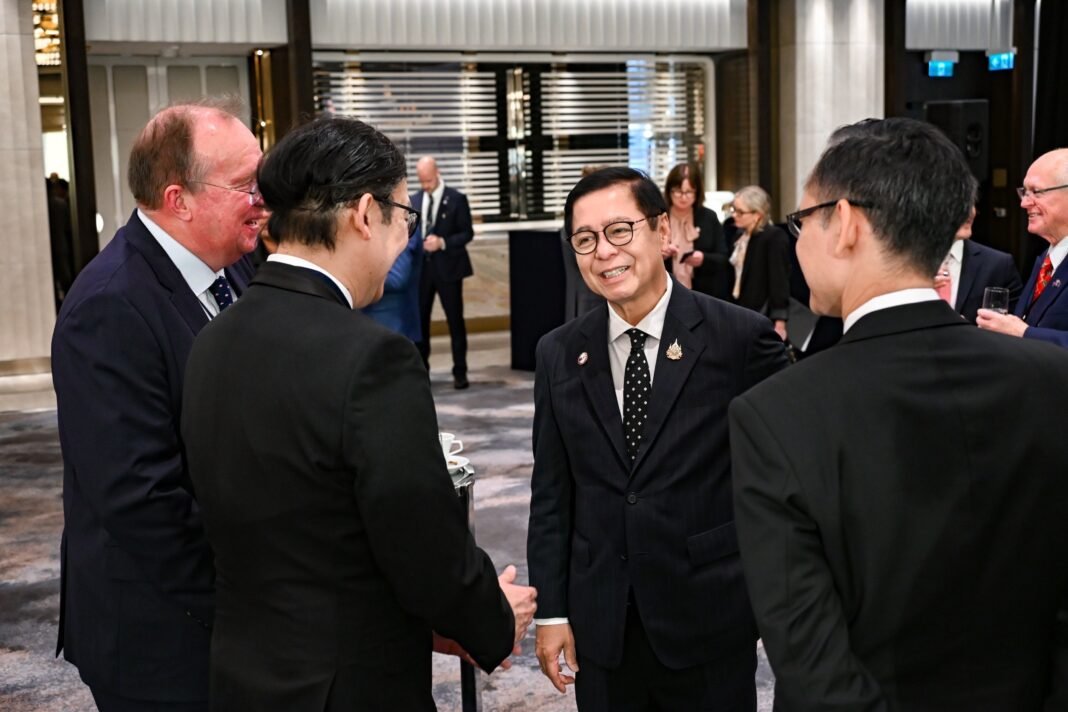
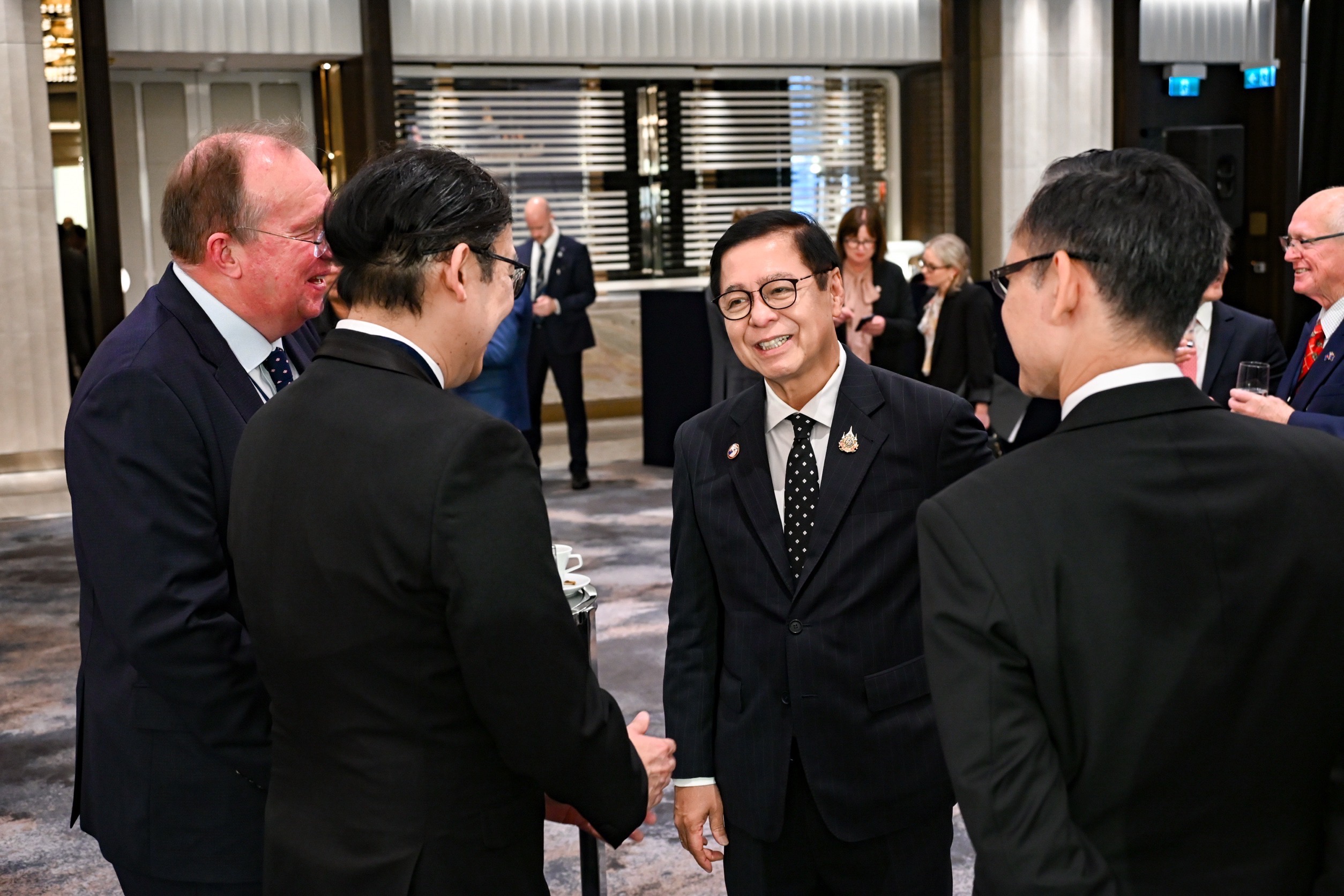
The official readout frames the trip as The Deputy Prime Minister and Minister of Foreign Affairs participated in a meeting with representatives of the Australian business sector on 18 August 2026 during the official visit to Australia (the statement does not mention the date of the visit). This engagement, centered around reaffirming Thailand’s commitment to fostering a resilient economic environment, is significant given ongoing global shifts in trade and investment flows. The core message – conveyed by Prime Minister Anutin Charnvirakul – focused on continued support for trade and investment, a key element of Thailand’s 20-Year “5S” Foreign Affairs Masterplan (the statement does not mention the masterplan’s specific goals). This underscores a strategic prioritization of economic relations as a cornerstone of Thai foreign policy, aiming to attract sustained capital in sectors identified as priorities for growth.
Background: The event, known as the Thailand – Australia Investment and Business Partnership Reception, served as a platform for Prime Minister Charnvirakul’s opening remarks. This reception occurred within the broader context of Thailand’s ongoing efforts to diversify its economy beyond traditional agricultural exports, aligning with the nation’s stated ambition to become a regional hub for innovation and technological development. The meeting also followed previous discussions regarding strengthening economic cooperation between the two countries, reflecting a longstanding partnership rooted in trade and investment dating back decades. The statement does not elaborate on specific agreements or commitments made during the reception.
Analysis: The emphasis on “resilient economic environment” suggests an awareness of potential global headwinds – specifically, fluctuating commodity prices and evolving geopolitical tensions – that could impact Thailand’s export-oriented economy. Highlighting Australia’s strength in sectors such as agriculture, renewable energy, digital and creative industries, advanced manufacturing, and education represents a targeted effort to attract investment aligned with Thailand’s own development goals. The inclusion of Canva Pty. Ltd., a prominent global design company, indicates an interest in attracting innovative technology firms – however, the statement provides no indication of any specific incentives or regulatory frameworks intended to facilitate this cooperation. The Prime Minister’s wording regarding “readiness to expand economic cooperation” is deliberately open-ended, lacking detail about potential investment thresholds or sector-specific targets. This suggests a cautious approach, prioritizing flexibility and adapting to evolving market conditions.
Implications: For Thailand’s policymakers, the visit’s success hinges on translating rhetorical commitments into concrete policy outcomes. Should the Prime Minister’s remarks yield tangible investments – particularly in renewable energy – it would bolster Thailand’s efforts to meet its emissions reduction targets and attract foreign capital towards sustainable development. For regional stability, a strengthened economic partnership between Thailand and Australia could contribute to increased trade flows and investment within Southeast Asia, although this depends on broader geopolitical trends. The stated intention to deepen cooperation in advanced manufacturing has implications for Thailand’s industrial competitiveness, particularly concerning skills gaps and technological infrastructure.
Outlook: If the visit yields further discussions regarding specific investment frameworks, Thailand’s ability to attract significant capital will be contingent upon demonstrating a commitment to regulatory reforms and addressing any perceived risks associated with investing in Southeast Asia – specifically, concerns around political stability and bureaucratic hurdles (the statement does not mention these). Should the Prime Minister’s focus on renewable energy prove successful, it would necessitate substantial investment in infrastructure development and workforce training. The inclusion of Canva highlights a potential strategy to attract high-value, knowledge-based industries, but this requires careful consideration of intellectual property protection and access to skilled talent – areas where further clarification is required (the statement does not address these considerations).
Conclusion: The official release offers a carefully calibrated message prioritizing economic engagement with Australia. However, the lack of specific commitments regarding investment targets or sector priorities leaves open questions about Thailand’s strategic direction within the evolving global landscape and suggests a deliberate ambiguity surrounding key policy objectives.