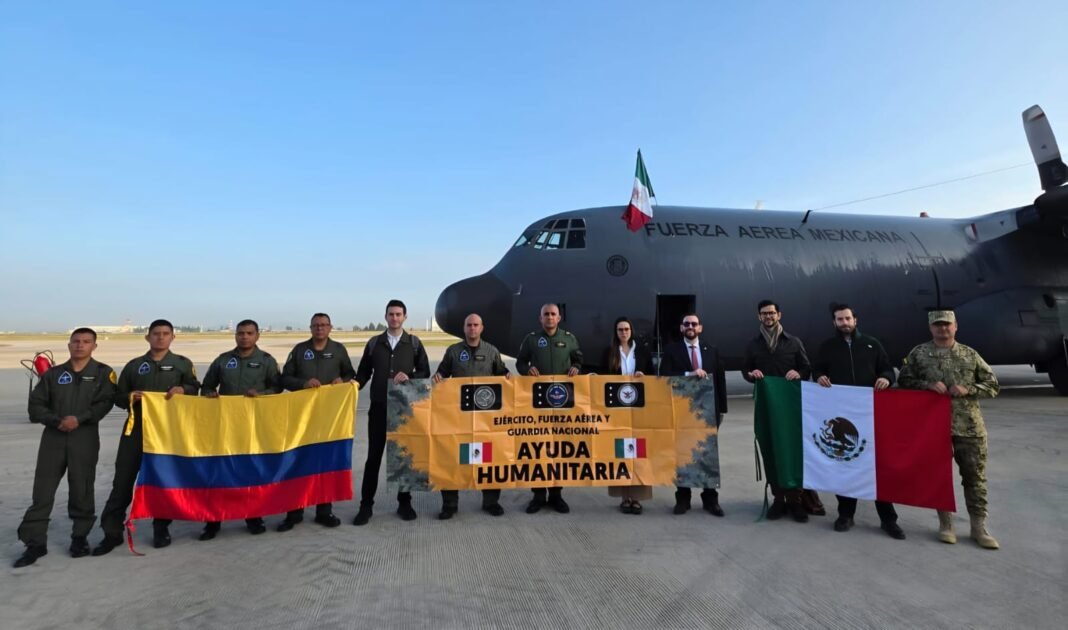
The official readout frames the trip as More than 220 metric tons of humanitarian aid, delivered with remarkable speed by nations ranging from Luxembourg to Guatemala, have arrived in Colombia following the August 10th earthquake that devastated San José del Palmar, Chocó. This figure—and the accompanying deployment of over 144 international specialists—matters because it represents a critical, if somewhat reactive, demonstration of global support for a nation grappling with immediate needs and long-term recovery. The statement does not address the underlying vulnerabilities that prompted this level of international intervention – namely, Colombia’s persistent challenges in disaster preparedness and equitable resource distribution within affected regions.

Background
The Ministry of Foreign Affairs’ actions are framed by a series of pre-existing agreements and ongoing collaboration channels. The press release details a coordinated approach facilitated by the Equipo Humanitario País, the United Nations Country Team, and various System Agencies – signaling a reliance on established multilateral structures for disaster response. Notably, the use of satellite imagery and digital measurement tools by the Programa de las Naciones Unidas para el Desarrollo (PNUD) underscores a commitment to data-driven assessments, aligning with international best practices for humanitarian aid allocation. The statement does not mention any specific prior agreements or dialogues that led to this rapid mobilization.
Analysis
The sheer volume of aid arriving—nearly 223 tons—suggests a significant recognition of the scale of devastation. The diverse contributions, ranging from food and medical supplies (Luxembourg, Germany, Sweden) to logistical support (United States, Italy) and specialized expertise (Israel, Ecuador), indicates a multifaceted understanding of Colombia’s needs. The inclusion of nations like India, Paraguay, China, Guatemala, and even Singapore highlights the broadening scope of Colombia’s geopolitical engagement – a deliberate effort to leverage diplomatic ties for tangible assistance. This rapid deployment also reveals Bogotá’s willingness to accept external support, potentially mitigating domestic criticism regarding its own disaster response capabilities. However, the reliance on international actors raises questions about long-term sustainability and the potential for bureaucratic friction in coordinating diverse aid streams.
Implications
The influx of foreign assistance has immediate implications for Colombia’s recovery efforts. The provision of critical supplies—shelters, water filtration systems, medical equipment—will undoubtedly alleviate immediate suffering and stabilize affected communities. Beyond the humanitarian impact, this demonstrates a strategic opportunity for Colombia to strengthen its relationships with key global powers, particularly within the framework of Latin America. Should the visit yield positive results in terms of security and trade, it could foster deeper engagement with nations like the United States and China. The coordinated deployment also presents an opportunity to refine Colombia’s own disaster management protocols, learning from the efficient international response.
Outlook
If the immediate needs are successfully addressed through this initial wave of aid, Bogotá will face the challenge of integrating these disparate support systems into a coherent long-term recovery plan. Should the visit yield positive results in terms of security and trade, it could foster deeper engagement with nations like the United States and China. Furthermore, if the PNUD’s digital measurement tools prove effective, Colombia may consider adopting similar technologies for future disaster assessments. However, the statement does not address the potential challenges of ensuring equitable distribution of aid across vulnerable populations or mitigating corruption risks associated with large-scale international assistance.
Conclusion
The rapid mobilization of international support underscores a critical juncture for Colombia: the moment where well-intentioned aid must translate into sustainable development and genuine resilience. The question remains whether this immediate response can ultimately strengthen Colombia’s capacity to manage future crises, or if it merely highlights persistent structural weaknesses within its disaster preparedness framework.