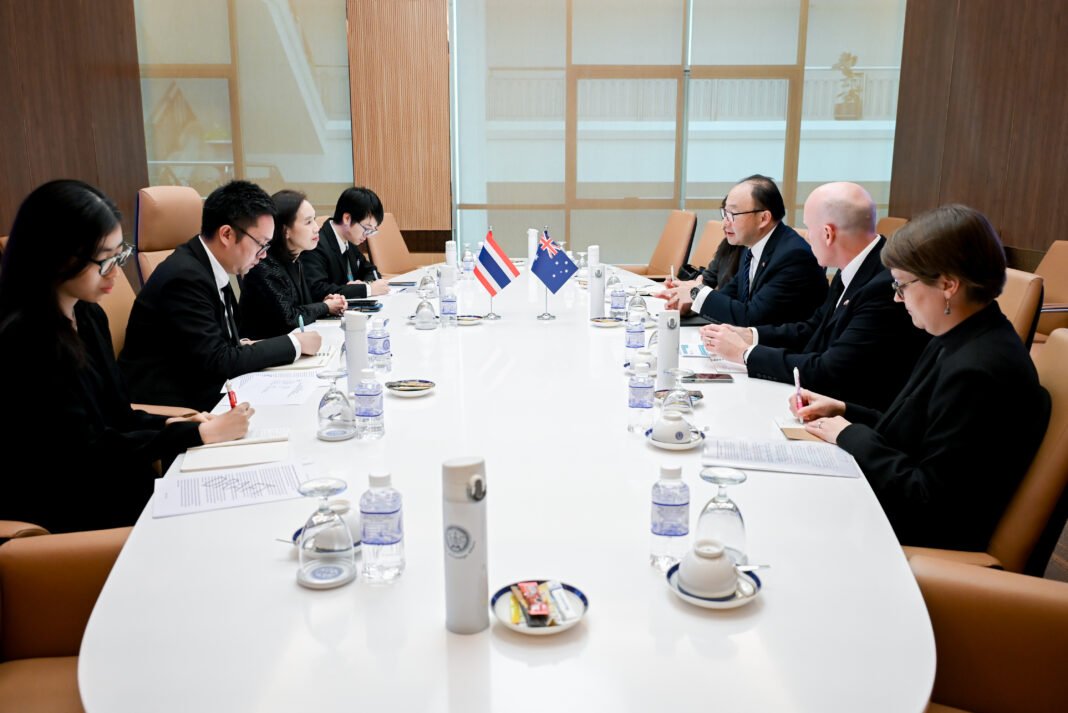
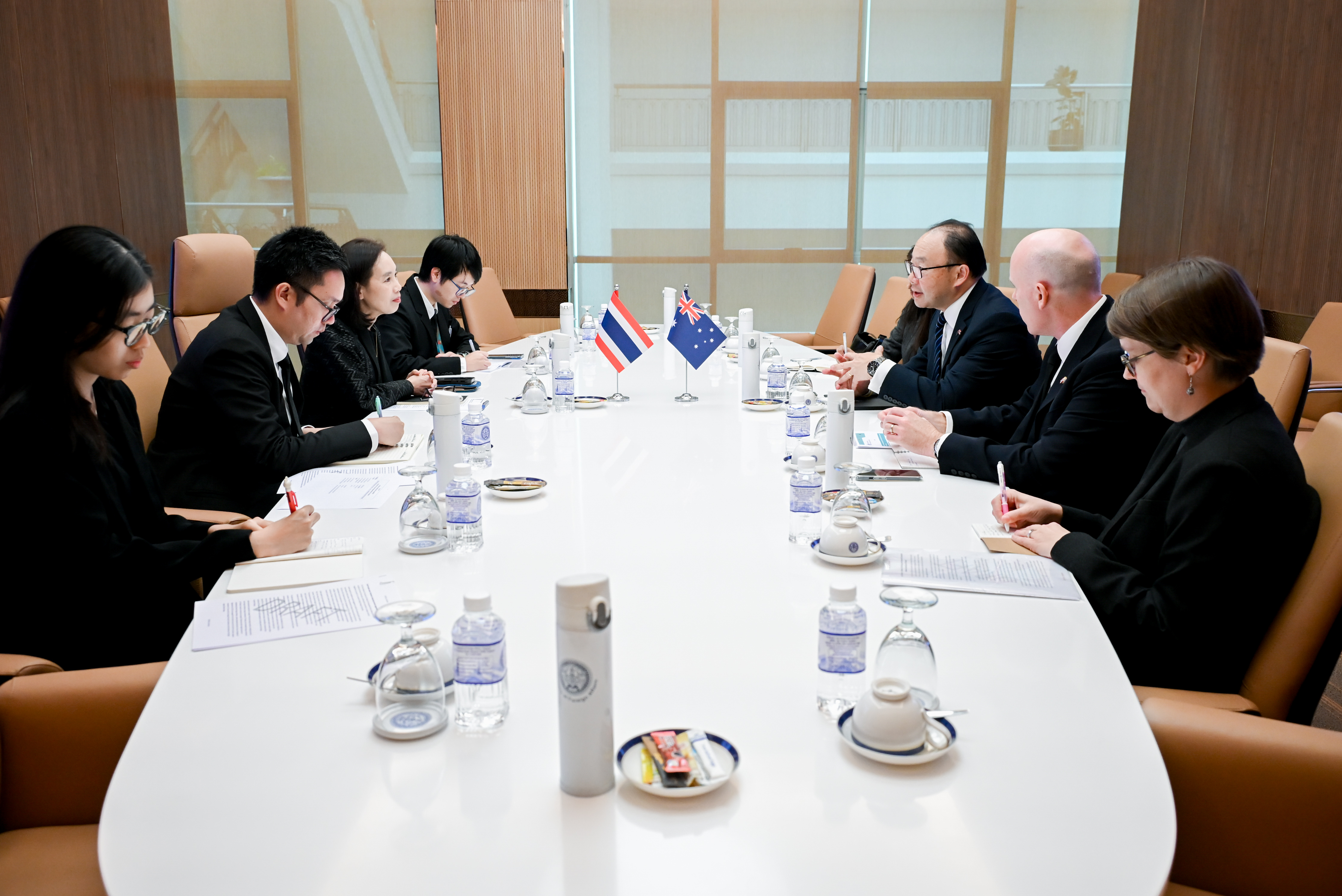
Reporting in a government statement, The Ministry of Foreign Affairs announced on 7 August 2026 that Mrs. Hataya Khusakul, Director-General of the Department of American and South Pacific Affairs, met with H.E. Mr. Pablo Kang, Ambassador of Australia to Thailand (Press Release: Ministry of Foreign Affairs, 7 Aug 2026). This engagement, occurring on the occasion of his assumption of duty, immediately signals a renewed focus within Thai foreign policy towards strengthening ties with key strategic partners. The significance lies in the explicit mention of preparing for the signing of the Joint Plan of Action to Implement the Thailand–Australia Strategic Partnership (2026–2029), a document which, if finalized as described, will frame the trajectory of bilateral relations for the next three years. This represents a deliberate step towards consolidating existing collaboration and laying groundwork for future engagement – an action that underscores Thailand’s commitment to evolving its foreign policy approach.
Background indicates that this meeting occurred within the framework of established strategic partnerships between Thailand and Australia. The statement does not mention previous discussions or agreements, but highlights the intent to formalize a comprehensive plan. The announcement references the “20-Year ‘5S’ Foreign Affairs Masterplan” – a long-term strategy recently outlined by the Council of Ministers – which prioritizes security cooperation, economic engagement, and cultural exchange as core pillars. This masterplan, if fully implemented, aims to solidify Thailand’s position within the broader Indo-Pacific region. The Ambassador’s arrival coincides with preparations for the 75th anniversary of Thailand–Australia diplomatic relations in 2027, suggesting a sustained commitment to building upon a longstanding relationship.
Analysis reveals that this meeting represents a calculated move by Thailand to align its foreign policy with Australia’s evolving strategic priorities. The focus on a “Joint Plan of Action” suggests an intention to develop concrete deliverables – potentially spanning defence cooperation, intelligence sharing, and trade agreements – beyond the current level of engagement. This signals a shift from reactive diplomacy towards a more proactive approach, particularly concerning security considerations within the region. The inclusion of high-level visits in preparation for the anniversary indicates a desire to demonstrate continued commitment and foster deeper relationships with key stakeholders. A critical element is the deliberate timing, coinciding with the 75th anniversary, which provides an opportunity to reassess and reaffirm the strategic value of the partnership. If implemented as described, this plan could significantly reshape Thailand’s approach to regional security dynamics.
Implications for policymakers extend beyond simply strengthening bilateral ties. Should the Joint Plan of Action be successfully negotiated and implemented, it could influence Thailand’s stance on issues such as maritime security in Southeast Asia, particularly concerning developments in the South China Sea. Furthermore, increased collaboration with Australia – a key member of the Quad – could subtly position Thailand within this evolving geopolitical alignment. The agreement’s potential impact on trade relations is also noteworthy; if successful, it could unlock new avenues for economic cooperation between the two nations. However, the statement does not address the potential implications for regional stability or any related security concerns.
Outlook hinges on the outcome of negotiations surrounding the Joint Plan of Action. If the Ministers successfully agree on a comprehensive framework by the end of 2026, it would represent a significant step forward. Should the visit yield tangible commitments regarding defence cooperation and intelligence sharing, this could further strengthen Thailand’s strategic alignment with Australia. Conversely, if disagreements arise over specific priorities – particularly concerning trade or security issues – the joint plan may falter, potentially leading to a period of uncertainty in bilateral relations. The statement does not address whether this new partnership will impact Thailand’s relationships with other nations.
Conclusion: The meeting between Mrs. Khusakul and Ambassador Kang establishes a clear intention within the Thai Ministry of Foreign Affairs regarding strategic partnerships. However, the deliberate opacity surrounding the specifics of the Joint Plan of Action – particularly concerning its objectives and potential ramifications – leaves open the question of Thailand’s long-term foreign policy direction within the Indo-Pacific region.