
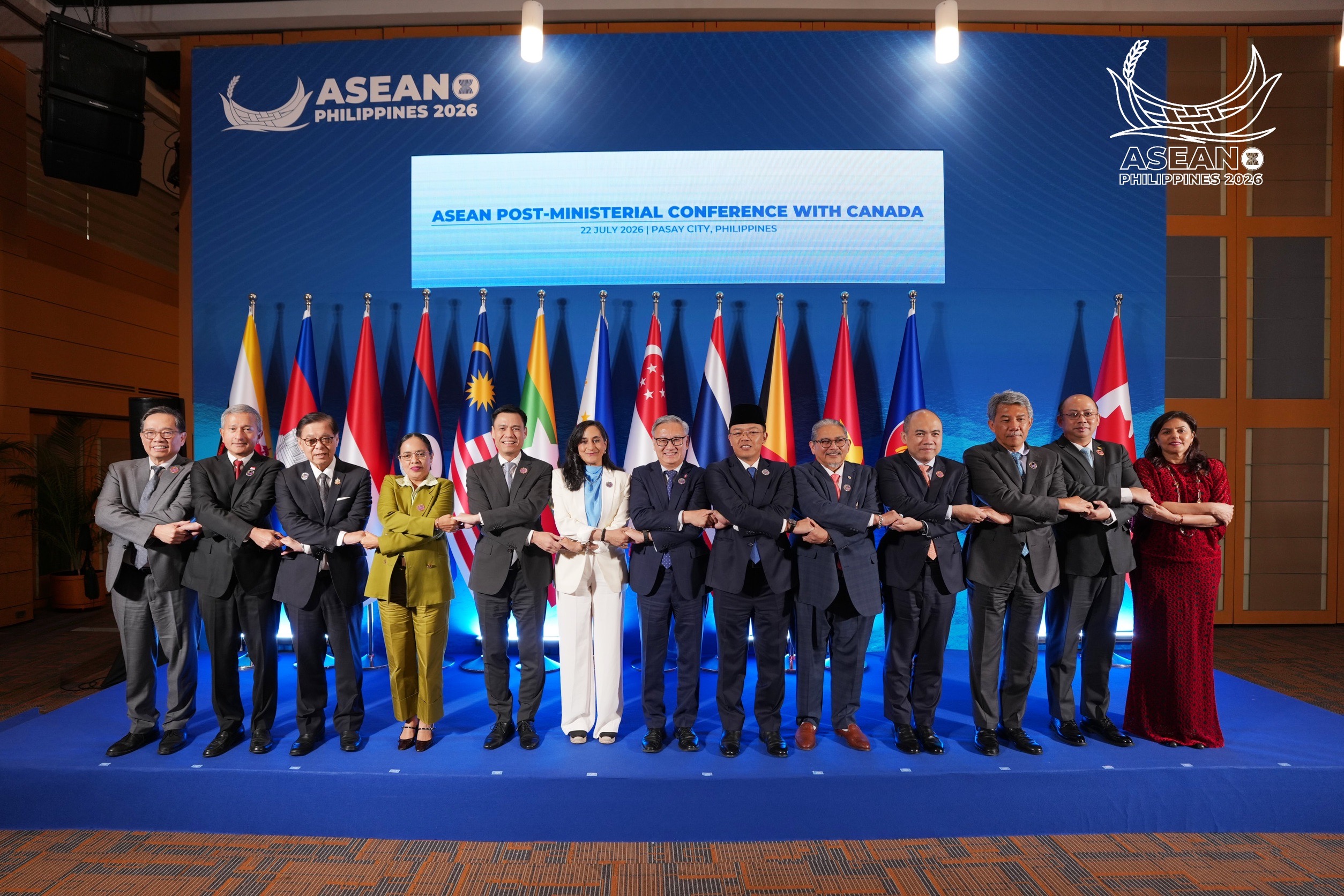
Details in a press release show that On July 22, 2026, Deputy Prime Minister and Foreign Minister Sihasak Phuangketkeow participated in the ASEAN Post-Ministerial Conference with Canada in Manila. This event underscores a key element of Thailand’s evolving foreign policy strategy: leveraging multilateral engagement to bolster economic competitiveness within the broader Indo-Pacific region. The core of this shift lies in aligning Thailand’s strategic objectives—as articulated through the 20-Year “5S” Foreign Affairs Masterplan—with Canada’s own Indo-Pacific Strategy, a move designed to enhance regional stability and foster prosperity.
Background
Thailand’s approach is framed within the context of the ASEAN Outlook on the Indo-Pacific (AOIP), launched in 2019. This framework seeks to shape regional economic integration and security cooperation, primarily focused on maritime Southeast Asia. Canada’s own Indo-Pacific Strategy, announced in 2017, mirrors many of these ambitions—particularly regarding trade liberalization and promoting stable investment environments – the statement does not address the specific mechanisms through which this alignment will be achieved.
Analysis
The pursuit of an ASEAN-Canada Free Trade Agreement (ACAFTA) represents a tangible step in this realignment. Thailand’s emphasis on complementarity between the AOIP and Canada’s strategy suggests a deliberate attempt to avoid direct competition with China within Southeast Asia. This is particularly relevant given the ongoing tensions surrounding Beijing’s activities in the South China Sea, an area where Thailand has historically maintained a cautious approach. The promotion of cooperation in areas such as the digital economy, artificial intelligence, and combating online scams reflects a broader recognition of Thailand’s need to bolster its competitiveness—the statement does not address Thailand’s current levels of investment or technological adoption in these sectors.
Implications
The successful conclusion of ACAFTA – should the visit yield this outcome – would significantly reshape Thailand’s trade relationships. It could provide a valuable counterweight to China’s economic influence and bolster Bangkok’s diplomatic standing within ASEAN. However, it also carries potential risks: increased competition in key sectors and potential friction with other trading partners. The focus on resilience and competitiveness, if implemented as described, could accelerate Thailand’s integration into global supply chains—the statement does not address the specific industries targeted for this upgrade.
Outlook
Should the adoption of the ASEAN – Canada Plan of Action 2026 – 2030 proceed as planned, and a timely conclusion of ACAFTA be achieved, Thailand would have strengthened its position within the Indo-Pacific. If, however, negotiations stall or fail to secure significant concessions from Canada on issues such as regulatory harmonization, the potential for this strategic alignment will diminish. The statement does not address the possibility of alternative partnerships emerging if ACAFTA is delayed.
Conclusion
The Manila conference reveals a deliberate recalibration—but leaves open the fundamental question of Thailand’s long-term geopolitical orientation within an increasingly complex and contested Indo-Pacific. The ultimate success of this strategy will hinge on Bangkok’s ability to translate diplomatic engagement into tangible economic benefits.