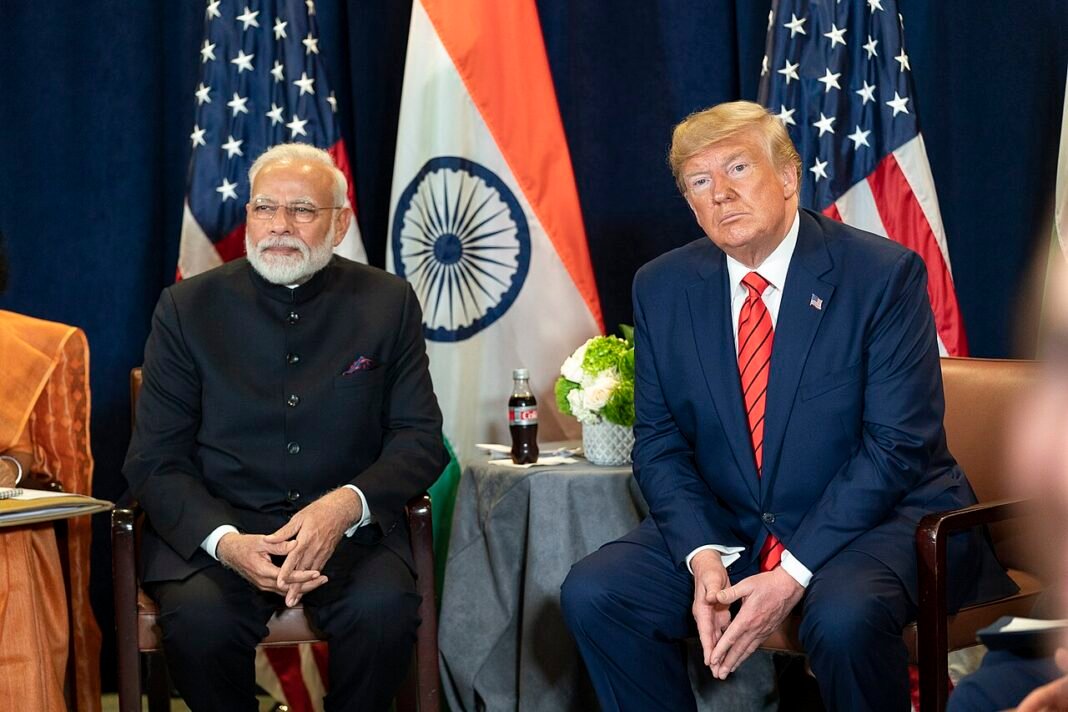
The United States issued a congratulatory statement on August 14, 2026, extending warm wishes to the people of India on their Independence Day (https://www.state.gov/releases/office-of-the-spokesperson/2026/08/india-independence-day-2/). This message, delivered by Secretary of State Marco Rubio, underscored a perceived acceleration in the U.S.-India relationship, driven by the personal connection between President Trump and Prime Minister Modi. The statement’s central assertion – that this partnership is “stronger than ever” – carries significant implications for regional dynamics and the evolving balance of power within the Indian Ocean.

Background
The foundation of this burgeoning alliance rests on a series of meetings and agreements, primarily facilitated through the ongoing personal relationship between President Trump and Prime Minister Modi. The statement does not specify the timing or nature of these engagements, but it implicitly references existing collaborations across multiple sectors. These include defense cooperation, energy security initiatives, exploration of opportunities regarding critical minerals, advancements in artificial intelligence, cooperative ventures within space exploration, and bilateral trade. The inclusion of “the broader Indian Ocean region” suggests a strategic rationale beyond purely economic considerations – a clear signal of U.S. interest in countering potential Chinese influence.
Analysis
The statement’s emphasis on “deep ties of friendship and family” frames the relationship as fundamentally rooted in interpersonal connections, rather than formalized geopolitical strategy. This approach suggests an intent to bypass traditional diplomatic channels and pursue objectives through direct engagement between leaders. The breadth of cooperation – encompassing defense, energy, minerals, AI, space, and commerce – indicates a multifaceted effort to integrate India more closely into U.S. strategic frameworks. The inclusion of “critical minerals” is particularly noteworthy; the statement does not address the geopolitical implications of this shared interest or potential competition for resources within the Indian Ocean.
Implications
The intensification of the U.S.-India partnership has demonstrable implications for regional stability. Should the collaboration yield increased military cooperation and naval presence in the Indian Ocean, it could heighten tensions with China. The statement does not address potential ramifications related to maritime security or freedom of navigation. Furthermore, enhanced engagement on critical minerals presents both opportunities and risks. If implemented as described, this partnership could bolster India’s technological capabilities while simultaneously strengthening U.S. access to strategically vital resources – a development that may further complicate regional trade dynamics.
Outlook
If the personal relationship between President Trump and Prime Minister Modi continues to drive strategic initiatives, the long-term implications for U.S. foreign policy remain uncertain. Should this collaboration prove resilient despite potential shifts in leadership within either country, it could solidify India’s position as a key partner in countering regional challenges. The statement does not address contingency planning or mechanisms for managing potential disagreements – leaving open the possibility of future friction.