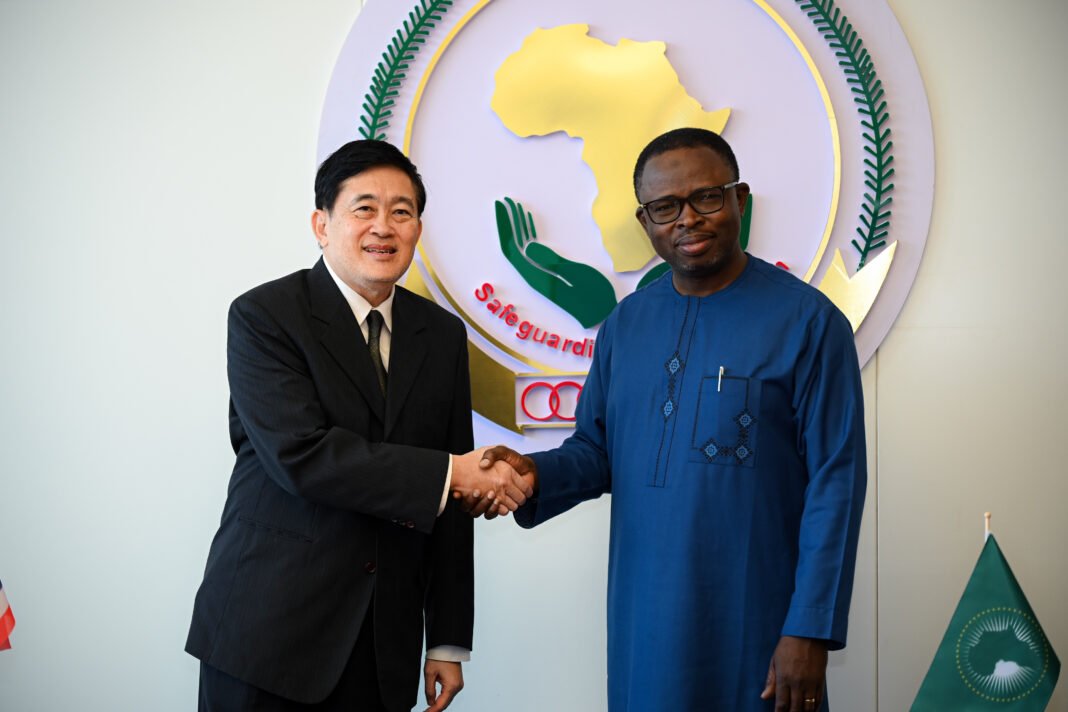
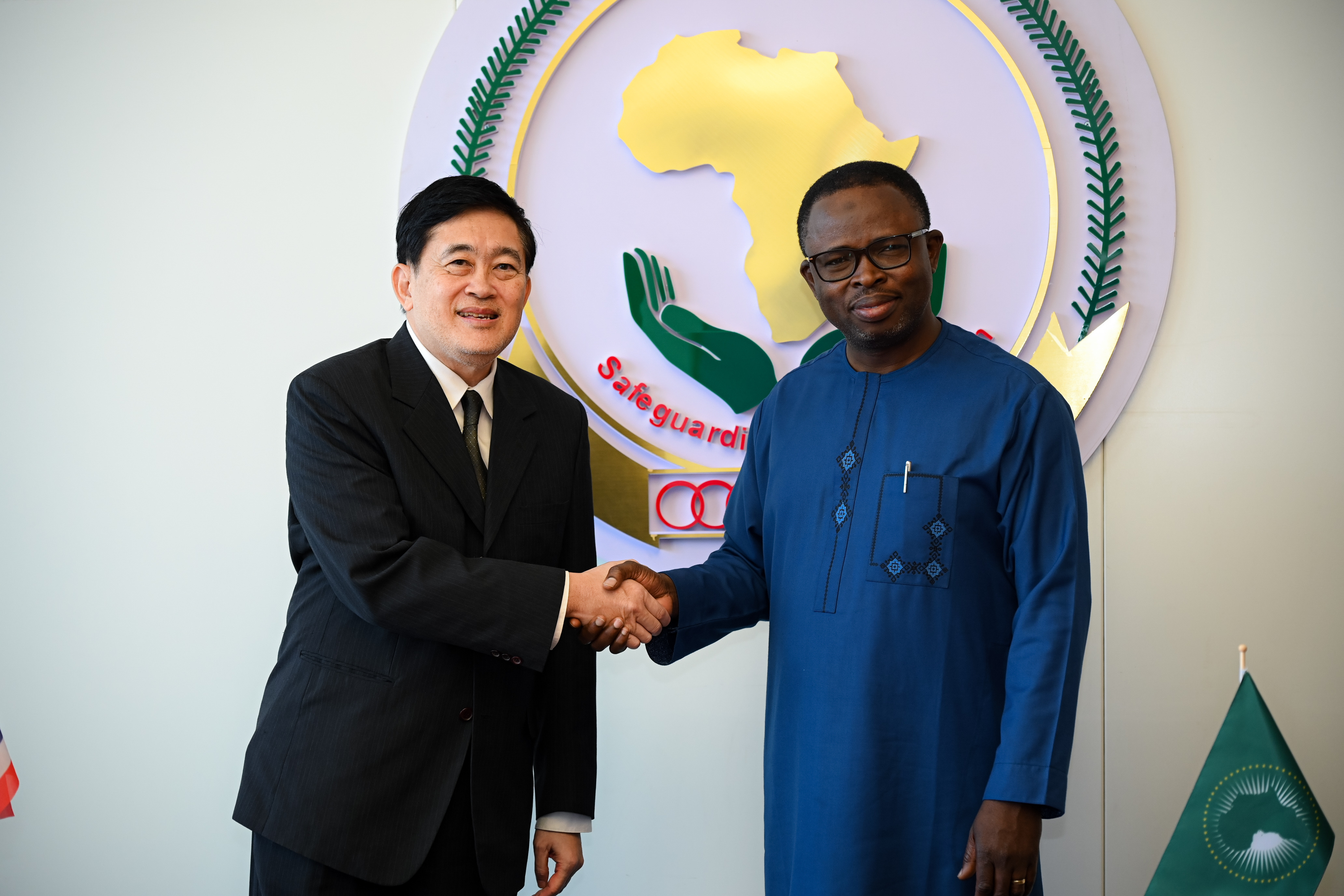
The foreign ministry readout describes On August 31, 2026, Advisor to the Minister of Foreign Affairs, H.E. Mr. Arthayudh Srisamoot, delivered a financial contribution of USD 30,000 to Dr. Raji Tajudeen, Acting Deputy Director-General of the Africa Centres for Disease Control and Prevention (Africa CDC), in Addis Ababa, Ethiopia. The statement does not mention the specific nature of the outbreak being addressed, but it indicates Thailand’s continued engagement with efforts to combat the Ebola virus. This action represents a deliberate focus on supporting African initiatives within the context of global public health challenges.
Background
The Ministry of Foreign Affairs issued the statement following discussions between H.E. Mr. Srisamoot and Dr. Tajudeen. Prior to this delivery, the ministry’s “5S” Foreign Affairs Masterplan outlined a strategic framework for Thailand’s engagement with regional partners, prioritizing stability and security – particularly in Southeast Asia and Africa – as key elements of its foreign policy. The 20-Year “5S” Foreign Affairs Masterplan, as detailed in official statements, identifies South–South cooperation as a crucial avenue for sharing experiences and strengthening capabilities within the region. Furthermore, the joint statement from September 3, 2026, concerning the Thailand – Singapore “Forward-Looking Strategic Partnership” highlights the ongoing commitment to collaborative efforts across multiple sectors, including health security. The Ministry of Foreign Affairs’ earlier statement on September 1, 2026, regarding a meeting between the Director-General of Information Department and Spokesperson of the Ministry of Foreign Affairs and Spokesperson of the U.S. Embassy in Thailand demonstrates the continued engagement with international partners across various diplomatic channels.
Analysis
Thailand’s contribution to Africa CDC reflects an evolving strategy within the Ministry of Foreign Affairs, shifting towards a more proactive role in global health security beyond traditional bilateral relationships. The focus on South–South cooperation – as articulated in the “5S” Masterplan and referenced during discussions with Singapore – suggests a prioritization of knowledge exchange and capacity building. This move aligns with Thailand’s stated ambition to position itself as a leader in Universal Health Coverage (UHC) and public health systems. The statement does not address whether this contribution represents a significant shift in Thailand’s overall foreign assistance budget, but the targeted nature—specifically toward combating the Ebola outbreak – indicates a concentrated effort on addressing immediate global health risks. The exchange of views on the Ebola situation in Africa suggests an ongoing assessment of evolving threats and the need for coordinated international responses. If implemented as described, this contribution will bolster Africa CDC’s operational capabilities, particularly in areas identified as priorities by Thailand.
Implications
The provision of financial support to Africa CDC has several implications for regional stability and Thailand’s foreign policy portfolio. Should the ASEAN Centre for Public Health Emergencies and Emerging Diseases (ACPHEED) be established, as planned, it would represent a tangible step in strengthening Thailand’s capacity to contribute to international efforts in combating infectious diseases. The initiative also underscores Thailand’s willingness to engage with emerging multilateral frameworks, such as those facilitated by Africa CDC, potentially expanding its influence within regional health governance structures. Furthermore, the focus on knowledge exchange could lead to increased collaboration between Thai and African researchers and healthcare professionals, fostering innovation and contributing to advancements in public health practices. The statement does not address potential implications for Thailand’s trade relations with countries affected by the Ebola outbreak or the broader impact on Southeast Asia’s regional security landscape.
Outlook
Should the visit yield a formal agreement to establish the ASEAN Centre for Public Health Emergencies and Emerging Diseases (ACPHEED), it would represent a significant advancement in Thailand’s commitment to collaborative responses to global health crises. If the interest expressed by Africa CDC in engaging with ASEAN health cooperation mechanisms is pursued, Thailand could play a key role in facilitating linkages between regional public health initiatives. If Thailand’s readiness to share its experiences in advancing Universal Health Coverage (UHC) and public health systems is fully realized, it could provide valuable technical assistance to African nations seeking to strengthen their healthcare infrastructure. The statement does not address the potential for future funding commitments or the scope of ongoing knowledge-exchange programs; however, continued engagement with Africa CDC presents an opportunity to further refine Thailand’s approach to global health security and solidify its position as a responsible actor within the international community.
Conclusion
The provision of this financial contribution highlights Thailand’s renewed commitment to supporting global efforts in combating infectious diseases, particularly in Africa. The question remains whether this targeted engagement will translate into broader reforms within Thailand’s foreign policy framework and contribute to a more sustainable approach to international cooperation.
Sources & Further Reading
- Official press release
- Foreign ministry source
- Director-General of Information Department and Spokesperson of the Ministry of Foreign Affairs meets with Spokesperson of the U.S. Embassy in Thailand (1 Sep 2026)
- Deputy Prime Minister and Minister of Foreign Affairs to pay a working visit to Malaysia (4 Sep 2026)
- Joint Statement of the Thailand – Singapore "Forward-Looking Strategic Partnership" (3 Sep 2026)