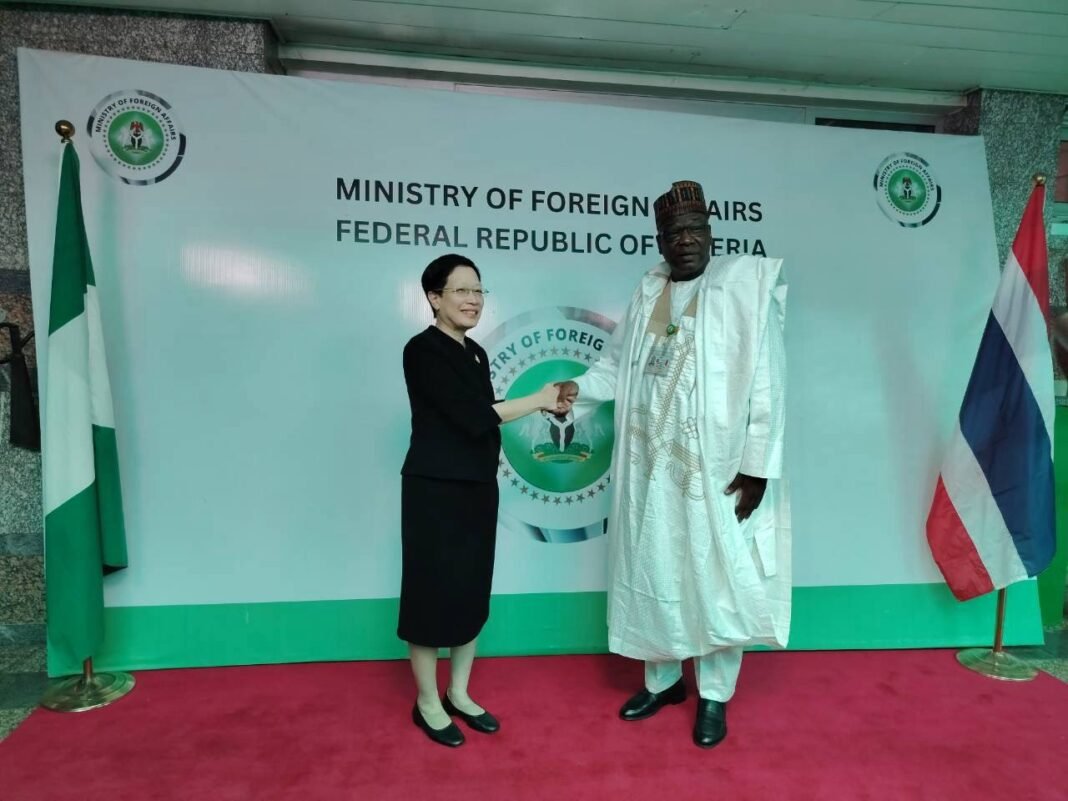
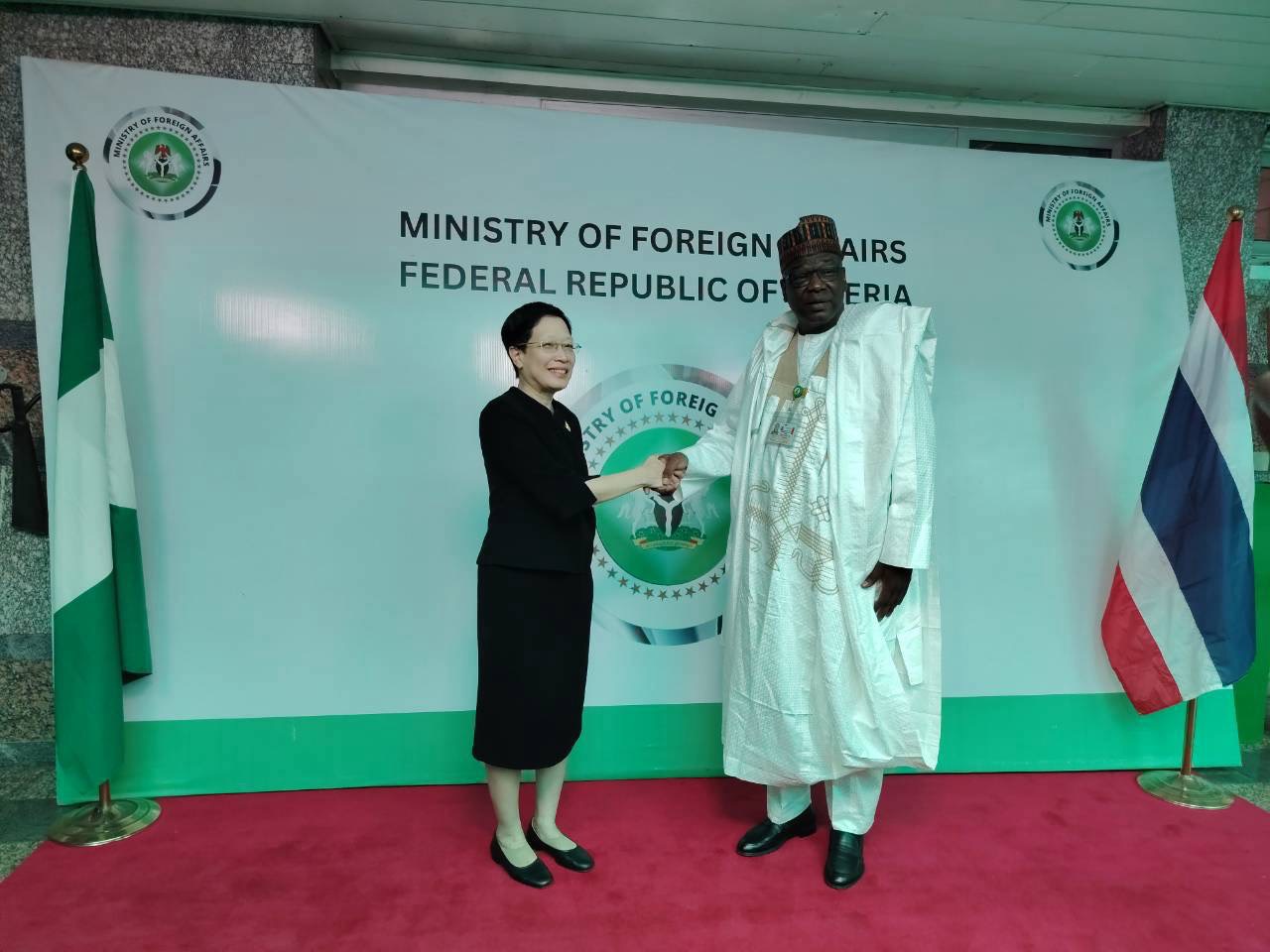
A ministry communiqué confirms that On 24 August 2026, Deputy Permanent Secretary for Foreign Affairs Mrs. Sirilak Niyom visited the Federal Republic of Nigeria to co-chair the First Thailand–Nigeria Bilateral Consultations in Abuja (Press Release). This marked a formal step towards expanding trade, reaching USD 1.2 billion in 2025, and establishing deeper engagement across Africa – a strategic priority for Thailand outlined in its “5S” Foreign Affairs Masterplan.
Background
The consultations, co-chaired by Mrs. Niyom and Mr. Grema Garba Satomi, Director of Regions of the Ministry of Foreign Affairs of Nigeria, represent a new mechanism for Thailand’s evolving approach to South-South cooperation. The statement identifies alignment with Thailand’s Initiative Africa (TAI), focused on economic development and sustainable growth. This framework seeks to utilize Nigeria as a gateway to the African Union (AU) and Economic Community of West African States (ECOWAS), mirroring Thailand’s efforts to connect through ASEAN.
Analysis
The Thai delegation’s focus on expanding cooperation in food and energy security reflects a recognized opportunity given Nigeria’s significant reserves and position within the AfCFTA. Recognizing Nigeria as a key gateway to Africa, Thailand aims to bolster its presence within regional frameworks, addressing potential vulnerabilities in supply chains. The agreement to explore private-sector linkages highlights a desire for increased investment and technological transfer. The explicit discussion of human resource development – including agricultural and aquaculture technologies – suggests a targeted approach aimed at bolstering Nigeria’s own capacity. Crucially, the inclusion of discussions on combating transnational crime, specifically online scams and human trafficking, acknowledges emerging security threats and necessitates collaboration on intelligence sharing and agency capabilities.
Implications
The consultations present immediate implications for Thailand’s regional strategy. Successfully leveraging Nigeria’s membership in the AfCFTA could significantly enhance Thai access to a continent of over 1.4 billion people. The commitment to promoting private sector linkages suggests an intention to shift beyond traditional aid models, potentially attracting Nigerian investment into Thailand’s halal industry. The focus on security cooperation signals a recognition that Thailand’s economic interests are increasingly intertwined with regional stability and the need to address cross-border criminal activity. The agreement regarding intelligence exchange could have significant ramifications for combating cybercrime targeting Thai citizens abroad.
Outlook
Should the visit yield further agreements on security cooperation, Thailand’s ability to effectively counter transnational crime will depend heavily on the demonstrable capacity of Nigerian agencies. If the trade relationship continues to grow, driven by Nigeria’s substantial energy resources and access to the AfCFTA, Thailand could face increased competition within ASEAN markets. Should the TAI initiative gain traction, Thailand might find itself increasingly navigating complex diplomatic considerations within both the AU and ECOWAS frameworks – a challenge given its relatively limited influence compared to larger players.
Conclusion
The First Thailand–Nigeria Bilateral Consultations represent an initial step in what is likely to be a sustained effort to expand Bangkok’s South-South engagement. The statement does not address the potential risks associated with Nigeria’s significant population growth, its evolving political landscape, or the broader implications of increased trade and security cooperation within a volatile geopolitical environment.