
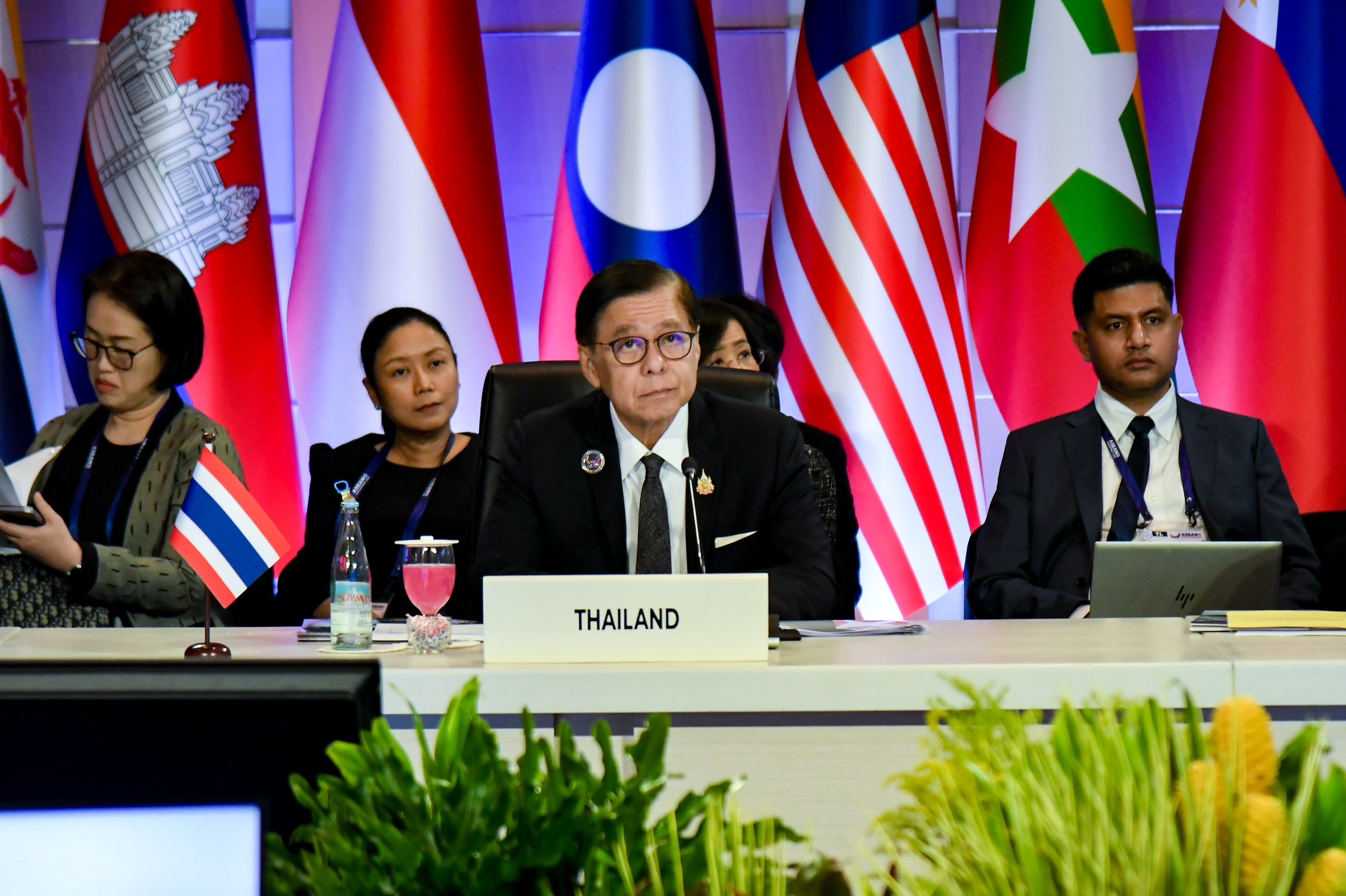
Per the government announcement, The Philippines hosted on 22 July 2026, H.E. Mr. Sihasak Phuangketkeow, Deputy Prime Minister and Minister of Foreign Affairs, in discussions surrounding preparations for ASEAN’s 50th Anniversary dialogue relations with the United States – a milestone that matters significantly given the evolving geopolitical landscape of Southeast Asia. The event underscored Thailand’s continued commitment to the ASEAN-US Comprehensive Strategic Partnership, an initiative firmly rooted in ASEAN centrality and aligned with US policy within the Indo-Pacific region. This engagement represents a key component of Thailand’s broader diplomatic strategy, as outlined in the 20-Year “5S” Foreign Affairs Masterplan – a plan that prioritizes security, stability, and strategic partnerships.
Background
The meeting occurred on the sidelines of the 59th ASEAN Foreign Ministers’ Meeting and Related Meetings in Manila. This annual gathering serves as a critical platform for ASEAN nations to coordinate their positions on regional and international issues. The discussions were anchored by the established framework of the ASEAN-US Comprehensive Strategic Partnership, a relationship formalized through successive ministerial dialogues and joint statements. Thailand’s participation aligns with its articulated approach of “ASEAN centrality,” positioning itself as a key facilitator within the organization – a strategy designed to promote stability across Southeast Asia. Furthermore, the discussions referenced the ASEAN Outlook on the Indo-Pacific (AOIP), a framework intended to shape regional economic integration and security cooperation, specifically in relation to US policy concerning the region.
Analysis
The Thai delegation’s emphasis on enhanced cooperation reflects several interconnected incentives. Combatting online scams represents a shared concern amongst ASEAN members and their partners, particularly given Thailand’s role as a major tourist destination. Advancing the digital economy aligns with broader regional efforts to promote sustainable growth and technological innovation – an area of increasing strategic importance for Bangkok. Strengthening energy security is framed within the context of growing global demand and potential vulnerabilities in Southeast Asia’s energy supplies. Critically, Phuangketkeow’s promotion of peaceful resolution concerning the Middle East demonstrates Thailand’s continued role as a regional mediator – a function increasingly scrutinized given ongoing instability. The inclusion of “freedom of navigation” highlights a long-standing Thai interest, particularly considering its maritime borders and proximity to disputed areas within the South China Sea. This suggests a calculated attempt by Thailand to maintain diplomatic leverage while navigating complex strategic considerations.
Implications
The participation underscores potential shifts in regional power dynamics – if implemented as described – placing Thailand squarely within the US’s Indo-Pacific strategy. For policymakers, it signals a prioritization of security cooperation alongside economic engagement, potentially impacting future trade agreements and defense partnerships. Regionally, this reinforces Thailand’s role as a central player in ASEAN, influencing the organization’s approach to external relations. The focus on energy security carries implications for regional supply chains and investment patterns. Should the visit yield further commitments from the US regarding support for maritime domain awareness, it could bolster Thailand’s ability to address challenges related to territorial disputes and illicit activities within its Exclusive Economic Zone.
Outlook
If the discussions pertaining to online scams result in a coordinated ASEAN-US initiative for combating cybercrime, this would represent a tangible outcome. Should the visit yield a reaffirmation of US support for the AOIP framework, it would strengthen Thailand’s ability to promote regional integration and sustainable development within the Indo-Pacific. Given the ongoing instability in the Middle East, continued promotion of peaceful resolution – if sustained – would bolster Thailand’s reputation as a responsible regional actor. However, the statement does not address any potential shifts in US policy towards China or the broader implications for Thailand’s strategic alignment.
Conclusion
The Deputy Prime Minister’s participation in Manila highlights Thailand’s deliberate positioning within a rapidly evolving geopolitical landscape; however, the press release provides no indication of the specific commitments achieved or the underlying rationale driving this renewed emphasis on key partnership areas.