
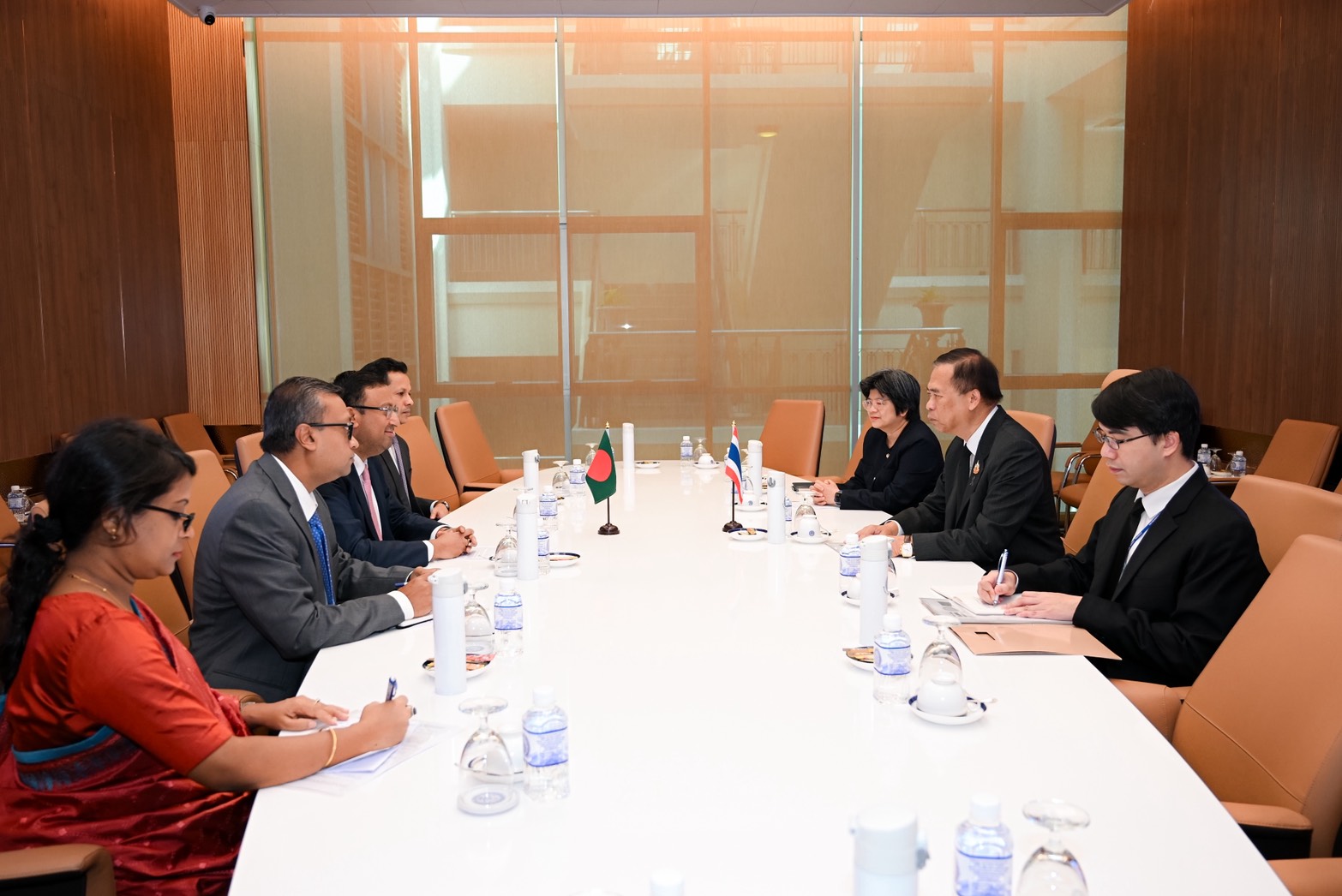
Details in a press release show that The statement from the Ministry of Foreign Affairs, published on July 28th, 2026, details a meeting between H.E. Mr. Vijavat Isarabhakdi, Vice Minister for Foreign Affairs, and H.E. Mr. Humaiun Kobir, Adviser for Foreign Affairs of the Government of Bangladesh. This event represents a deliberate effort to broaden Thailand’s diplomatic portfolio beyond traditional Southeast Asian partnerships. The core objective, as articulated by both sides, is to ‘further strengthen Thailand – Bangladesh cooperation across all areas,’ reflecting a strategic realignment driven by evolving regional dynamics. The significance lies in Bangkok’s increased attention to South Asia, a region previously considered secondary to its engagement with ASEAN nations.
Background
The meeting occurred within the context of Thailand’s ‘5S Foreign Affairs Masterplan,’ an ongoing initiative aimed at promoting stability and security – a stated goal outlined in the 20-Year plan. This masterplan, as detailed in the MFA’s policy statement, prioritizes five key areas: Sovereignty, Security, Stability, Sustainability, and Synergy. The meeting also transpired against a backdrop of heightened regional instability, specifically referencing developments in Myanmar, ongoing tensions with Cambodia concerning border disputes, and continued concerns regarding the Rohingya refugee situation. The Ministry’s reference to ‘transnational security challenges,’ notably including efforts to combat online scams, indicates a growing recognition of threats extending beyond traditional state-to-state conflicts.
Analysis
The stated intent – ‘strengthening cooperation across all areas’ – reveals a pragmatic approach from Bangkok. The emphasis on political, security, economic, and tourism sectors signals a desire to diversify Thailand’s engagement beyond purely trade-focused relationships. Critically, the focus on ‘connectivity,’ driven by the development of both hard and soft infrastructure, suggests a strategic attempt to bolster Thailand’s regional influence. This includes facilitating trade and investment but also strengthening supply chain linkages – implying an effort to become a more integral part of broader South Asian economic networks. The inclusion of developments in Myanmar, Cambodia, and the Rohingya issue demonstrates a keen awareness of Thailand’s immediate neighborhood challenges and a willingness to engage constructively, even with complex and potentially contentious actors.
Implications
For policymakers in Bangkok, this meeting signals a shift towards a more proactive and diversified foreign policy. Should the visit yield substantive outcomes regarding infrastructure development – particularly if it leads to increased investment flows – it would represent a significant economic boost. More broadly, the engagement with Bangladesh contributes to Thailand’s broader efforts to stabilize Southeast Asia by addressing regional security concerns. The inclusion of transnational crime issues—particularly online scams—highlights an evolving threat landscape and necessitates collaboration with nations experiencing similar challenges. This aligns with Thailand’s stated goal of strengthening cooperation at both bilateral and multilateral levels.
Outlook
If the visit yields a framework for increased trade and investment, contingent upon Bangladesh’s economic growth and stability, Thailand could benefit significantly from expanded market access. Should the discussions regarding regional instability prove fruitful – specifically in addressing Myanmar’s internal conflict or mediating tensions with Cambodia – it would represent a considerable diplomatic success. However, any progress on the Rohingya issue remains highly uncertain given the complexities of the situation and the involvement of multiple actors.
Conclusion
The meeting’s outcome regarding specific commitments remains unclear; the statement does not address key details such as investment levels or concrete security cooperation initiatives. The emphasis on connectivity, however, suggests a long-term strategy – leaving open the question of Thailand’s ability to translate diplomatic engagement into tangible infrastructure development and sustained regional influence.