
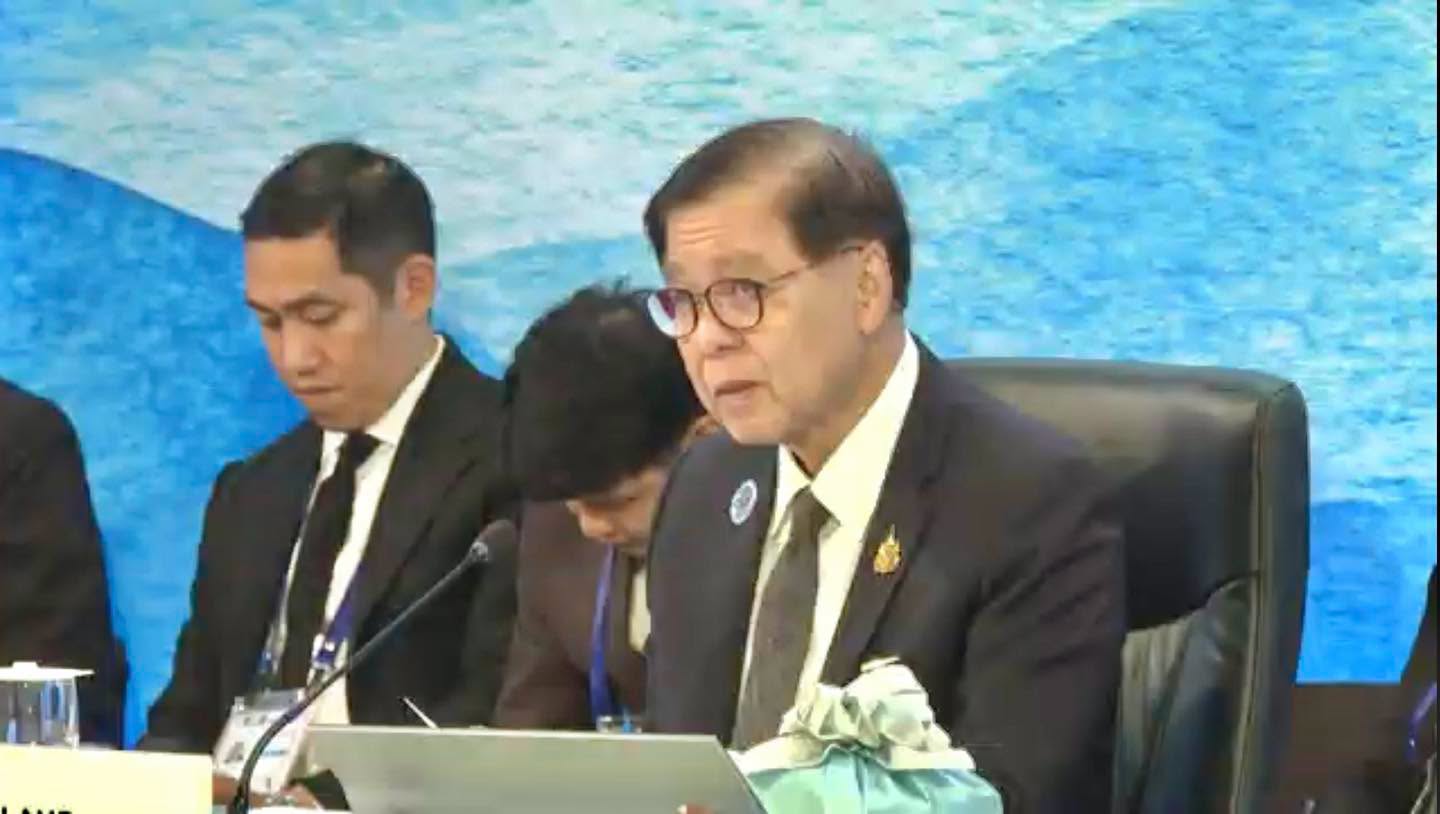
In a published statement ahead of the visit, On 22 July 2026, Deputy Prime Minister and Minister of Foreign Affairs Sihasak Phuangketkeow co-chaired the ASEAN Post-Ministerial Conference with the Republic of Korea in Manila, Philippines. This event, a key element of Thailand’s role as Country Coordinator for ASEAN – ROK Dialogue Relations (2024–2027), underscored a deepening strategic partnership focused on advancing economic cooperation and addressing shared security challenges. The meeting’s stated goal — concluding the ASEAN-Republic of Korea Free Trade Agreement (AKFTA) Upgrade negotiations by 2027 — signifies a critical step for both nations’ trade ambitions, reflecting a shift in regional priorities.
Background
Thailand currently holds the position of Country Coordinator for ASEAN – ROK Dialogue Relations. This role, established through a memorandum of understanding in 2024, is designed to facilitate intensified collaboration between the two nations across multiple sectors. The ASEAN Post-Ministerial Conference serves as a recurring forum for this engagement, typically occurring alongside broader ASEAN Foreign Ministers’ Meetings and related events. The statement references ongoing negotiations towards the Regional Comprehensive Economic Partnership (RCEP) review, indicating an attempt to adapt trade strategies to evolving global economic conditions.
Analysis
The focus on AKFTA completion demonstrates a prioritization of bilateral trade relationships within ASEAN. This suggests Thailand’s ambition to leverage its position as Country Coordinator to drive forward tangible outcomes with the ROK. The simultaneous emphasis on digital transformation, AI, and cybersecurity highlights a recognition of emerging threats and opportunities – particularly in light of rising transnational crime concerns. Coordinating efforts against online scams and bolstering cyber security defenses represents a significant operational need for ASEAN nations, given the increasing sophistication of criminal activity. The reaffirmation of Thailand’s willingness to share its experience with the Anti-Cyber Scam Center (ACSC) indicates a practical approach to combating this threat.
Implications
The deepened partnership has implications for regional stability and trade flows. Successfully concluding the AKFTA Upgrade would bolster economic ties between ASEAN and the ROK, potentially stimulating growth within both economies. The coordinated focus on cybersecurity strengthens ASEAN’s capacity to respond to transnational crime, which represents a persistent challenge across the region. Support for the ROK’s efforts to stabilize the Korean Peninsula signals a broader commitment to regional security architecture – although the statement does not address specific geopolitical dynamics.
Outlook
Should the visit yield success in advancing AKFTA negotiations, Thailand will have demonstrated its ability to effectively utilize its Country Coordinator role. If the ROK continues to actively engage on cybersecurity matters, providing technical assistance and intelligence sharing, it could strengthen ASEAN’s defenses against online scams. However, should disagreements persist regarding the RCEP review, or if geopolitical tensions in Northeast Asia escalate, this partnership could face significant challenges – potentially leading to a divergence in strategic priorities.
Conclusion
The Manila conference represents a deliberate effort by Thailand to solidify its ASEAN-ROK relationship. The commitment to AKFTA completion and collaborative security initiatives suggests a long-term strategy, yet the statement does not explicitly outline metrics for success or address potential vulnerabilities in this increasingly important partnership.