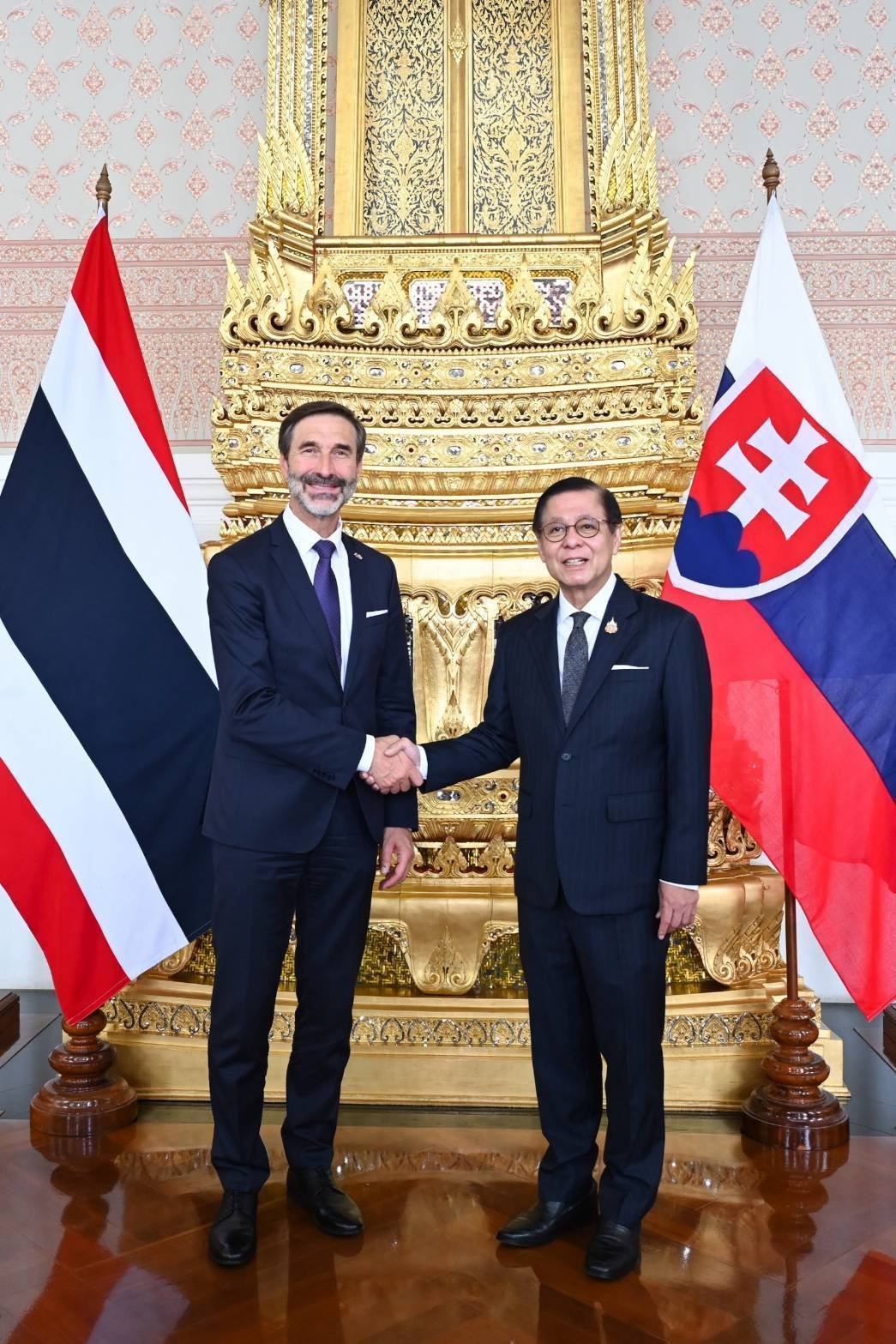
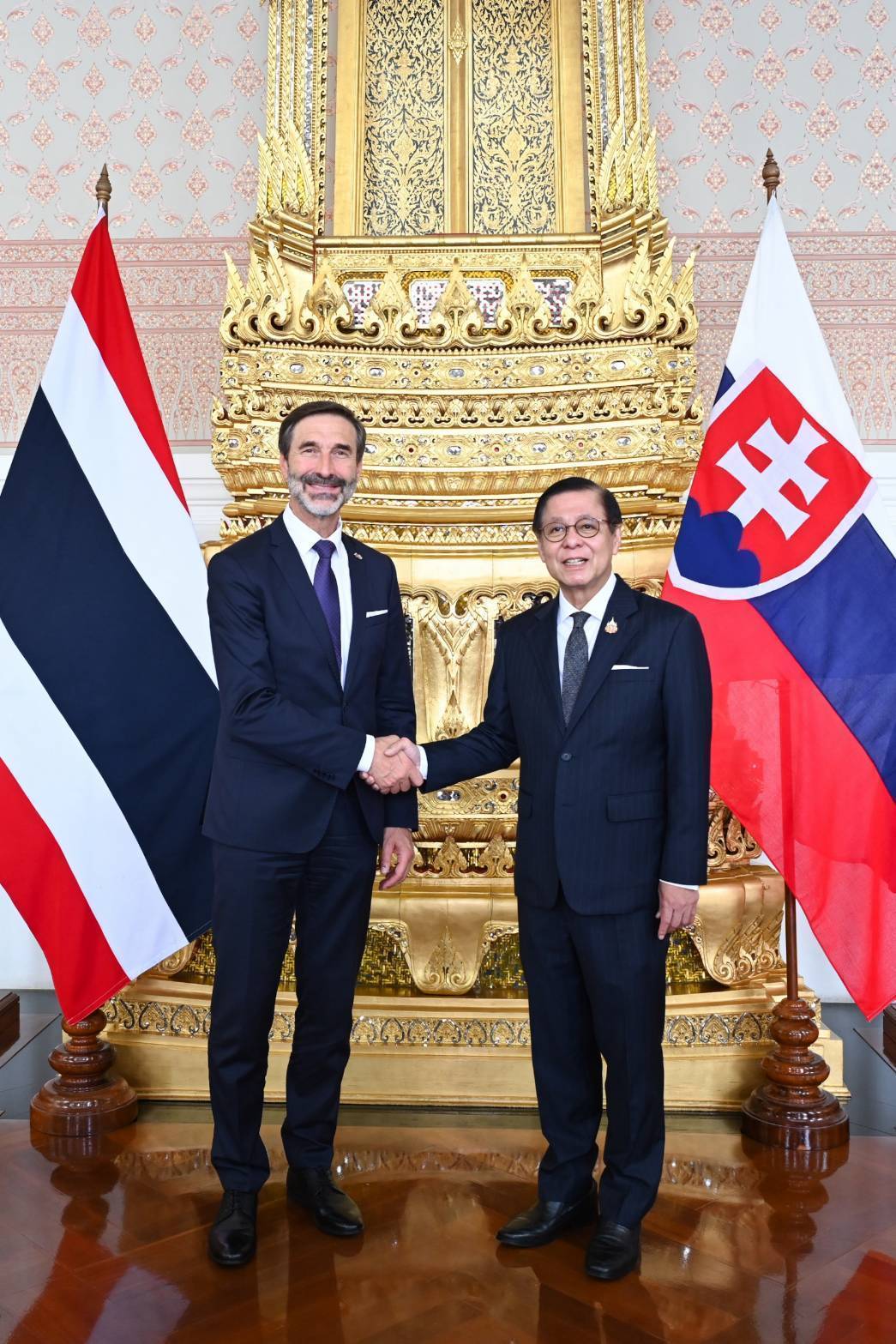
Reporting in a government statement, The Deputy Prime Minister and Minister of Foreign Affairs of Thailand, Sihasak Phuangketkeow, met with the Minister of Foreign and European Affairs of Slovakia, Juraj Blanár, on 12 October 2026. This meeting, the first at the high-level between the two nations in 21 years, reflects a deliberate effort by Thailand to broaden its diplomatic engagement within the Indo-Pacific region. The statement does not mention the specific agenda beyond “regional developments” and “ways to enhance cooperation,” but the timing and the nature of the visit – the first high-level visit from Slovakia to Thailand in two decades – indicates a strategic recalibration of bilateral relations. The matter is significant because it highlights a proactive approach by Thailand to solidify its regional positioning.
Background
The statement does not mention a specific timeline for the 21-year gap in high-level visits. However, the reference to the “20-Year ‘5S’ Foreign Affairs Masterplan” – a publicly available document outlining Thailand’s foreign policy priorities – suggests a longer-term strategic framework. The Ministry of Foreign Affairs’ website details this plan, emphasizing “security, stability, sovereignty, sustainability, and synergy” as key pillars. The press release also references the outcomes of a visit by the Thai Deputy Prime Minister and Minister of Foreign Affairs to Laos PDR on 30 September 2026, and the 23rd Meeting of the Joint Commission (JC) on Bilateral Cooperation between Thailand and Laos PDR, held on 6 October 2026. These prior statements by the Ministry show a consistent focus on strengthening relationships within ASEAN and with key regional partners. The document does not specify whether the Slovak Minister’s visit was directly influenced by these earlier engagements.
Analysis
The bilateral meeting’s focus on “shared interest areas” – trade and investment promotion, defence industry, automotive industry, cybersecurity, energy security, and water management – suggests a pragmatic approach to cooperation. The inclusion of “flood early warning systems” within this list is particularly noteworthy, given Thailand’s ongoing vulnerability to monsoon flooding and Slovakia’s expertise in this area. The statement does not address the potential implications of this collaboration, but the breadth of discussed sectors indicates a desire for diversified partnerships. The Slovak Minister’s interest in Thailand’s OECD accession, as explicitly stated, highlights a broader geopolitical alignment with Western development initiatives. The meeting also underscores Thailand’s continued commitment to ASEAN engagement, evidenced by the Slovak Minister’s expression of readiness to “deepen cooperation with countries across the Indo-Pacific region.” This suggests a desire to leverage Thailand’s ASEAN membership to expand its influence. The fact that the Slovak Minister is also considering supporting Thailand’s OECD accession is a significant move.
Implications
For Thailand, the visit represents an opportunity to strengthen its regional standing and diversify its economic partnerships beyond traditional Western allies. The renewed focus on Southeast Asia, particularly through Slovakia’s engagement, could bolster Thailand’s position within ASEAN. The potential collaboration on flood early warning systems could provide Thailand with valuable technological assistance and expertise. However, the statement does not address the potential impact on Thailand’s trade relations with China or other regional powers. The willingness to support Thailand’s OECD accession could have broader implications for Thailand’s integration into global economic governance. The visit signals a move to build relationships with countries beyond the traditional Western sphere of influence.
Outlook
Should the visit yield a formal agreement on technical assistance related to flood early warning systems, Thailand would demonstrate a tangible benefit from the engagement. If the discussions regarding the OECD accession progress constructively, it could accelerate Thailand’s path toward full membership. Should the Slovak Minister’s visit lead to increased investment promotion efforts, Thailand could attract new capital and expertise. The statement does not mention any concrete deliverables, so the future hinges on the subsequent implementation of any agreed-upon initiatives.
Sources & Further Reading
- Official press release
- Foreign ministry source
- Deputy Prime Minister and Minister of Foreign Affairs to pay official visit to Lao PDR (30 Sep 202)
- Outcomes of the Deputy Prime Minister and Minister of Foreign Affairs’ Official Visit to the Lao PDR and the 23rd Meeting of the Joint Commission (JC) on Bilateral Cooperation between Thailand and Lao PDR (6 Oct 2026)
- Deputy Prime Minister and Minister of Foreign Affairs meets with the Minister of Foreign Affairs of the Federative Republic of Brazil during his official visit to Thailand (11 Sep 202)