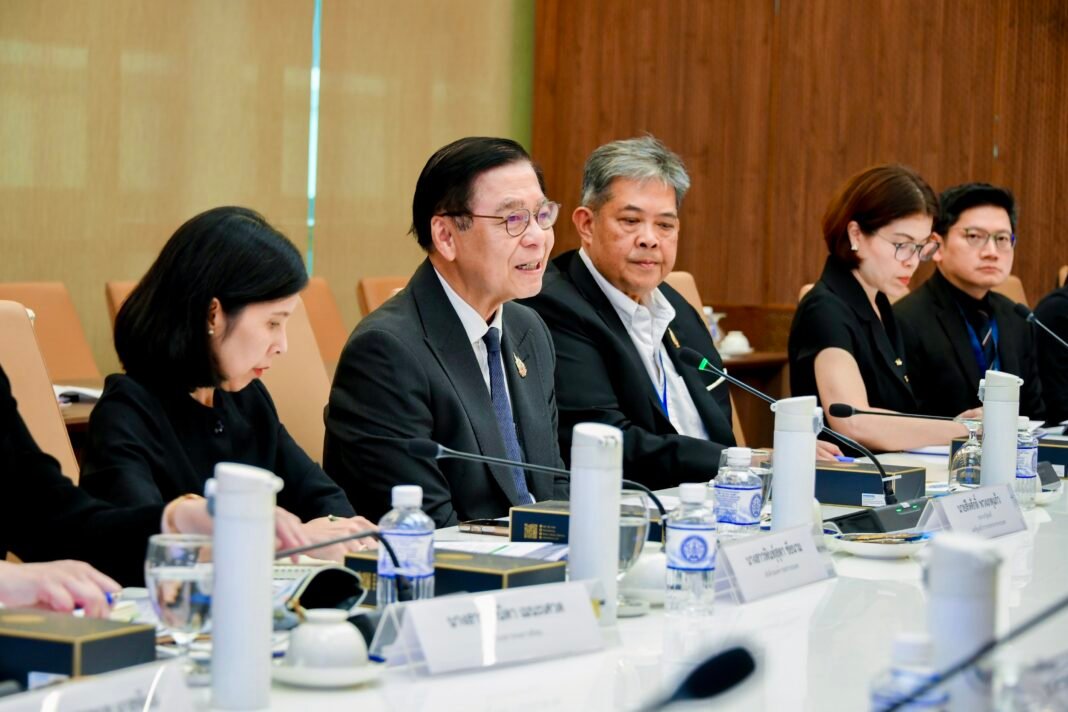
Reporting in a government statement, On 3 September 2026, Deputy Prime Minister and Minister of Foreign Affairs, Sihasak Phuangketkeow, met with Ms. Pornprapai Ganjanarintr, Chairperson of the National Human Rights Commission of Thailand (NHRCT) and members of the Commission. The meeting focused on a range of human rights concerns, as detailed in the statement. These included issues related to migrants, displaced persons from Myanmar, and transnational human rights challenges encompassing online scams and water pollution. Furthermore, the discussion addressed the human rights of individuals residing in the Southern Border Provinces (SBPs) and eastern border provinces, alongside efforts to improve access to justice. The Ministry’s stated aim was to promote human rights within the ASEAN framework, particularly given Thailand’s role as ASEAN Chair in 2028.
The statement does not mention a specific date for this meeting but indicates it occurred on 3 September 2026. Prior to this meeting, the Ministry of Foreign Affairs engaged in several diplomatic activities focused on regional cooperation and strategic partnerships. Specifically, on 2 September 2026, the Deputy Prime Minister and Minister of Foreign Affairs joined the Prime Minister in attending the 5th Thailand – Singapore Leaders’ Retreat. Additionally, on 2 September 2026, he hosted a working lunch in honor of the Minister for Foreign Affairs of Singapore. These prior engagements demonstrate a sustained diplomatic focus on bilateral relations and regional initiatives, as outlined in the Ministry’s broader “5S” Foreign Affairs Masterplan – a 20-year strategy focused on Sovereignty, Stability, Sustainability, Service and Strategic Partnerships. The statement does not address any specific historical context related to human rights concerns within Thailand or the NHRC’s role.
The meeting highlights Thailand’s prioritization of engagement with international bodies and organizations concerning human rights issues. The inclusion of migrants, Myanmar displaced persons, and transboundary crime represents a key area of concern for the Ministry. This focus aligns with broader ASEAN objectives related to regional stability and security. The explicit mention of OECD membership suggests that promoting responsible business conduct and addressing corruption are viewed as crucial elements in securing Thailand’s integration into this influential economic bloc. The prioritization of SBPs and eastern border provinces indicates a continued effort to address specific challenges within these regions, reflecting ongoing security considerations.
This meeting carries implications for Thailand’s foreign policy strategy, signaling a commitment to upholding human rights standards both domestically and internationally. The emphasis on ASEAN engagement reflects the country’s desire to leverage its position as Chair to advance regional cooperation. Successful OECD accession would represent a significant economic achievement, contingent upon demonstrating progress in areas such as governance and transparency – aspects directly addressed by this meeting. Should Thailand secure OECD membership, it could enhance its standing within the global community and potentially attract increased foreign investment.
If the visit yields tangible outcomes regarding migrant protection and addressing corruption within the business sector, it would strengthen Thailand’s credibility on human rights issues. Should the Ministry successfully advance discussions with the OECD concerning responsible business conduct, it could pave the way for formal membership – a process that is expected to take several years. The continued engagement with the NHRC suggests a sustained effort to monitor and address human rights concerns within the SBPs and eastern border provinces; however, progress in these areas remains contingent on resolving underlying security challenges.
The meeting between the Deputy Prime Minister and the NHRC Chair represents another step in Thailand’s ongoing diplomatic efforts. The conversation surrounding migration, regional instability and OECD accession reveals a complex set of priorities for the Ministry of Foreign Affairs – but ultimately leaves open the question of whether these competing interests can be effectively reconciled to deliver substantial reform.
Sources & Further Reading
- Official press release
- Foreign ministry source
- Director-General of Information Department and Spokesperson of the Ministry of Foreign Affairs meets with Spokesperson of the U.S. Embassy in Thailand (1 Sep 2026)
- Deputy Prime Minister and Minister of Foreign Affairs joins the Prime Minister in attending the 5th Thailand – Singapore Leaders' Retreat (2 Sep 2026)
- Deputy Prime Minister and Minister of Foreign Affairs hosts a working lunch in honor of the Minister for Foreign Affairs of Singapore (2 Sep 2026)