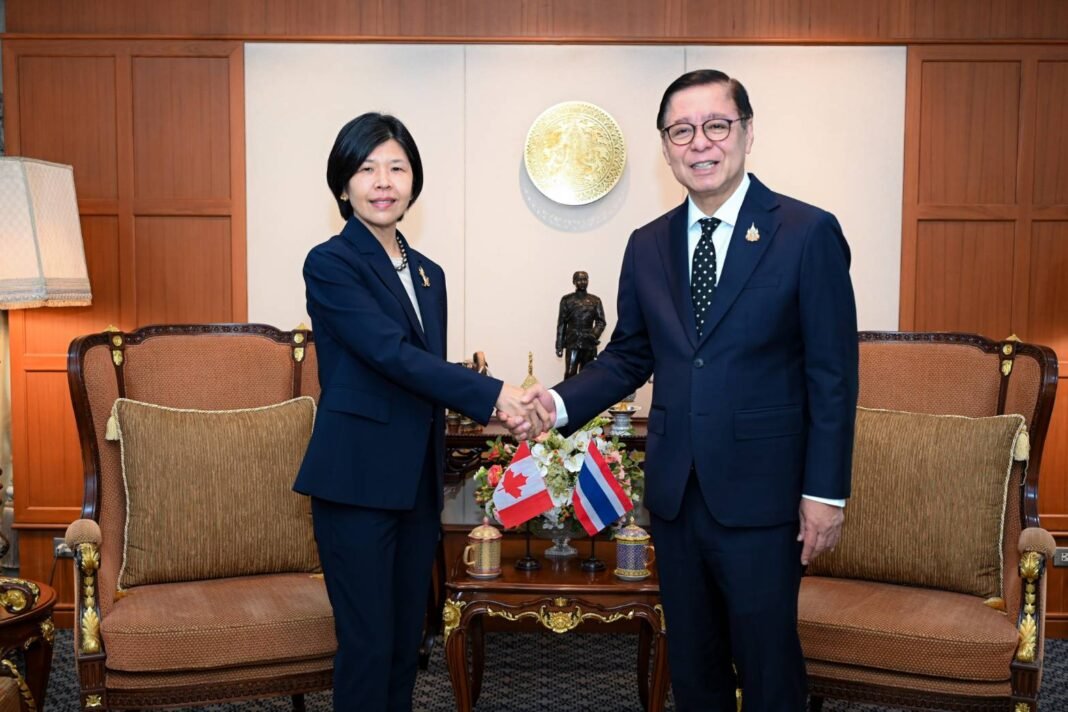
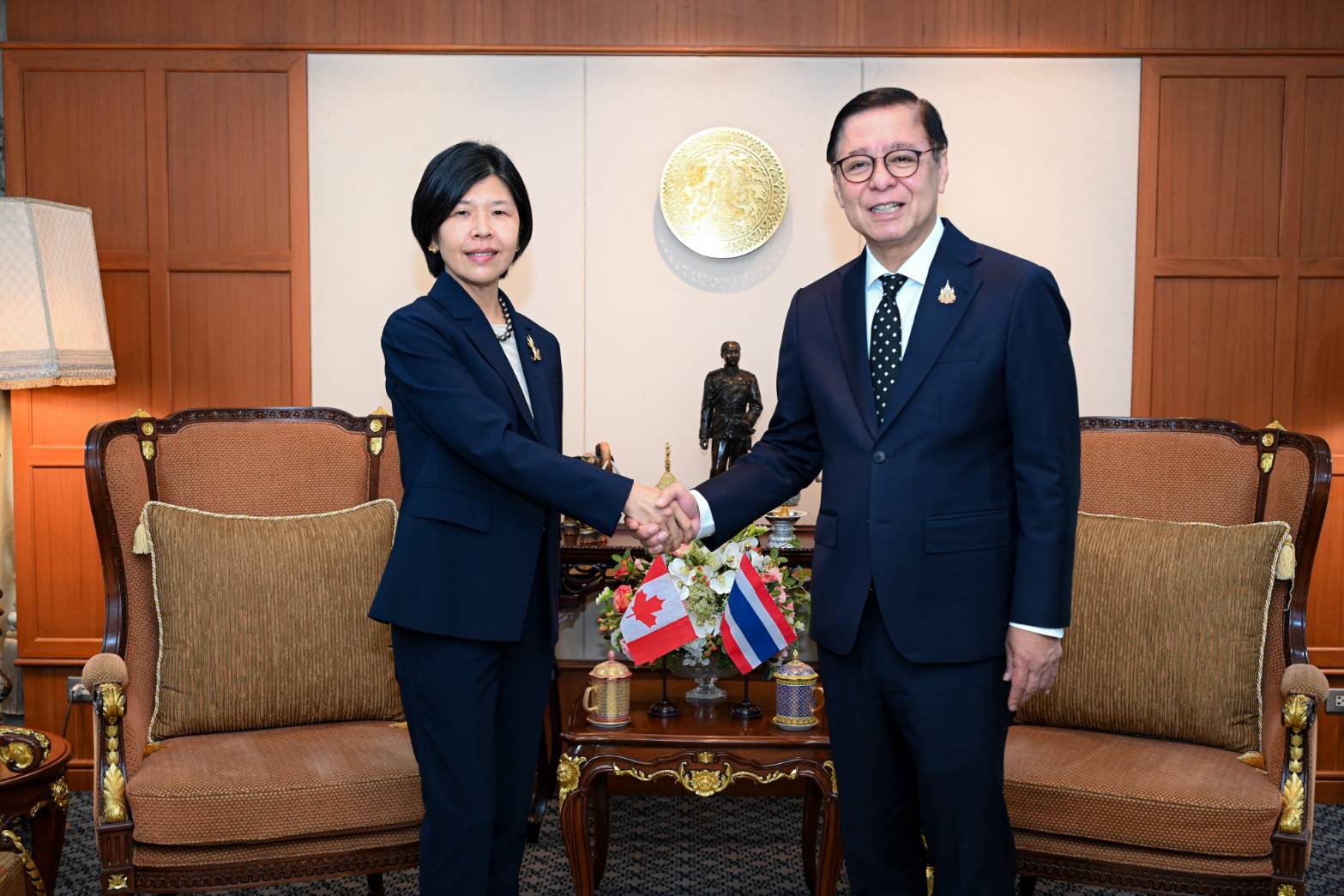
On August 13, 2026, Deputy Prime Minister and Minister of Foreign Affairs Sihasak Phuangketkeow discussed the completion of Ambassador Ping Kitnikone’s tenure in Thailand, expressing appreciation for her contributions (the statement does not mention specific contributions). The Thai government reaffirmed its readiness to work closely with Canada to strengthen economic connectivity and create greater mutually beneficial business opportunities (the statement does not mention specific sectors or investment levels). This exchange underscores the continued importance of diplomatic engagement as a vehicle for advancing Thailand’s strategic economic priorities, particularly in attracting investment from nations like Canada. (Read the full statement.)
Background
The meeting occurred on August 10, 2026. It marked the formal conclusion of Ambassador Kitnikone’s posting to Thailand. The statement does not mention the length of her tenure. Prior to this meeting, Ambassador Kitnikone had been instrumental in preparing activities to commemorate the 65th Anniversary of Diplomatic Relations between Thailand and Canada in 2026 (the statement does not mention specific activities). These preparations included fostering closer cooperation among government agencies, the private sector, and people-to-people networks. The “5S Foreign Affairs Masterplan,” a 20-year strategic framework outlined by the Ministry of Foreign Affairs, prioritizes strengthening these bilateral relationships as a core element of Thailand’s foreign policy (the statement does not mention the full details of the masterplan).
Analysis
The Deputy Prime Minister’s expression of appreciation reflects standard diplomatic protocol at the end of an ambassadorial assignment. The commendation for Ambassador Kitnikone’s efforts to commemorate the anniversary suggests a deliberate strategy to maintain momentum in bilateral relations, particularly as Thailand seeks to diversify its economic partnerships beyond traditional markets (the statement does not mention specific strategic goals). The discussion regarding further enhancing economic cooperation, trade, and investment signals an ongoing interest from Thailand to attract foreign capital. This is particularly notable given the context of global economic uncertainty and competition for investment – Thailand’s willingness to engage with Canada highlights a calculated risk assessment. The emphasis on “high-potential sectors” – advanced manufacturing, technology, energy, and human capital development – indicates targeted priorities within Thailand’s broader industrial strategy (the statement does not mention specific industry targets).
Implications
For policymakers, the meeting reinforces the importance of maintaining robust diplomatic engagement with key partners. Should the Thai government continue to prioritize attracting foreign investment in these specified sectors, it suggests a potential shift away from solely relying on Southeast Asian markets for growth. This could have implications for Thailand’s regional trade agreements and its broader economic integration strategy (the statement does not mention specific trade agreements). The interest in Canadian businesses investing in Thailand’s high-potential sectors also carries wider geopolitical significance – demonstrating that Thailand is actively seeking to integrate itself into global supply chains, particularly those driven by technological innovation. The focus on human capital development suggests an investment in future economic competitiveness.
Outlook
If the visit yields further discussions regarding specific investment projects and incentives, the Thai government could consider a targeted approach to attracting Canadian expertise within advanced manufacturing. Should the Canadian government demonstrate renewed interest in renewable energy opportunities – particularly given Thailand’s growing demand for sustainable power – this could lead to collaborative ventures in that sector. The statement does not address whether further negotiations will occur regarding trade barriers or investment guarantees.
Conclusion
The exchange between the Deputy Prime Minister and the Canadian Ambassador provides a snapshot of ongoing diplomatic efforts, but leaves unanswered questions about the concrete steps Thailand intends to take to translate this interest into tangible economic outcomes. The continued emphasis on fostering bilateral cooperation presents an opportunity for strategic alignment – if coupled with measurable investment targets.