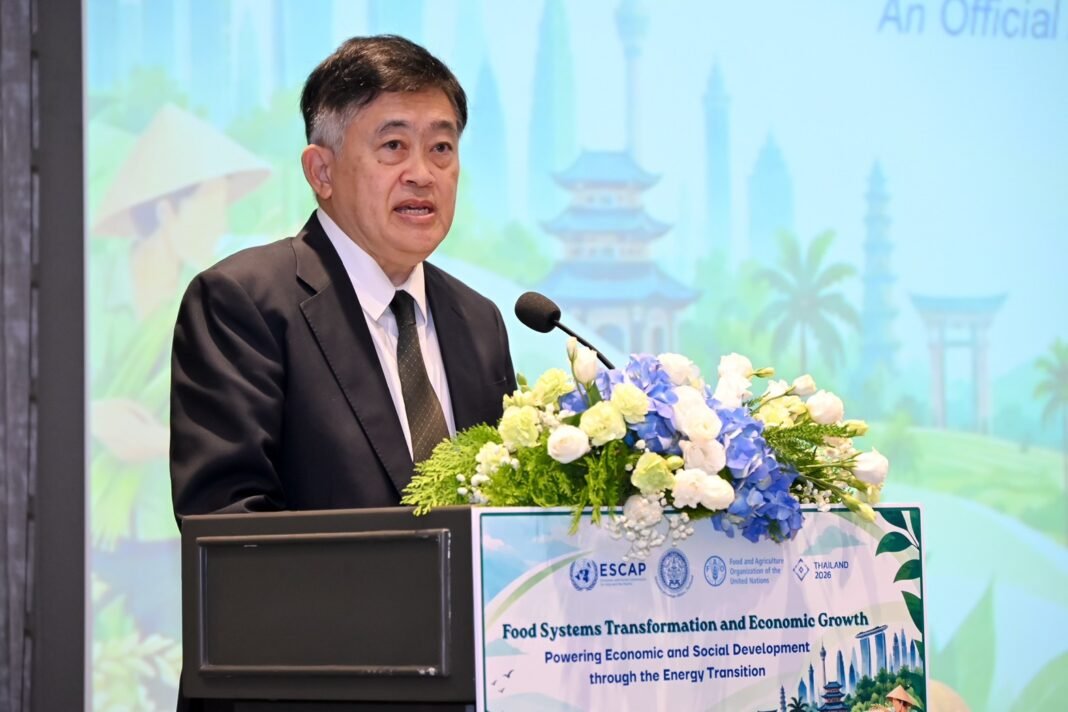
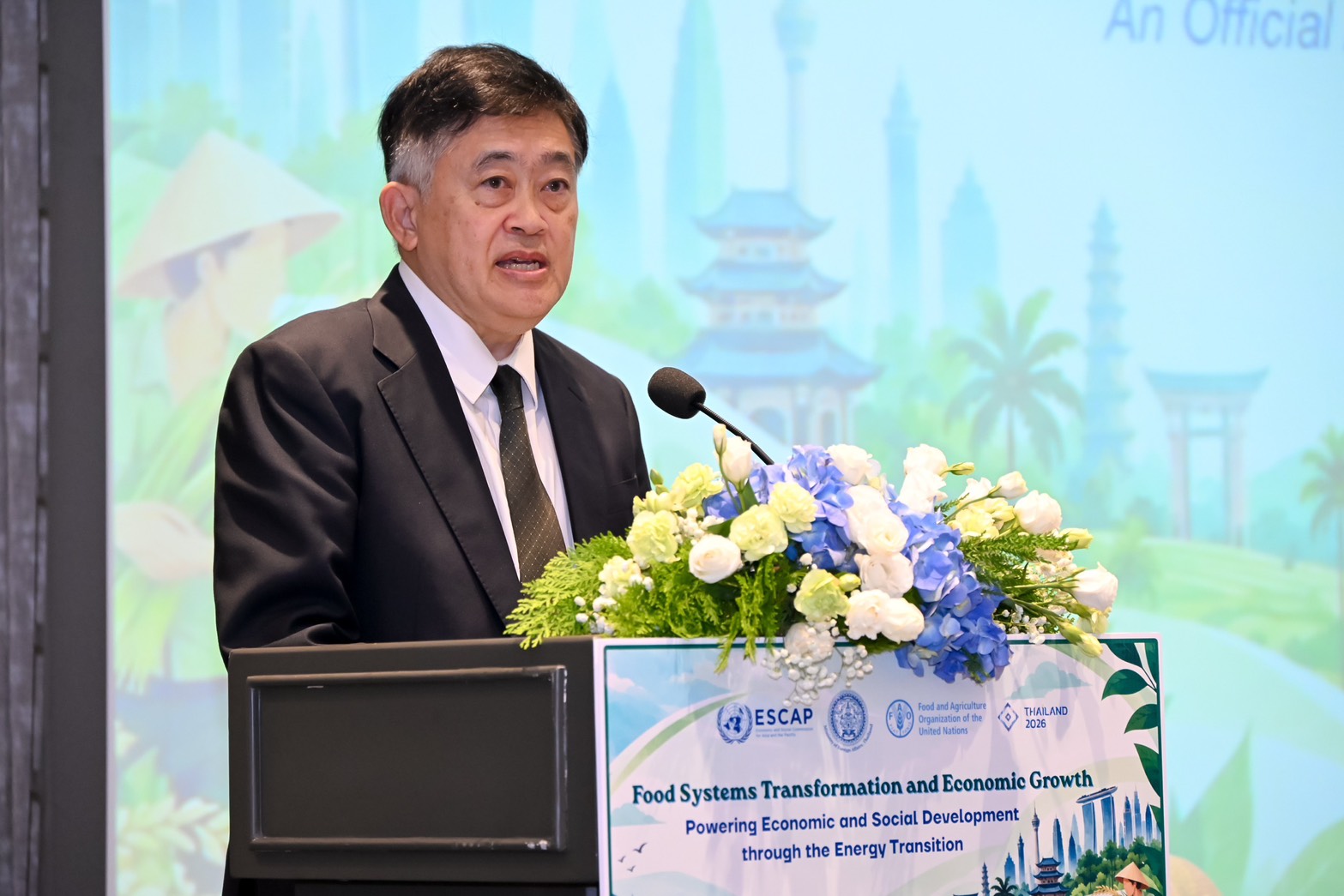
The foreign ministry readout describes On 17 October 2026, Advisor to the Minister of Foreign Affairs, Mr. Arthayudh Srisamoot, delivered opening remarks at the affiliated program “Food Systems Transformation and Economic Growth – Powering Economic and Social Development through the Energy Transition” held at the InterContinental Bangkok. The statement underscored the nexus between water, food, and energy systems, as well as the role of the energy transition in driving food security and economic growth. Key priority actions were highlighted, namely harnessing technology and innovation to transform energy and food production, in which Thailand has adopted the Bio-Circular-Green (BCG) Economy model, low-carbon rice production, and the conversion of agricultural residues into biofuels, while promoting soil health and World Soil Day, with the aim of becoming a regional hub for high-quality food and alternative energy.
Background
The event was co-organised by the Ministry of Foreign Affairs of Thailand, in collaboration with ESCAP, FAO and Indonesia. It was a sideline event at the IMF-World Bank Group Annual Meetings 2026. The official affiliated program discussed how the energy transition can enhance the resilience, inclusivity, and sustainability of agrifood systems in the Asia-Pacific region, as well as promote a just and equitable energy transition. The 20-Year “5S” Foreign Affairs Masterplan, a strategic framework for Thailand’s foreign policy, prioritizes sustainable development and regional cooperation, particularly in areas related to economic growth and food security. The statement does not address specific funding mechanisms or timelines associated with the initiatives.
Analysis
The Advisor’s remarks reveal Thailand’s commitment to aligning its foreign policy with global efforts to address food security challenges. The emphasis on the BCG Economy model and low-carbon rice production demonstrates a strategic focus on sustainable agriculture and reducing the environmental impact of food production. The mobilization of finance and strengthening of international cooperation, as outlined, indicates a recognition of the need for external support to achieve these goals. The citation of ASEAN cooperation and the United Nations Economic and Social Commission for Asia and the Pacific (ESCAP) initiatives highlights Thailand’s regional engagement. The statement does not address Thailand’s current trade relationships with key agricultural exporters.
Implications
This event carries implications for regional stability, particularly concerning food security within Southeast Asia. Thailand’s leadership in promoting sustainable food systems could influence policy discussions within ASEAN, potentially leading to harmonized approaches to agricultural development. The focus on mobilizing finance from multilateral development banks and international financial institutions could affect Thailand’s access to concessional loans and technical assistance. The emphasis on cooperation with the United Nations, specifically ESCAP, suggests a potential role for Thailand in shaping global discussions on energy transition and sustainable development. The statement does not address the potential impact on Thailand’s trade agreements regarding agricultural products.
Outlook
Should the visit yield further discussions on financing the BCG Economy model, Thailand could secure additional resources from international partners. If the collaboration with ESCAP continues to focus on promoting sustainable agricultural practices, Thailand could become a regional leader in knowledge sharing and technology transfer. Should the United Nations’ Energy Transition for Green Growth and Prosperity initiative gain momentum, Thailand could be positioned to benefit from investments in renewable energy and sustainable food systems. The statement does not outline specific contingency plans should funding negotiations fail.
Conclusion
The Advisor’s presentation underscores Thailand’s commitment to a proactive approach to food systems transformation, yet the underlying details regarding specific investment commitments and collaborative frameworks remain undefined, leaving open the question of how effectively Thailand can translate these intentions into tangible outcomes.
Sources & Further Reading
- Official press release
- Foreign ministry source
- Vice Minister for Foreign Affairs delivers the closing remarks for the 15th ASEF Journalists Seminar (19 Sep 202)
- Advisor to the Minister of Foreign Affairs Delivers Opening Remarks at "Thailand – Ethiopia: Building Business Bridges" in Addis Ababa, Ethiopia (31 Aug 202)
- Permanent Secretary for Foreign Affairs meets with Ambassador of Bangladesh to Thailand (12 Oct 202)