
The official readout frames the trip as
Background
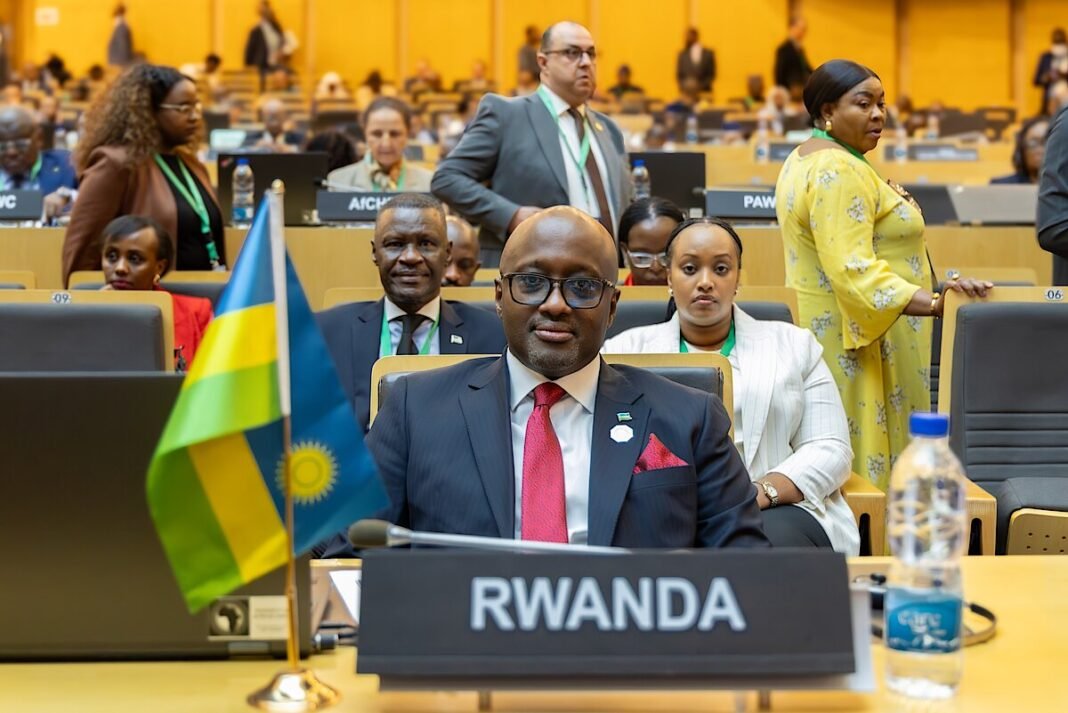
The Executive Council serves as the primary decision-making body of the African Union, operating under the guidance of the Assembly of Heads of State and Government. The theme of this 49th session – “Assuring Sustainable Water Availability and Safe Sanitation Systems to Achieve Agenda 2063” – reflects a growing concern across the continent regarding water scarcity and its impact on economic development and stability. Rwanda’s participation underscores its commitment to contributing to these broader continental efforts.
Analysis
The Minister’s attendance at this summit, coupled with subsequent engagements including signing the African Union convention on ending violence against women and girls, visits to Tanzania and meetings with South Africa, reveals a strategic effort to diversify Rwanda’s diplomatic portfolio. The focus on water security is particularly noteworthy given the nation’s own vulnerabilities relating to climate change and agricultural production. Furthermore, the Minister’s interaction with Itorero Indangamirwa participants highlights ongoing investment in human capital development – a key pillar of Rwanda’s economic strategy. The signing of the convention demonstrates a commitment to regional norms and international obligations, while the discussions with South Africa signal an effort to normalize relations following previous diplomatic challenges.
Implications
Rwanda’s emphasis on water security carries implications for regional stability. Successfully implementing solutions to water scarcity issues could contribute to reduced tensions over shared resources within the Great Lakes region. The normalization of relations with South Africa, as documented in June 2026, suggests a willingness to engage constructively and potentially unlock new trade opportunities. However, the statement does not address Rwanda’s engagement with global economic powers or its broader trade strategy.
Outlook
Should the visit yield continued positive dialogue regarding regional cooperation on water management, it would strengthen Rwanda’s position as a key mediator within the Great Lakes region. If the normalization of relations with South Africa proves sustainable and leads to increased investment and trade flows, this could provide a significant boost to Rwanda’s economy. However, if diplomatic efforts remain largely symbolic without tangible economic benefits, Rwanda risks further isolating itself from major global economic trends.