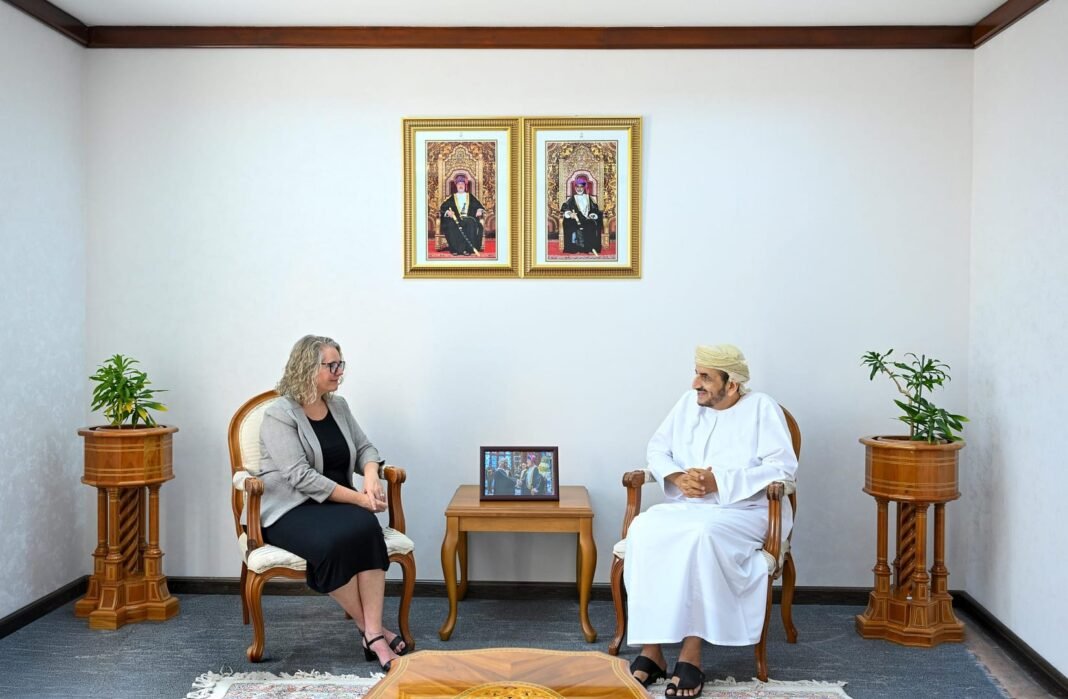
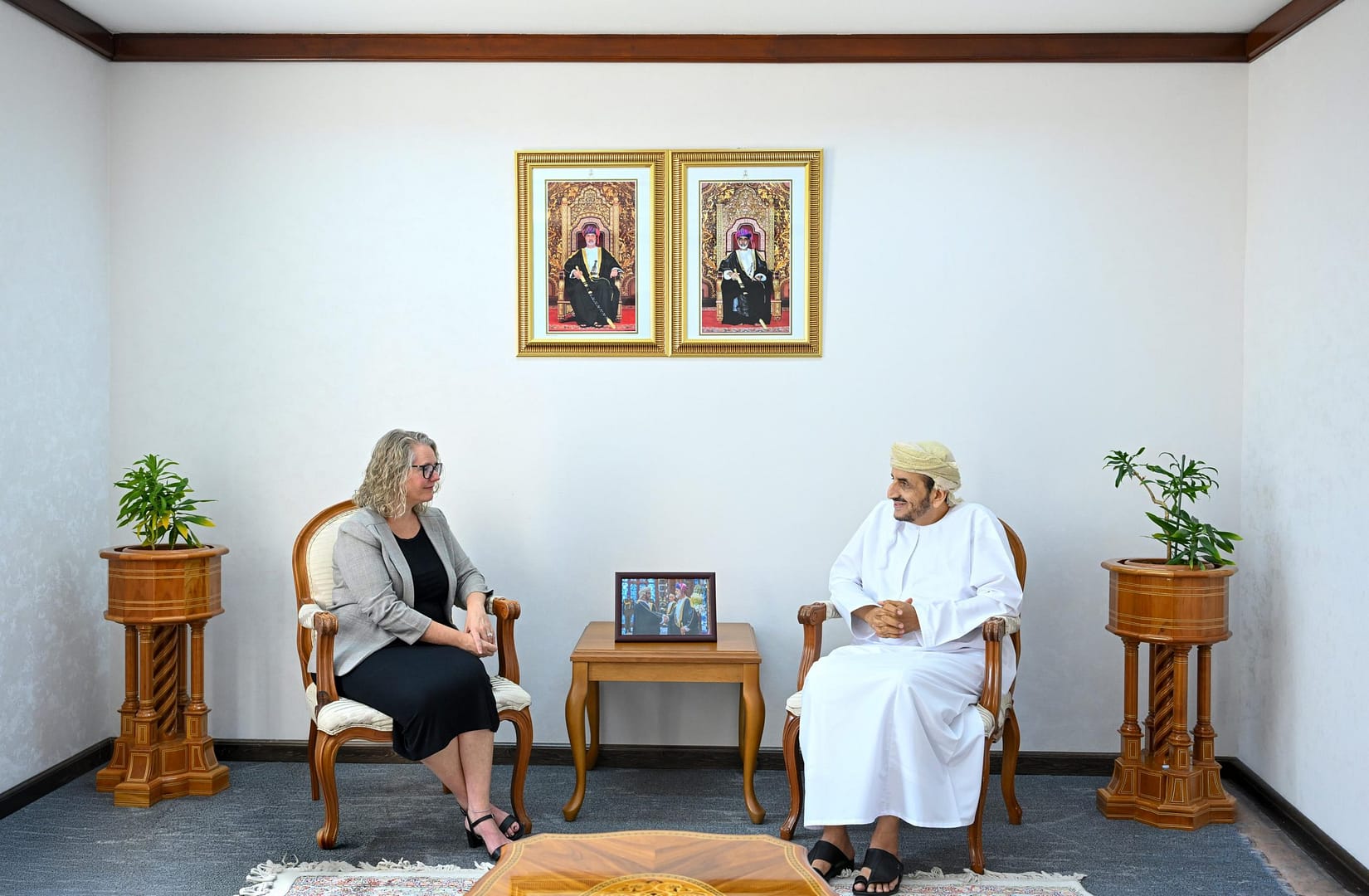
In a published statement ahead of the visit, Political Undersecretary Sheikh Khalifa Alharthy received Emmee Haun, Managing Director of the Sultanate of Oman’s Commercial Office in the United States of America, on 29 September 2026. The statement does not mention the location of the meeting. This meeting reviews economic and trade cooperation between the two countries and ways to maximize the benefits of the US Oman Free Trade Agreement. The statement does not address the specific outcomes of the discussion.
Background: Previous meetings between Omani officials and the US Commercial Office have focused on broader trade relations. In March, the ministry said Oman and Tanzania hold consultations, indicating a sustained effort to diversify economic partnerships. Prior to this, Political Undersecretary Sheikh Khalifa Alharthy received US Assistant Treasury Secretary Jonathan Burke, Assistant Secretary for Terrorist Financing at the US Treasury, on 9 September 2026. This history of engagement suggests a consistent, if somewhat reactive, approach to international economic relations.
Analysis: The stated objective – maximizing the benefits of the US Oman Free Trade Agreement – reflects Oman’s broader economic strategy. The focus on “new opportunities for partnerships” indicates a desire to move beyond simply implementing existing trade agreements. This suggests a recognition that the agreement alone is insufficient to drive substantial economic growth. The meeting’s emphasis on investment, technology, and industry highlights key sectors where Oman seeks to attract foreign capital and expertise. A key contradiction lies in the lack of explicit detail regarding the specific initiatives discussed. The statement does not address the potential for contentious negotiations surrounding market access or regulatory standards. The presence of Ambassador Tafoul Aldhahab, Head of the International Trade, Knowledge Economy and Technology Department, indicates a technical focus on facilitating trade.
Implications: For policymakers, this meeting underscores the ongoing importance of bilateral economic diplomacy. Should the visit yield positive results in terms of attracting investment and expanding trade, it would bolster Oman’s efforts to diversify its economy away from hydrocarbons. The meeting’s focus on technology and industry carries implications for Oman’s broader industrial development strategy. For regional stability, the meeting does not directly impact existing geopolitical dynamics, but continued engagement with key trading partners like the United States is seen as a factor in Oman’s economic resilience. The statement does not address the potential impact on trade flows or the balance of payments.
Outlook: If the meeting successfully identifies specific investment opportunities and generates concrete proposals for collaboration, it could pave the way for further discussions. Should the visit yield a commitment from US companies to establish a presence in Oman, it would represent a significant step forward. The statement does not mention any specific timelines or benchmarks for achieving these outcomes. The continued engagement with the US Commercial Office provides a platform for ongoing dialogue and information exchange, which is crucial for navigating the complexities of the global trading system.
Conclusion: The meeting’s focus on bolstering the US Oman Free Trade Agreement highlights Oman’s ongoing efforts to leverage trade agreements for economic diversification. However, the lack of concrete details surrounding the discussions leaves open the question of whether this engagement will translate into tangible economic benefits for the Sultanate.