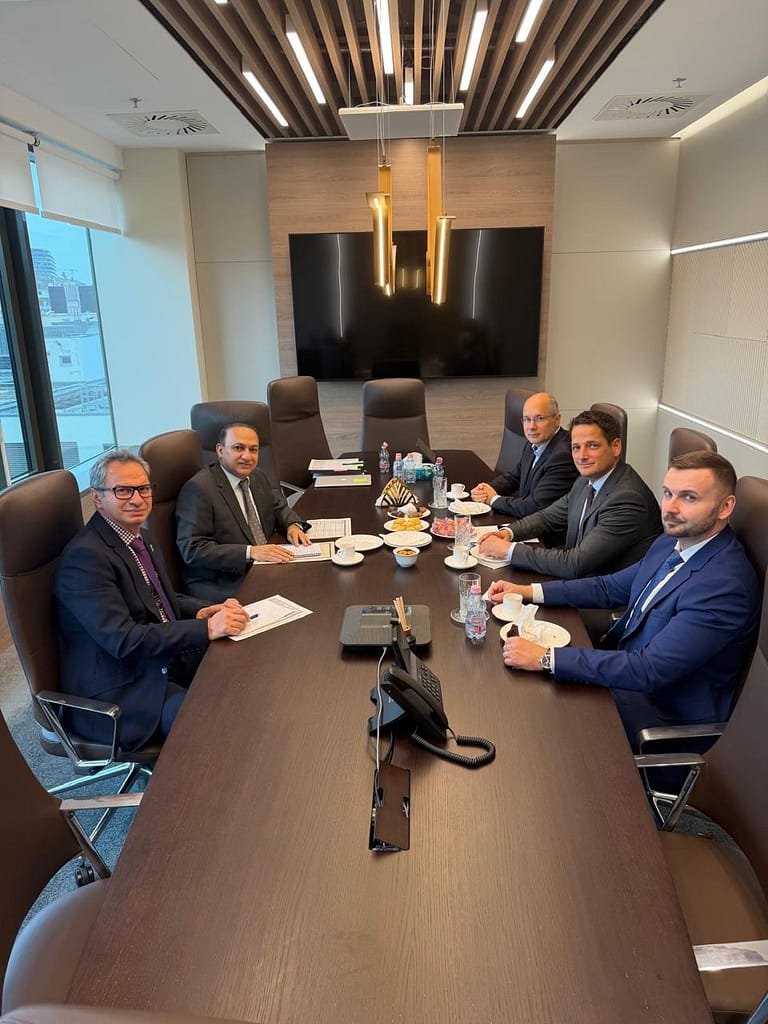
A ministry communiqué confirms that The Ambassador of the Sultanate of Oman to Hungary, Malallah Albalushi, met on 10 November 2026 with János Laszlovka, Director General for the Middle East and North Africa at the Hungarian Ministry of Foreign Affairs and Trade. This meeting, as stated by the Ministry, reviewed existing areas of cooperation between the two countries. The significance of this engagement lies in Oman’s established diplomatic footprint across Europe, an area increasingly focused on diversifying partnerships beyond traditional Western alliances. The statement does not mention the specific sectors of cooperation under review, leaving the precise nature of the discussions open to interpretation.

Background
Prior to this meeting, the Ministry of Foreign Affairs and Trade had engaged in a series of diplomatic activities within the region. On 9 October 2026, Deputy State Secretary Ivan Medveczky of the Hungarian Ministry of Foreign Affairs met with Ambassador Albalushi, further demonstrating a sustained level of engagement. Subsequently, on 25 September 2026, State Secretary Zsolt Sándor of the Ministry of Defence met with Ambassador Issa Alalawi, Head of the Mission of the Sultanate of Oman to Hungary, highlighting a broader diplomatic strategy encompassing defence and cybersecurity. These prior engagements, as detailed in the Ministry’s archive, indicate a consistent effort to build and maintain relationships within Central Europe. The statement does not address the frequency or intensity of these prior discussions.
Analysis
The meeting’s stated purpose – reviewing existing cooperation – suggests a consolidation of established ties rather than the initiation of new agreements. Oman’s engagement with Hungary, a member of the European Union, reflects a broader strategy of diversifying its diplomatic portfolio. The focus on the Middle East and North Africa region at the Hungarian Ministry suggests a strategic alignment with European concerns regarding regional stability and security. The meeting’s timing remains unclear, but it likely reflects ongoing efforts to strengthen bilateral ties amidst a fluctuating geopolitical landscape. The presence of the Director General for the Middle East and North Africa indicates a deliberate prioritization of this relationship within the Hungarian Foreign Ministry. If implemented as described, the meeting could represent a subtle recalibration of Oman’s diplomatic priorities within Europe.
Implications
The meeting’s implications extend beyond the bilateral relationship between Oman and Hungary. It underscores Oman’s continued commitment to engaging with countries across the Central and Eastern European regions, a zone of increasing strategic importance for the Sultanate. The focus on cooperation, however broad, suggests a desire to build reliable partnerships that can contribute to regional stability and economic diversification. Should the visit yield positive outcomes, it could strengthen Oman’s position as a facilitator of dialogue and a reliable partner in a region grappling with complex security challenges. The statement does not address whether this meeting signals a broader shift in Oman’s regional diplomatic strategy. It also does not address Oman’s trade relations with Hungary.
Outlook
If the meeting proceeds as stated, and the review of existing cooperation is successful, it could pave the way for increased engagement in areas such as investment and technology. Should the visit yield further discussion on energy cooperation, it would align with Oman’s broader efforts to diversify its economy. However, given the current geopolitical context, the meeting’s impact will likely be limited to maintaining existing ties and reinforcing Oman’s commitment to dialogue. The statement does not offer any projections regarding future diplomatic activity or the potential for new initiatives.
Conclusion
The meeting between Ambassador Albalushi and Director General Laszlovka represents a procedural step in Oman’s ongoing diplomatic engagement within Hungary. The fact that the statement does not explicitly outline the key outcomes leaves open the question of whether this interaction will translate into tangible benefits for either side – a question that will likely require further observation.