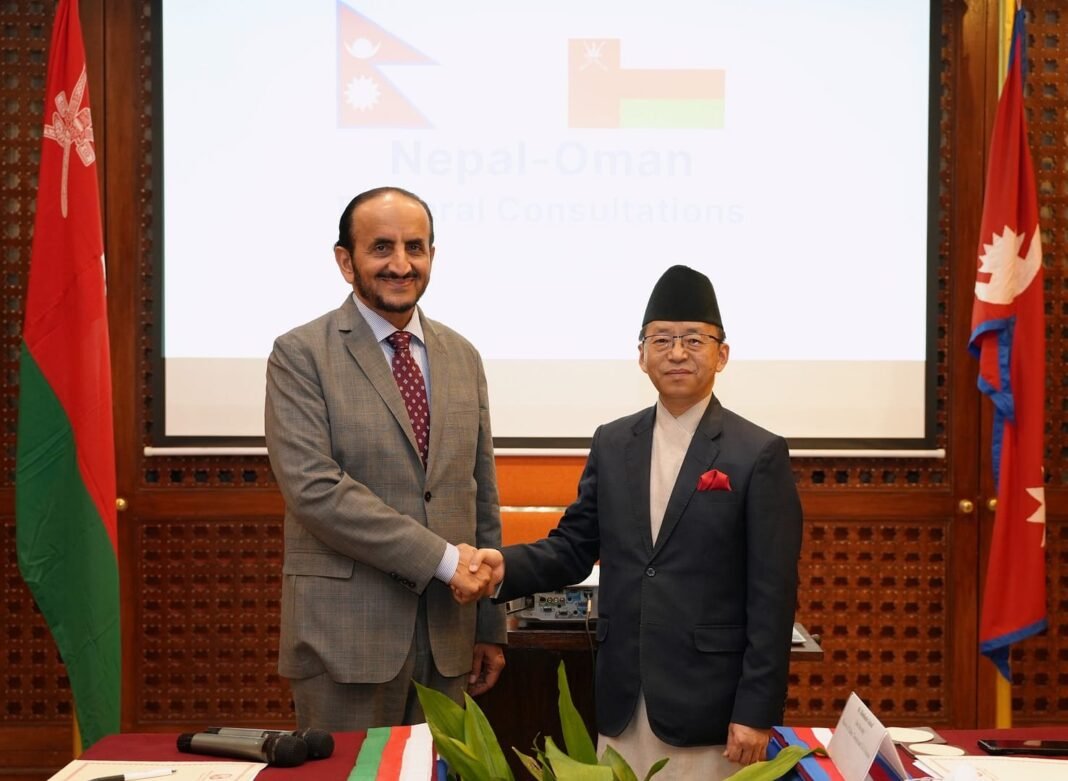
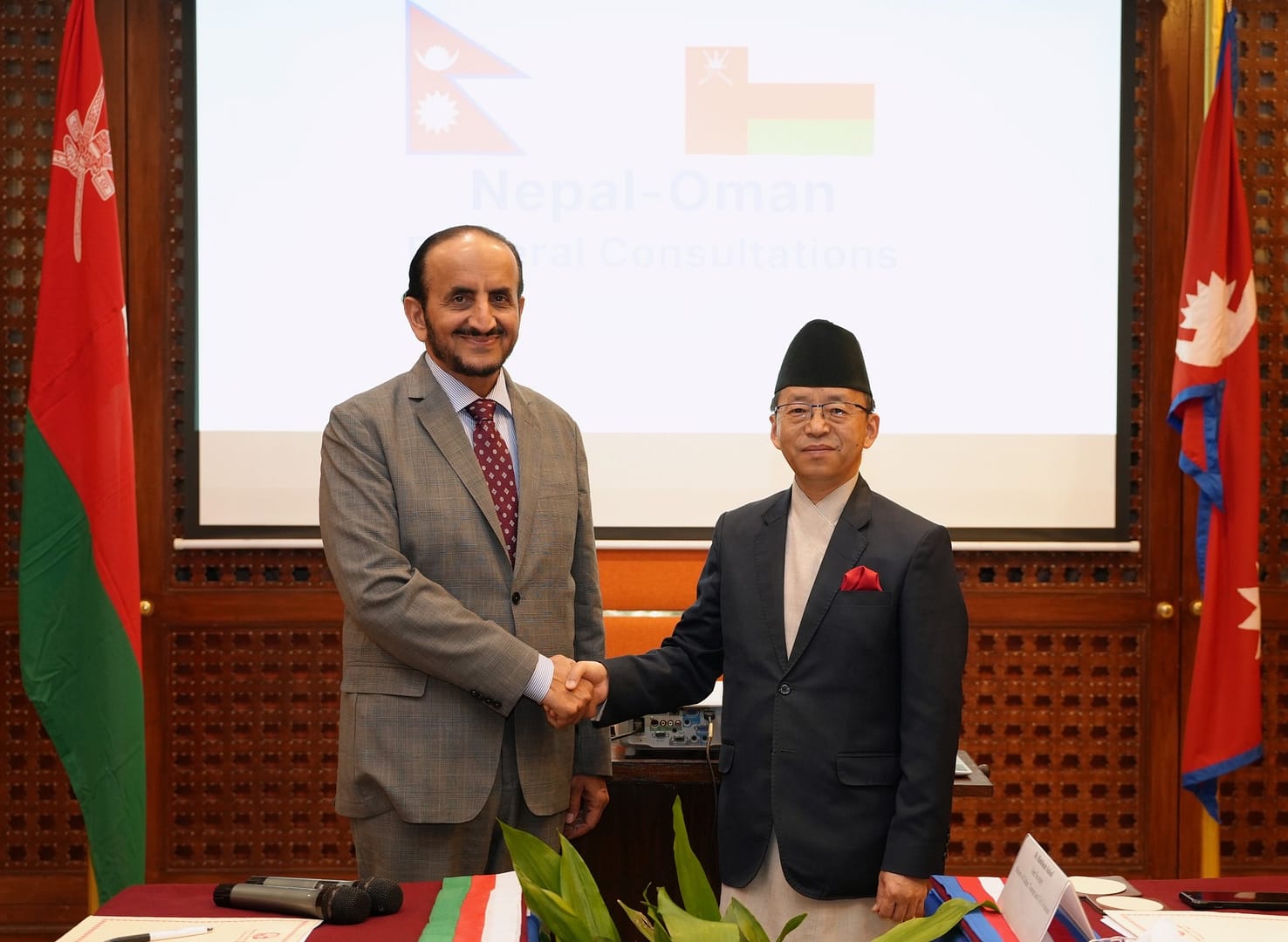
Oman and Nepal held political consultations on 9 October 2026 in Kathmandu, as outlined in a statement released by the Omani Ministry of Foreign Affairs. The purpose of these discussions, the first of a second session, was to bolster trade and investment opportunities between the two nations. This activity matters because it represents a deliberate expansion of Oman’s diplomatic engagement beyond its established regional partnerships, aiming for increased economic cooperation.; see the full statement.
Background
Prior to this meeting, the Sultanate of Oman and the Federal Democratic Republic of Nepal had maintained diplomatic relations. Previous consultations, as noted in a statement from September 28, 2026, focused on friendly relations and cooperation in investment, trade, and logistics, highlighting a sustained interest in strengthening bilateral ties. The statement concerning Oman and Tanzania held consultations in September 2026, demonstrating a pattern of engagement with nations across Africa. The Ministry of Foreign Affairs’ statement regarding the meeting with the Director of Oman’s Commercial Office in the USA, dated September 29, 2026, further illustrates Oman’s proactive approach to diversifying its commercial interests globally. These engagements indicate a deliberate strategy to broaden Oman’s international portfolio.
Analysis
The stated aims of the consultations – boosting trade and investment and expanding economic cooperation – reflect a mutual desire to capitalize on complementary strengths. Nepal’s strategic location within South Asia and its growing market present potential opportunities for Omani exports, particularly in agricultural products and fertilizers, as explicitly mentioned in the statement. Oman, in turn, can offer investment opportunities and access to global markets. The discussions on consular matters and bilateral agreements suggest a desire to streamline these processes and enhance the operational efficiency of the relationship. The inclusion of regional developments in the discussions indicates an awareness of broader geopolitical dynamics within the Indo-Pacific region. The meetings with Nepal’s Minister for Agriculture, Forestry and Environment and the Minister for Youth, Labour and Employment further signal a focus on sectors with significant bilateral potential. This suggests a targeted approach to economic collaboration.
Implications
For Oman, the deepening relationship with Nepal represents a strategic effort to diversify its economic partnerships beyond established alliances within the Gulf region. Should the discussions yield tangible agreements, it could potentially reduce Oman’s reliance on traditional trading partners and mitigate risks associated with concentrated economic exposure. Regionally, the consultations contribute to a broader trend of engagement between the Gulf states and South Asian nations. This could influence the dynamics of regional trade and security arrangements. The discussions on consular matters and bilateral agreements have implications for facilitating smoother business operations and strengthening the overall framework for cooperation.
Outlook
If the meetings are successful in establishing concrete frameworks for trade and investment, the relationship could develop further. Should the visit yield a commitment to explore joint ventures in agricultural products and fertilisers, this would align with previously stated objectives. The exchange of views on regional developments suggests that Oman is monitoring geopolitical trends in South Asia and seeking to maintain stable and productive relationships across the region.