
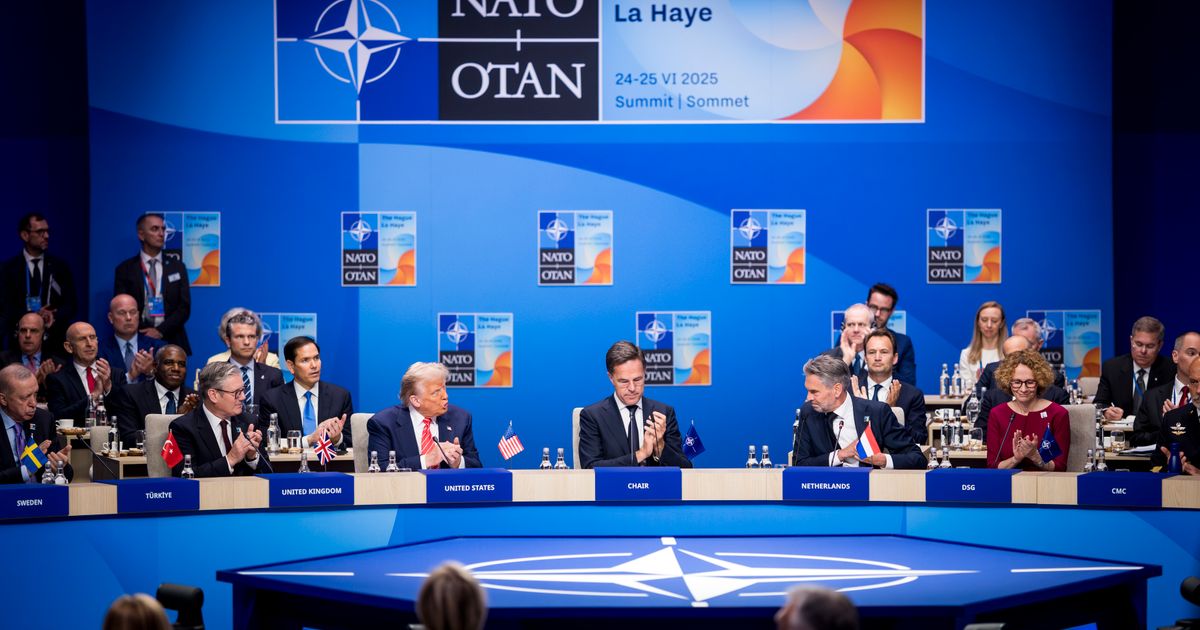
Per the government announcement, The conclusion of the NATO Summit in The Hague on June 26th, 2025, solidified a key agreement: member states will allocate at least 3.5 percent of gross domestic product to defense spending, supplemented by an additional 1.5 percent for supporting activities. This commitment, reached after two days of intensive negotiations involving heads of state, government leaders, and defence ministers, reflects a renewed focus on collective security within the alliance. The statement does not address the scale of funding required to achieve this target across all member nations.
Background
The core of the Summit’s deliberations centered around the North Atlantic Council, the principal decision-making body within NATO. This forum facilitated discussions on the evolving security landscape, specifically prioritizing increased defense spending and continued support for Ukraine. Bilateral talks were held by individual countries including the Netherlands, adding a layer of tailored agreements to the broader alliance strategy. The statement does not mention specific bilateral agreements reached beyond the general observation that such discussions occurred.
Analysis
The commitment to 3.5 percent GDP represents a tangible escalation in NATO’s demand for contributions from its members. This suggests a recognition of the evolving threat environment, particularly Russia’s actions and the ongoing conflict in Ukraine. The addition of 1.5 percent for supporting activities indicates a broadening scope beyond traditional military expenditures – potentially encompassing cyber defense, intelligence gathering, and logistical support. Should the Netherlands fully implement this described commitment, it would represent a significant increase to its already substantial defence budget.
Implications
For policymakers, achieving the 3.5 percent target necessitates budgetary adjustments across multiple sectors. The implications extend beyond purely financial considerations; they touch on industrial capacity, technological development, and workforce training within each member state. Regional stability is inextricably linked to this commitment – a sustained increase in defense spending aims to deter aggression and bolster collective deterrence. Trade/security relationships will be affected as nations reassess their defence postures and alliances.
Outlook
If the Netherlands successfully meets its 3.5 percent target, it could provide a model for other NATO members grappling with economic pressures. Should the visit yield further commitments on supporting activities, this would strengthen the alliance’s overall resilience. However, the statement does not address the long-term sustainability of these increased expenditures or potential future demands from the alliance.
Conclusion
The Hague Summit concluded with a declaration of intent, but the precise mechanisms for achieving and sustaining this new defence standard remain undefined. The question remains: will the Netherlands’ actions translate into tangible improvements in NATO’s ability to address emerging security challenges?