
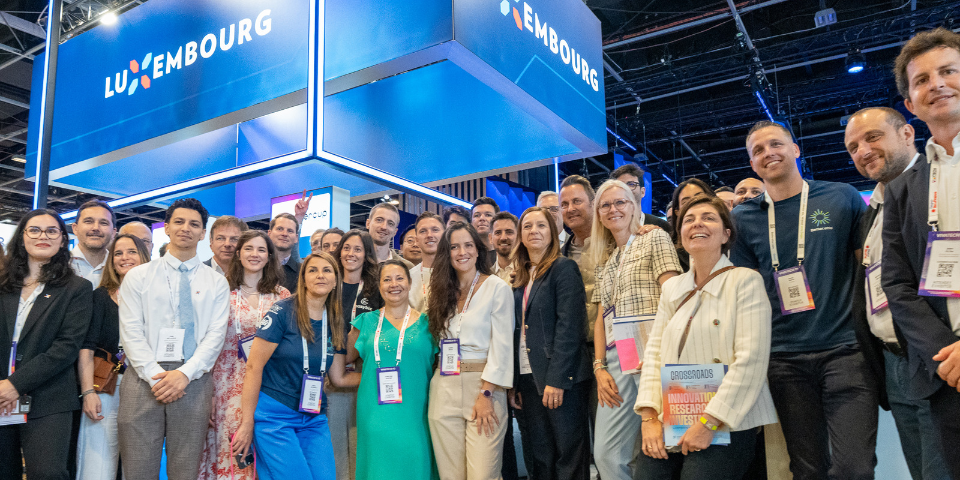
The foreign ministry readout describes The Vice-Premier Minister, Xavier Bettel, alongside the Minister of Research and Digitalisation, Stéphanie Obertin, travelled to Paris on June 18th, 2026, to participate in the tenth edition of VivaTech – a conference focused on start-ups, investment, and digital transformation. This visit matters because it represents Luxembourg’s continued commitment to fostering innovation within its burgeoning tech sector and expanding international trade relations, particularly with key economies like India.
Background
VivaTech, established in 2016, has become a prominent European event for startups and investors. This marks the eighth time Luxembourg has maintained a national pavilion at the conference. The statement details that this year’s pavilion showcases thirteen innovative companies across sectors including artificial intelligence, cybersecurity, robotics, augmented reality, educational technologies, digital health, and climate technologies. The logistical coordination of the pavilion is shared between the Ministry of Foreign Affairs and Commerce Exterior and the Chamber of Commerce.
Analysis
The event’s core purpose centers on promoting Luxembourg’s startup ecosystem. The participation of representatives from DEEP by POST Luxembourg, Inui Studio, and Leexi demonstrates a deliberate effort to connect these companies with international investment opportunities. The presence of a delegation including over a dozen startups suggests a targeted strategy – not simply showcasing Luxembourg but actively seeking partnerships. This aligns with the Ministry’s stated goal of supporting Luxembourgish start-ups internationally. The visit also highlights a strategic move to bolster digital sovereignty, particularly evident in the bilateral meeting between Bettel and Shri Piyush Goyal, Minister of Commerce and Industry of India, focused on artificial intelligence collaboration. The inclusion of Maurice Lévy, co-founder of VivaTech, further underscores the event’s significance within Luxembourg’s innovation network.
Implications
This engagement carries implications for regional stability within Europe – positioning Luxembourg as a hub for technological advancement. Furthermore, the increased trade relations, particularly with India, could impact European supply chains and accelerate the adoption of new technologies. The focus on cybersecurity and climate technologies suggests an alignment with global priorities related to national security and environmental sustainability. The delegation’s interaction with companies like DEEP, focused on postal innovation, indicates a broader strategy beyond simply attracting high-growth tech firms.
Outlook
Should the visit yield successful partnerships in areas such as AI development – particularly with India – it would represent a significant step toward strengthening Luxembourg’s position within the global technological landscape. If the bilateral meetings result in concrete agreements regarding technology transfer and collaborative research, this could contribute to increased innovation capacity within Luxembourg’s startup ecosystem. The level of success hinges on the ability of Luxembourgish companies to demonstrate viable solutions and secure investment from international partners.
Conclusion
The visit concludes with a question: will Luxembourg’s efforts at VivaTech translate into sustained economic growth and a demonstrable shift towards digital sovereignty, or will it remain largely symbolic engagement within Europe’s evolving technological landscape?