
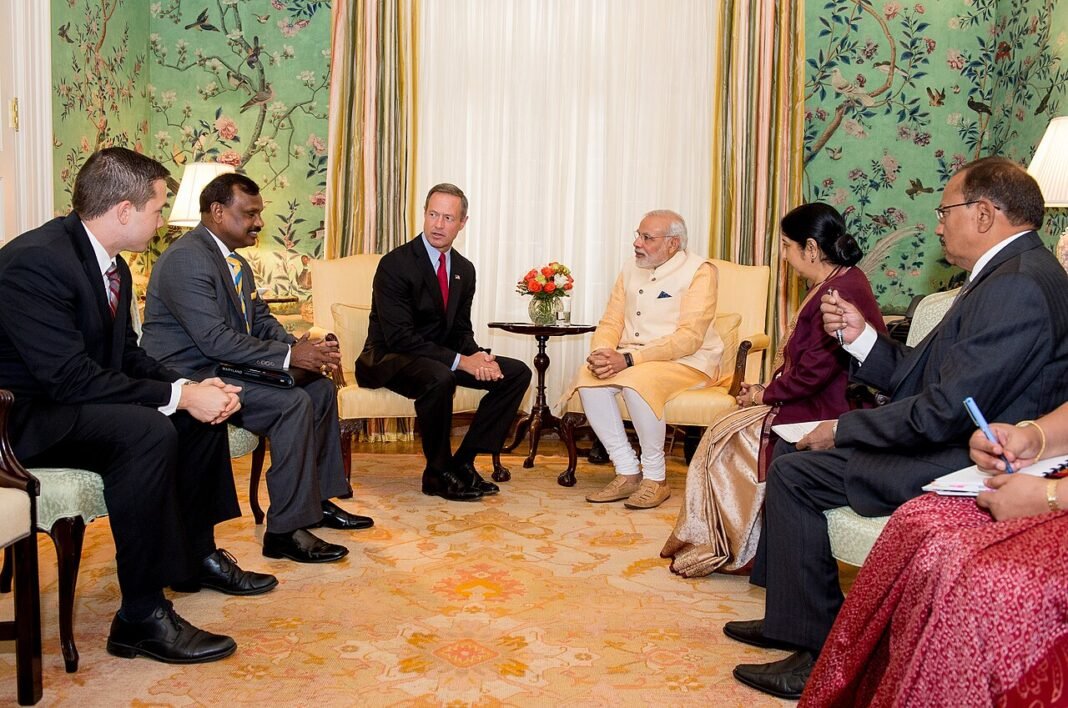
The official readout frames the trip as The meeting between Prime Minister Shri Narendra Modi and Chinese President Xi Jinping on September 12, 2026, occurred against a backdrop of longstanding bilateral tensions, primarily centered around the unresolved border dispute in the Himalayas. The statement confirms a steady, if cautious, progression in relations since their last meeting in Tianjin in August 2025, highlighting a commitment to a “long term perspective” – a key element in navigating a complex geopolitical relationship. The fact that this meeting occurred on the sidelines of the BRICS Summit in New Delhi underscores the importance of India’s role within this regional grouping and the potential for leveraging it to manage the wider bilateral dynamic.

Background
The bilateral relationship between India and China has evolved through a series of meetings and agreements, punctuated by periods of heightened tension. Prior to the Tianjin meeting in August 2025, the Ministry of External Affairs issued a statement emphasizing the need for dialogue and the importance of maintaining communication channels. The Ministry’s previous statement on September 11, 2026, regarding a meeting with the President of the Russian Federation, detailed a series of engagements across multiple sectors including security, space, maritime, energy, and defence, demonstrating a broader diplomatic outreach strategy. Similarly, on September 13, 2026, the Prime Minister met with the President of South Africa and the President of the Republic of the Philippines, further cementing India’s engagement with key partners within the BRICS framework. These meetings, while seemingly routine, represent a deliberate effort to maintain diplomatic channels and address shared concerns, particularly regarding regional stability.
Analysis
The core of the Prime Minister’s approach, as articulated in the statement, revolves around three “mutuals”: mutual respect, mutual sensitivity and mutual interest. This framework, explicitly referencing the Tianjin agreement, suggests a desire to manage expectations and avoid misinterpretations. The emphasis on “peace and tranquility in the border areas” is a recurring theme, reflecting the acknowledged difficulties in achieving a definitive resolution to the boundary question. The statement does not address the complexities of the dispute, nor does it offer any new proposals or concessions. The reiteration of the need for “a fair, reasonable, and mutually acceptable resolution” highlights the established position, emphasizing a political approach to the issue. The statement’s focus on people-to-people ties – cultural exchanges, business linkages and mobility – indicates a recognition that economic and social cooperation are crucial for managing broader geopolitical tensions. The fact that the meeting occurred on the sidelines of the BRICS Summit suggests an understanding that India’s influence within this grouping can be leveraged to shape the bilateral relationship.
Implications
The meeting’s outcome, or lack thereof, carries significant implications for regional stability. Should the visit yield a reaffirmation of existing agreements, it suggests a commitment to maintaining the current state of affairs, characterized by a precarious truce along the Line of Actual Control (LAC). However, the continued emphasis on the need for a “long term perspective” and “strategic” ties suggests that fundamental disagreements remain. The focus on addressing trade imbalances and supply chain issues highlights the economic dimensions of the dispute, which are likely to continue to be a point of contention. The agreement to expand common ground on regional and global issues underscores India’s commitment to multilateralism, although this does not necessarily translate into a resolution of the border issue. The continued support for China’s BRICS chairship signals a strategic calculation on India’s part, aiming to maintain influence within the BRICS framework.
Outlook
If the meeting does not lead to any concrete progress on the border issue, it is likely to reinforce the existing pattern of cautious engagement. Should the visit yield a reaffirmation of existing agreements and a commitment to continued dialogue, the bilateral relationship will likely remain characterized by a fragile equilibrium, punctuated by periodic tensions. The statement’s emphasis on maintaining “peace and tranquility” suggests that both sides will continue to prioritize stability, but this will likely be contingent on a lack of escalation along the LAC. The continued focus on people-to-people ties represents a long-term strategy for building trust and fostering cooperation, but this will require sustained effort and a willingness to compromise on the more contentious issues.
Sources & Further Reading
- Official press release
- Foreign ministry source
- Prime Minister meets with the President of the Russian Federation on the sidelines of BRICS Summit (11 Septemb)
- Prime Minister meets with the President of South Africa on the sidelines of the BRICS Summit in New Delhi (13 Septemb)
- Prime Minister meets with the President of the Republic of the Philippines on the sidelines of the BRICS Summit in New Delhi (13 Septemb)

.jpg)