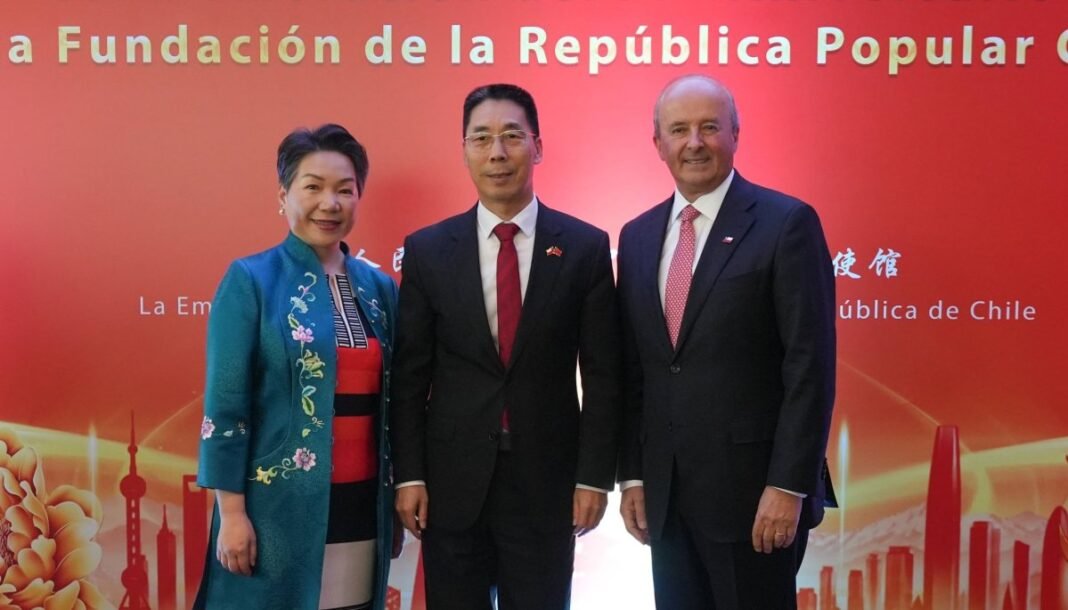
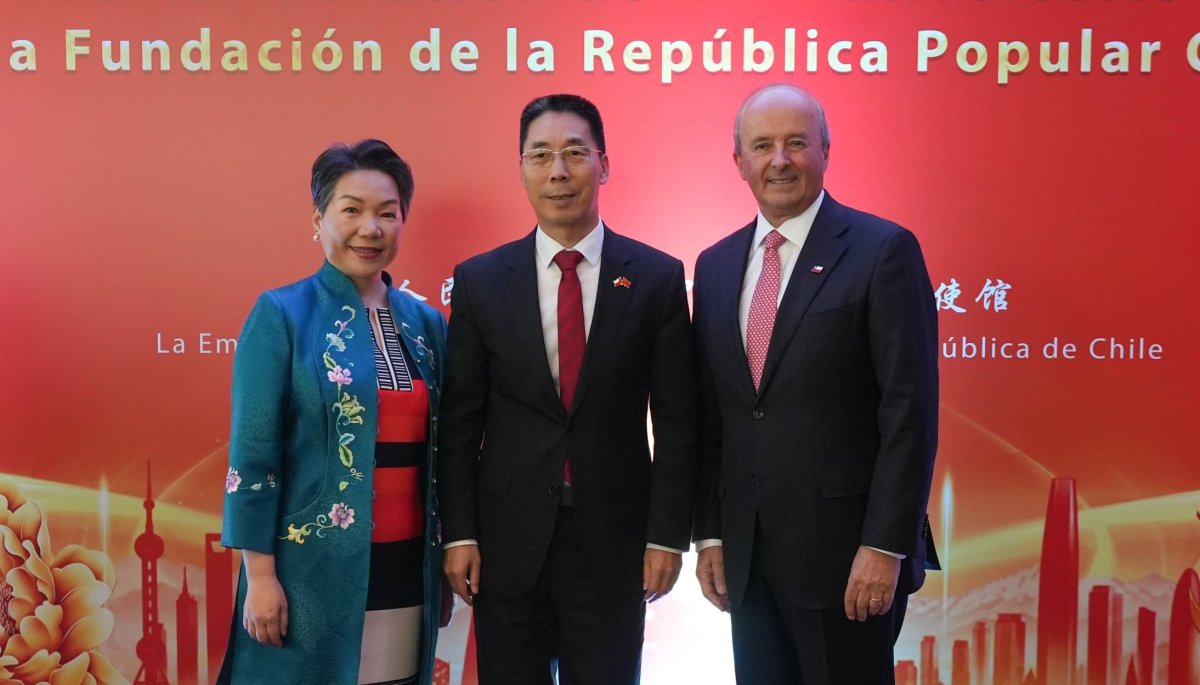
As set out in a formal announcement, Chile’s Minister of the Exterior, Patricio Torres, participated today in the commemoration of the National Day of the People’s Republic of China, a ceremony headed by the Chinese Ambassador to Chile, Niu Qingbao. This event marks a significant moment in the ongoing strengthening of ties between the two nations. The fact that Torres attended this ceremony underscores the Chilean government’s commitment to cultivating a relationship with China, a partnership built upon mutual respect, reciprocity, and shared benefit.
Background
The Strategic Alliance was formally established in 2009. This agreement, as Torres noted, has become a cornerstone of Chile’s diplomatic and economic engagement with China. It has facilitated a broad spectrum of cooperation encompassing political, economic, commercial, scientific, technical, and cultural domains. The Association’s formation coincided with China’s rise as Chile’s leading trading partner, a status that has been steadily reinforced over the past decade.
Analysis
The Minister’s focus on “respect, reciprocity, and mutual benefit” suggests a deliberate effort to frame the relationship within a framework of pragmatic engagement. The tenth anniversary of the Strategic Alliance, as highlighted by the event, signals a desire to solidify this partnership beyond simply trade. The fact that China is now Chile’s largest trading partner – projected to exceed US $67 billion in 2025 – demonstrates the tangible rewards of this alliance. The press release does not address the underlying tensions between Chile’s traditional trade partners, the United States and Europe, and China’s growing economic influence, nor does it comment on the potential impact of the BBNJ agreement on Chilean maritime resources.
Implications
The deepening trade relationship with China carries significant implications for Chile’s economic strategy. The continued flow of goods and investment, facilitated by the Strategic Alliance and the Free Trade Treaty, is central to Chile’s economic model. Should the trade volume continue to expand as projected, it would further reshape Chile’s economic landscape. Furthermore, Chile’s engagement with China could potentially influence its approach to broader regional and international affairs, particularly concerning maritime rights and the negotiation of the BBNJ agreement, as evidenced by the Ministry’s simultaneous participation in events focused on ocean observation.
Outlook
If the current trajectory of trade continues, Chile would see a sustained increase in its economic reliance on China. Should the Strategic Alliance remain robust, it would provide Chile with a stable, predictable trading partner. However, this relies on continued political stability within both nations and a lack of significant disruptions to global trade flows. If the Chinese economy slows significantly, or if geopolitical tensions escalate, the projected trade volume could be impacted.
Conclusion
The anniversary of the Strategic Alliance underscores a long-term commitment from Chile to its relationship with China. However, the extent to which this partnership can withstand broader global shifts – specifically concerning trade and maritime resources – remains an open question.