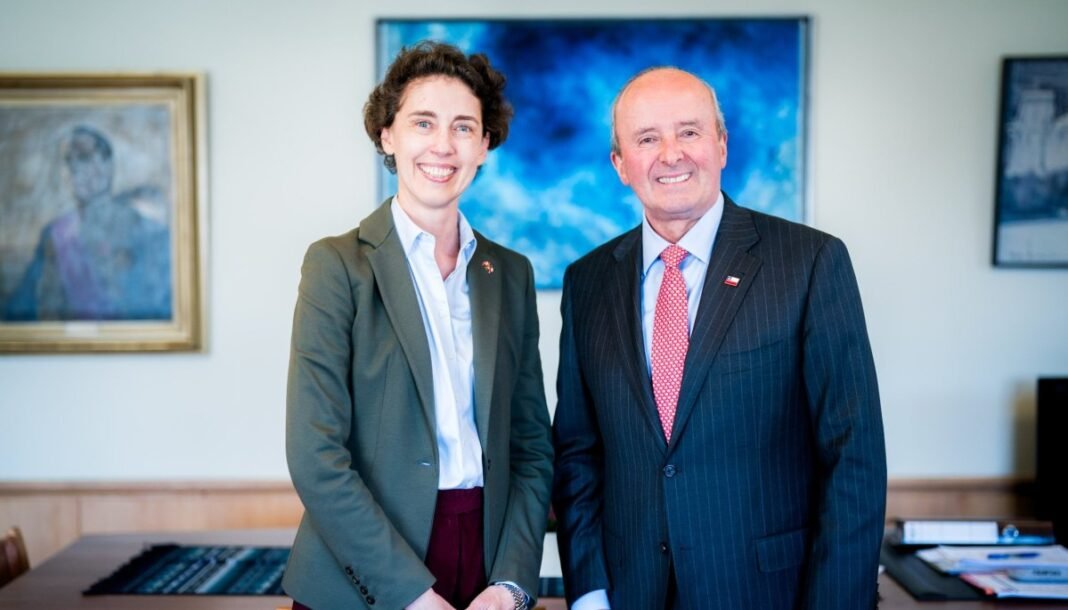
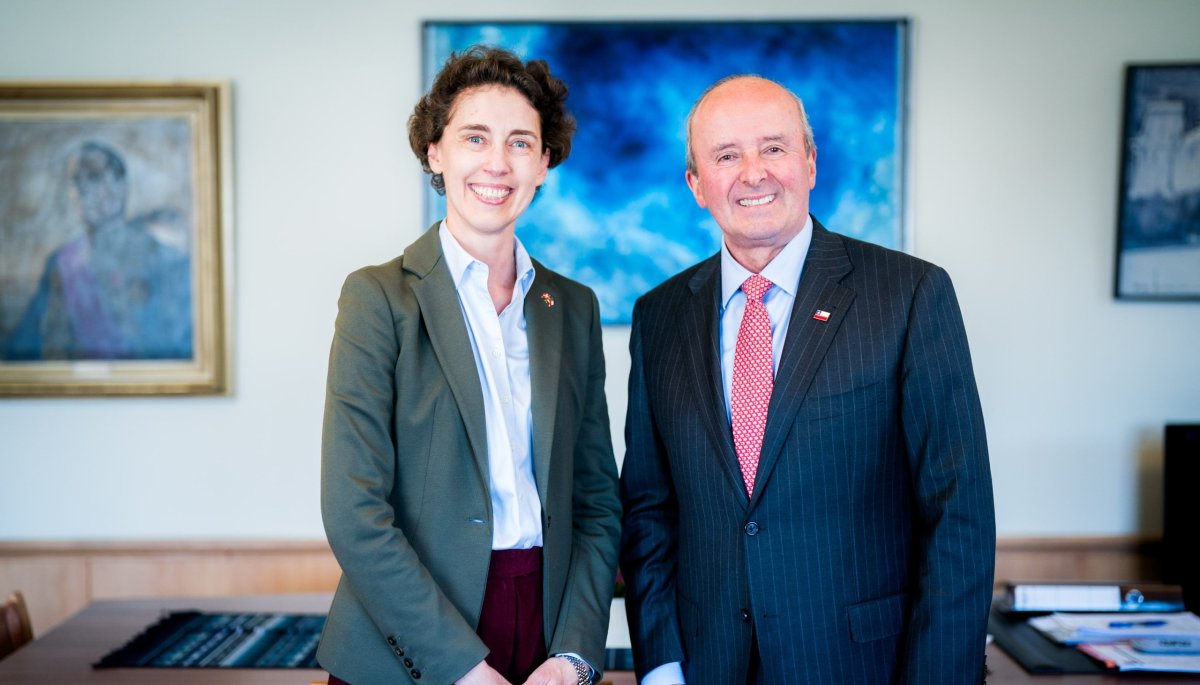
Per the government announcement, The Chilean Undersecretary of Foreign Affairs, Patricio Torres, met with the new Danish Ambassador to Chile, Louis de Brass, on October 15, 2026. The statement does not mention the specific location of the meeting. This engagement is significant because it formalizes the diplomatic relationship following the Ambassador’s arrival and underscores Chile’s commitment to strengthening economic ties with the European Union. The meeting’s core purpose was to discuss the ratification of the Advanced Framework Agreement between Chile and the European Union, a treaty that, according to the statement, generates stronger conditions for trade, investment, and deeper economic cooperation.
Background
Prior to this meeting, the Ministry of Foreign Affairs, led by Minister Francisco Pérez Mackenna, has been actively promoting Chile as a destination for foreign investment. In March, the ministry said that it was seeking to attract European investment to bolster the country’s economy. The Advanced Framework Agreement, ratified by Denmark, is a key element of this strategy. The statement does not address the specific details of the agreement’s provisions, but highlights its importance for Chile’s economic outlook. Furthermore, the Ministry of Foreign Affairs announced the opening of two new Chilean consulates in Venezuela on Wednesday, October 14, 2026, demonstrating a continued commitment to diplomatic engagement across South America. The Ministry of Foreign Affairs also highlighted the strategic alliance between Chile and Japan on Thursday, October 15, 2026, during a meeting led by Minister Pérez Mackenna and the Japanese Ambassador.
Analysis
The meeting between Torres and de Brass represents a continuation of Chile’s efforts to deepen its economic ties with the European Union. The ratification of the Advanced Framework Agreement by Denmark is a critical step, suggesting a willingness from a key trading partner to strengthen collaboration. The dialogue also reflects a shared position on the international stage, with Chile firmly condemning the ongoing aggression against Ukraine. This aligns with previous statements by the Ministry of Foreign Affairs regarding the need for a peaceful resolution to the conflict. The statement does not mention any specific discussions about investment opportunities beyond the general framework of the agreement. The simultaneous engagement with Denmark and Japan underscores Chile’s diversification of its diplomatic portfolio and its commitment to maintaining strong relationships across multiple regions. This suggests a pragmatic approach to foreign policy, balancing economic interests with geopolitical considerations.
Implications
The renewed focus on the Advanced Framework Agreement has significant implications for Chile’s trade policy. Should the agreement fully implement its provisions, it could lead to increased exports of Chilean goods and services to the European Union. The meeting also signals a potential shift in Chile’s approach to international relations, prioritizing alignment with countries that share similar values, particularly regarding the conflict in Ukraine. The continued engagement with Japan, highlighted by the Minister’s meeting, further strengthens Chile’s strategic partnerships. The statement does not address the potential impact of these developments on Chile’s broader trade relationships with other countries, such as China or Brazil.
Outlook
If the ratification of the Advanced Framework Agreement proceeds smoothly, it could unlock significant economic benefits for Chile. Should the visit yield further discussions regarding investment opportunities, it would represent a positive step for the country’s economic growth. However, the statement does not mention any specific timelines or milestones for the agreement’s implementation. Furthermore, should the current geopolitical tensions escalate, Chile’s commitment to international cooperation could be tested, potentially impacting its ability to secure favorable trade agreements.