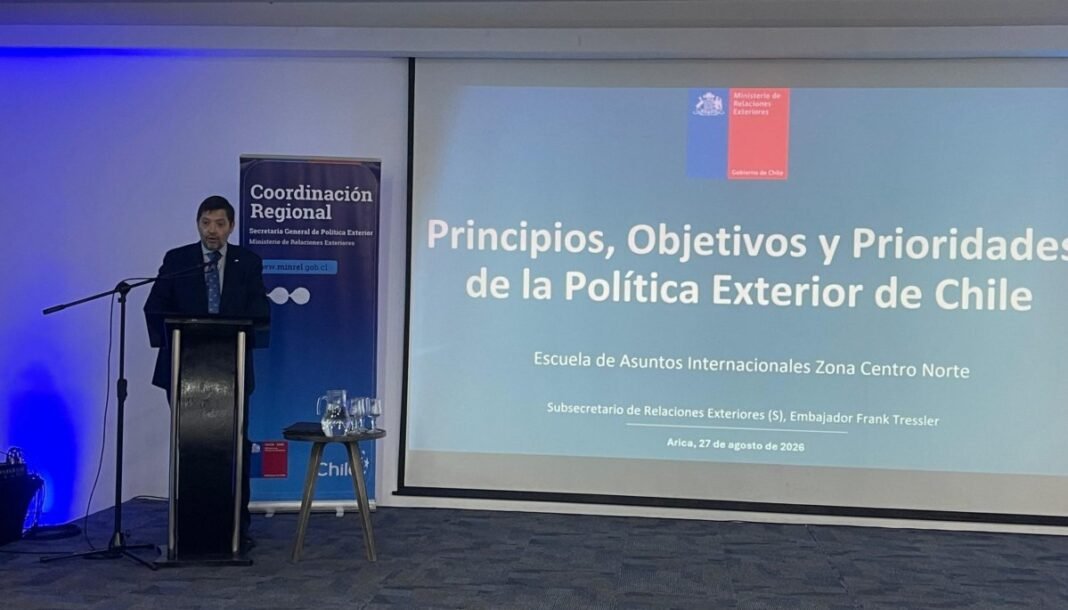
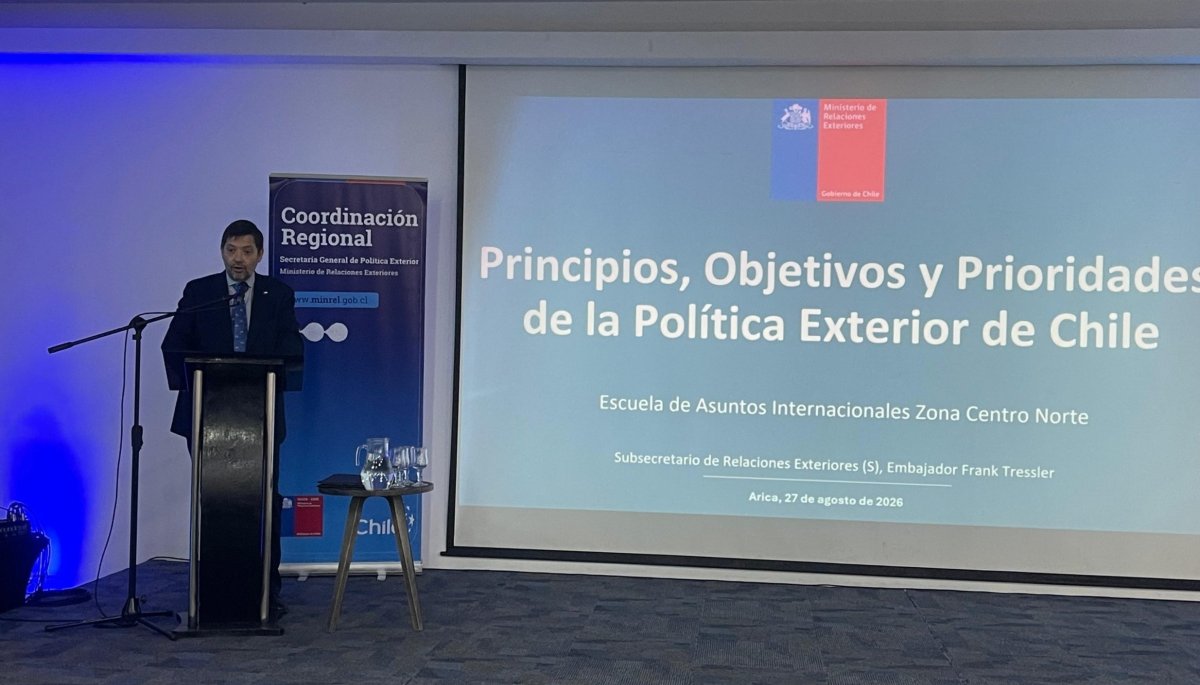
Per the government announcement, Arica, Chile – On August 28th, 2026, Subsecretary of Foreign Affairs Frank Tressler inaugurated a new iteration of the Escuela de Asuntos Internacionales (Foreign Affairs School) in Arica, a move designed to bolster regional engagement within Chile’s foreign policy. This event, organized by the Ministry of Foreign Affairs, brought together the heads of Regional International Affairs Units (URAI) from Valparaíso to Arica and Parinacota, aiming to enhance opportunities for these northern regions on the international stage.
Background
The Escuela de Asuntos Internacionales program operates as a training initiative for regional officials involved in Chile’s foreign relations. The “Zona Centro Norte” (North Center Zone) version specifically targets personnel from the areas spanning Valparaíso to Arica and Parinacota, reflecting Chile’s strategic priorities along its northern border. Prior meetings focused on broader diplomatic strategy, but this event represents a targeted effort to refine regional expertise. The Ministry of Foreign Affairs, led by Minister Patricio Torres, has been increasingly emphasizing regional integration as a key component of the nation’s foreign policy objectives.
Analysis
The government’s investment in training URAIs suggests a desire to proactively shape Chile’s engagement with neighboring countries, particularly Argentina, Paraguay and Brazil, given the strategic importance of the Corredor Bioceánico Vial project. The inclusion of governors, regional councilors, and military representatives highlights a multi-faceted approach, seeking to harmonize foreign policy across various sectors. The discussion surrounding trade agreements and investment attraction reflects Chile’s traditional strengths in export promotion – though the statement does not address the potential impact on existing mining industries or broader economic diversification strategies. The presence of figures from the armed forces underscores a commitment to security cooperation alongside economic development, although it doesn’t detail specific collaborative efforts.
Implications
This initiative carries significant implications for regional stability in South America. If implemented as described, Chile’s active engagement with the Corredor Bioceánico – a project linking northern ports to the Atlantic via Argentina and Brazil – could reshape trade flows and potentially alter geopolitical dynamics within the region. The focus on commercial agreements presents both opportunities and risks, demanding careful negotiation to avoid protectionist measures or disputes over resource access. Should the visit yield further momentum for the Corredor Bioceánico, it would significantly impact Chile’s relationship with its neighbors, requiring coordinated infrastructure development and regulatory frameworks – a challenge given existing bilateral tensions.
Outlook
Should the training program prove effective in equipping regional officials with the skills to navigate complex international negotiations, Chile could strengthen its position as a key facilitator of trade and investment within the Southern Cone. If the government prioritizes sustainable development alongside economic growth, this event might contribute to a more balanced approach to regional integration. However, should the focus remain solely on infrastructure projects like the Corredor Bioceánico without addressing underlying issues related to regulatory harmonization or dispute resolution mechanisms, the initiative risks exacerbating existing tensions and hindering broader regional cooperation.