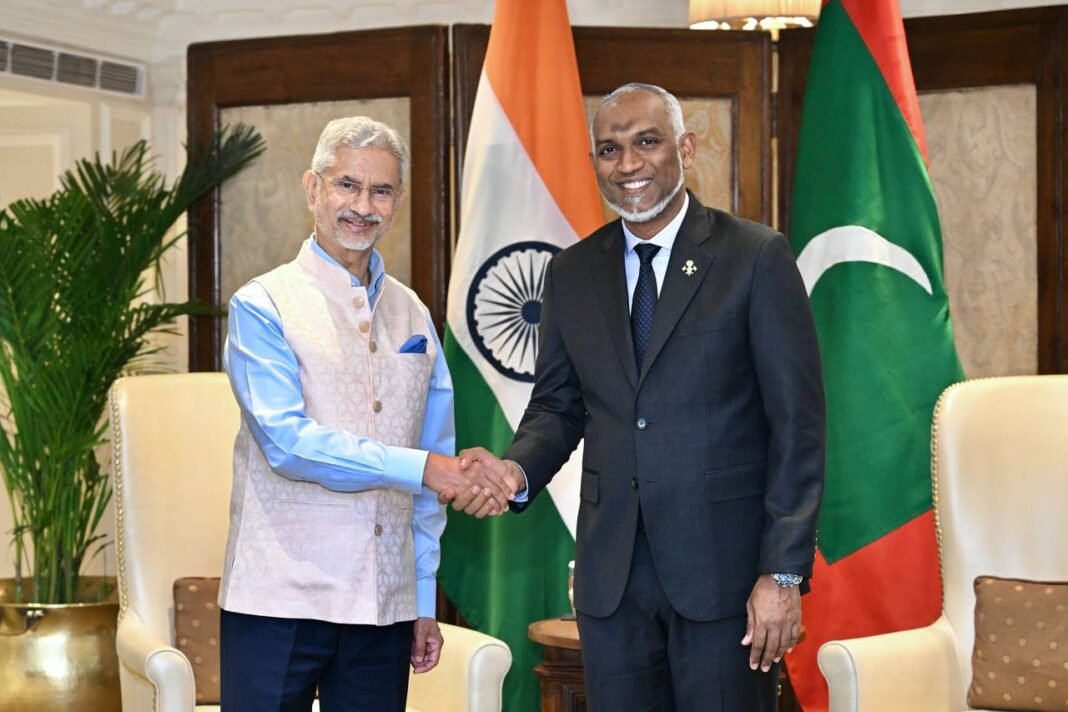
As set out in a formal announcement, The fourth Strategic Dialogue between the State of Qatar and the Republic of France concluded on October 21st 2026 in Doha, reaffirming a longstanding bilateral relationship characterized by “deep and historic ties,” according to a joint statement released by the French Ministry for Europe and Foreign Affairs. The event, co-chaired by Prime Minister and Minister of Foreign Affairs Sheikh Mohammed bin Abdulrahman bin Jassim Al Thani and Minister for Europe and Foreign Affairs Jean-Noël Barrot, underscores a continued commitment to collaboration across a broad spectrum of areas, despite ongoing regional challenges. This reaffirmation matters because it signals a sustained, if somewhat reactive, diplomatic engagement between two nations with significant strategic interests within the volatile Middle East.

Background
The Strategic Dialogue, established in 2025, represents a formalized mechanism for coordinating policy between France and Qatar. Prior meetings, including the third Strategic Dialogue held in June 2025, demonstrate a consistent effort to address shared concerns and deepen the strategic partnership. The dialogue operates within the framework of the “relation bilatérale” – a bilateral relationship – and is informed by previous joint statements, most recently concerning the fight against drug trafficking – Joint statement issued by the French Republic and the Republic of Paraguay Paraguay Relation bilatérale Joint statement On : September 10th 2026 on the occasion of the meeting between Minister for Europe and Foreign Affairs Jean-Noël Barrot and Minister of Foreign Affairs Rubén Ramírez Lezcano. Similarly, a meeting between Minister Barrot and Lê Hoài Trung, Minister of Foreign Affairs of the Socialist Republic of Vietnam, occurred on September 10th 2026, highlighting France’s broader engagement in Southeast Asia.
Analysis
The renewed commitment articulated in the joint statement reflects a confluence of strategic incentives for both nations. Qatar, heavily invested in economic diversification away from hydrocarbons, seeks reliable partners for investment and technological advancement. France, facing a complex security environment in the Middle East and North Africa, requires Qatar’s support in addressing regional crises and protecting its strategic interests. The statement’s emphasis on “shared priorities” – including Gulf Security, Iran conflict, Strait of Hormuz, and Middle East/Africa developments – indicates a common recognition of these challenges. However, the dialogue’s scope also reveals potential contradictions. Qatar’s willingness to engage on issues such as Syria and Lebanon, despite ongoing disagreements with regional partners, suggests a calculated risk-taking strategy. France, while expressing support for Qatar’s mediation efforts, remains wary of certain aspects of Qatar’s regional influence. This suggests a cautious approach to the relationship, prioritizing security and stability over broader geopolitical ambitions.
Implications
The deepened partnership has implications for regional stability. France’s continued commitment to Qatar’s security, particularly in response to Houthi attacks on Saudi Arabia, reinforces a critical pillar of deterrence in the region. The agreement to enhance military cooperation, including participation in Exercise ORION 2026, strengthens Qatar’s defensive capabilities. Economically, the commitment to trade exceeding €1.52 billion in 2025 signals the potential for further investment, particularly in sectors such as consumer goods, telecommunications, and artificial intelligence. This suggests a potential shift in Qatar’s economic strategy, leveraging French expertise and investment opportunities. The agreement to explore collaboration in quantum technologies and artificial intelligence indicates a forward-looking approach, positioning both nations at the forefront of technological innovation.
Outlook
Should the visit yield continued progress on shared priorities, the next Strategic Dialogue, scheduled for 2027, will likely focus on implementing the new ministerial action plan for 2027–2030. If Qatar’s involvement in regional mediation remains limited, France may seek to bolster its own diplomatic efforts. Should France continue to prioritize its security partnership with Qatar, this could lead to increased military exercises and intelligence sharing. The agreement to sign a Letter of Intent on cooperation in the field of communications and information technology suggests a commitment to strengthening this partnership, but it does not address the broader issue of Qatari involvement in regional conflicts.
Conclusion
The reaffirmation of the Qatar-France Strategic Dialogue provides a framework for continued collaboration, but the underlying tensions and competing priorities within the region remain unresolved. The question remains: will this dialogue prove to be a durable mechanism for managing strategic differences, or will it ultimately be constrained by the shifting dynamics of the Middle East?